- Animals
- ›Arthropods
- ›Hexapods
- ›Insects
- ›Winged and Once-winged Insects
- ›Ants, Bees, Wasps, and Sawflies
- ›Narrow-waisted Wasps, Ants, and Bees
- ›Proctotrupomorpha
- ›Gall Wasps and Allies
- ›Gall Wasps
- ›Cynipinae
- ›Oak Gall Wasps
- ›Disholcaspis
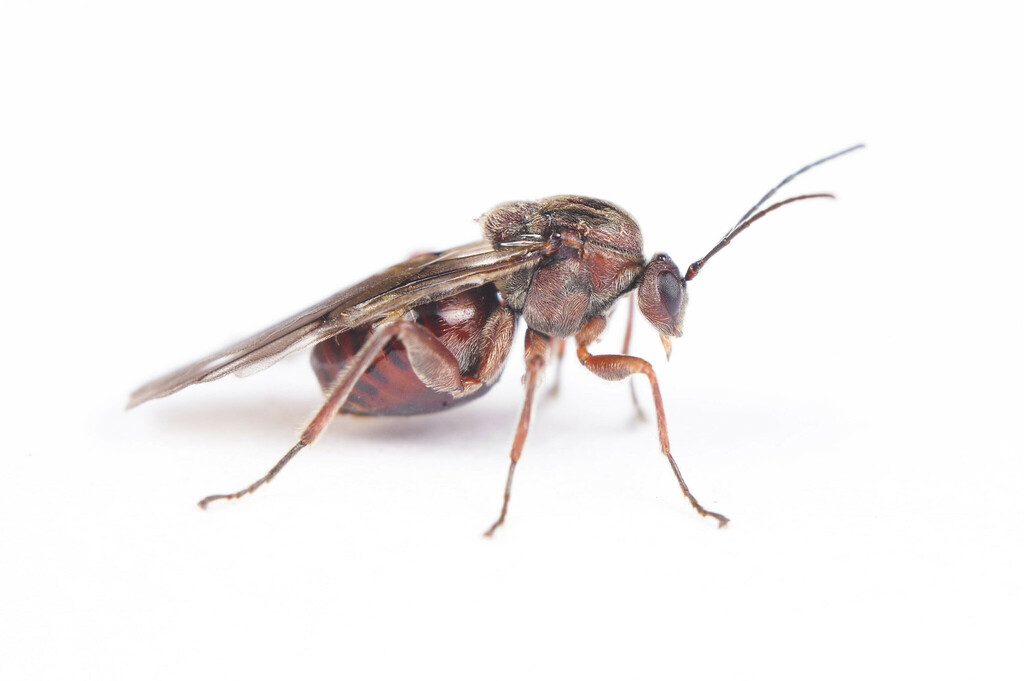
Oak Rough Bulletgall Wasp
Disholcaspis quercusmamma
Disholcaspis quercusmamma, the oak rough bulletgall wasp, is a species of gall wasp in the family Cynipidae. The quercus in its name is the genus name for oak, while "mamma" is Latin for "breast", presumably a reference to the "nipple" on the gall.
The galls formed by several species in the Disholcaspis genus are called "bullet galls" due to their shape and size. Disholcaspis quercusmamma galls are similar in appearance to those formed by Disholcaspis quercusglobulus; the distinguishing characters are a velvety surface and pointed apex ("nipple").
From the article Disholcaspis quercusmamma on Wikipedia (CC BY-SA), quoted section by section
What it does
As in all Hymenoptera, sex-determination in Disholcaspis quercusmamma is governed by haplodiploidy: males develop from unfertilized eggs and are haploid, and females develop from fertilized eggs and are diploid. The life cycle of Disholcaspis quercusmamma alternates between an asexual (agamic) generation and a sexual generation, producing two different types of galls at different seasons of the year.
Asexual generation. The conspicuous bullet galls seen in summer and fall contain only female larvae. When mature, female adults emerge in late fall and reproduce parthenogenetically. The females are self-fertile and lay a single egg in a dormant leaf bud. These eggs along with the resulting wasp larvae stimulate the tree to produce small, inconspicuous leaf galls in the spring.
Sexual generation. Both male and female wasps develop inside the spring leaf galls and adults emerge in mid-to-late spring. The mated females fly or crawl to newly elongated twigs where they insert their eggs through the phloem to be in contact with the cambium, where undifferentiated (meristematic) cells are stimulated to grow the fall bullet galls.
Wikipedia: “Life cycle”
Listen
Looking for field recordings…
Where it lives
Recorded sightings
—
geo-referenced records in GBIF, from museums, herbaria and field observers.
Drag the globe to turn it. Dots are where records exist, not a range map; darker means more records.
In the stacks
Searching the stacks…
Every page naming Disholcaspis quercusmamma in the Biodiversity Heritage Library →
This page is assembled live from iNaturalist, GBIF, Wikipedia, the Source Library and the Internet Archive. It is not yet part of the hand-edited codex. iNaturalist taxon 146964.