- Plants
- ›Vascular Plants
- ›flowering plants
- ›Dicots
- ›Legumes, Milkworts, and Allies
- ›Legumes
- ›Faboideae
- ›milkvetches, locoweeds, and allies
- ›Oxytropis
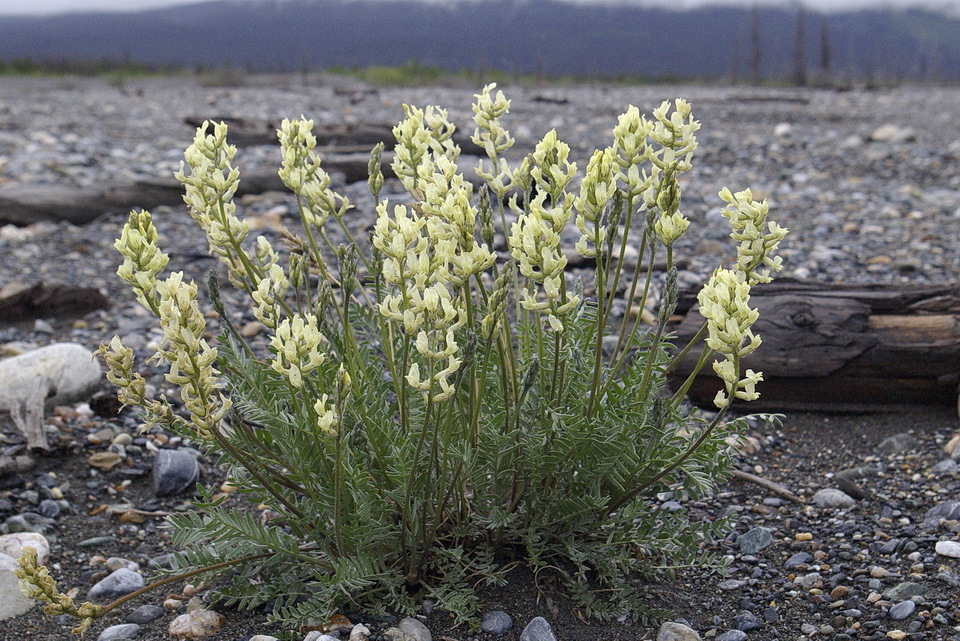
field locoweed
Oxytropis campestris
Oxytropis campestris, the field locoweed, is a plant native to Northern Europe, the mountains of Central and Southern Europe, the Northwestern United States and all of Canada, sometimes grown as an ornamental plant.
It is found in prairies, woods, and meadows, and prefers gravelly and rocky slopes, where it grows most abundantly. The plant has numerous variants. It is a larval host plant of the small blue butterfly
From the article Oxytropis campestris on Wikipedia (CC BY-SA), quoted section by section
Description
Oxytropis campestris blooms flowers from May to July. These are racemes that are capitate or oblong, 4 to 15 cm in length. The plants have 8 to 32 flowers that rise from a scape. The actual flowers have five lobes and form a calyx tube. They are of a cream to yellowish color, but sometimes of pink, blue, or purple, with hairs that are usually black. The keel petals are pointed, and often have purple blotches. The plant also produces fruit which matures from July to September. These are legumes which are oblong-ovate 1.5 to 2 cm in length. They are mostly sessile and dehiscent from the tip. The fruit is membranous and contains many seeds. The plant grows perennially, with an acaulescent forb reaching 20 to 50 cm in height and has a taproot. Leaves grow alternately in a pinnate fashion and are usually 8 to 40 cm long. The leaves are dimorphic, with primary leaves short ovate leaflets, and secondary leaves with 11 to 33 leaflets. These secondary leaflets are 1 to 2.5 cm long.
Toxicity
The Oxytropis campestris plant is poisonous and may cause loco disease in livestock. From this it derives the common name field locoweed or some other variations. However, Mountain goats eat it freely.
Where it lives
Recorded sightings
—
geo-referenced records in GBIF, from museums, herbaria and field observers.
Drag the globe to turn it. Dots are where records exist, not a range map; darker means more records.
In the stacks
Searching the stacks…
Every page naming Oxytropis campestris in the Biodiversity Heritage Library →
This page is assembled live from iNaturalist, GBIF, Wikipedia, the Source Library and the Internet Archive. It is not yet part of the hand-edited codex. iNaturalist taxon 154238.