- Animals
- ›Arthropods
- ›Hexapods
- ›Insects
- ›Winged and Once-winged Insects
- ›Flies
- ›Brachyceran Flies
- ›Cyclorrhaphan Flies
- ›Aschizan Flies
- ›Hover Flies
- ›Drone Flies and Allies
- ›Rat-tail Maggot Flies
- ›Eristalina
- ›Eristalis
- ›Eoseristalis
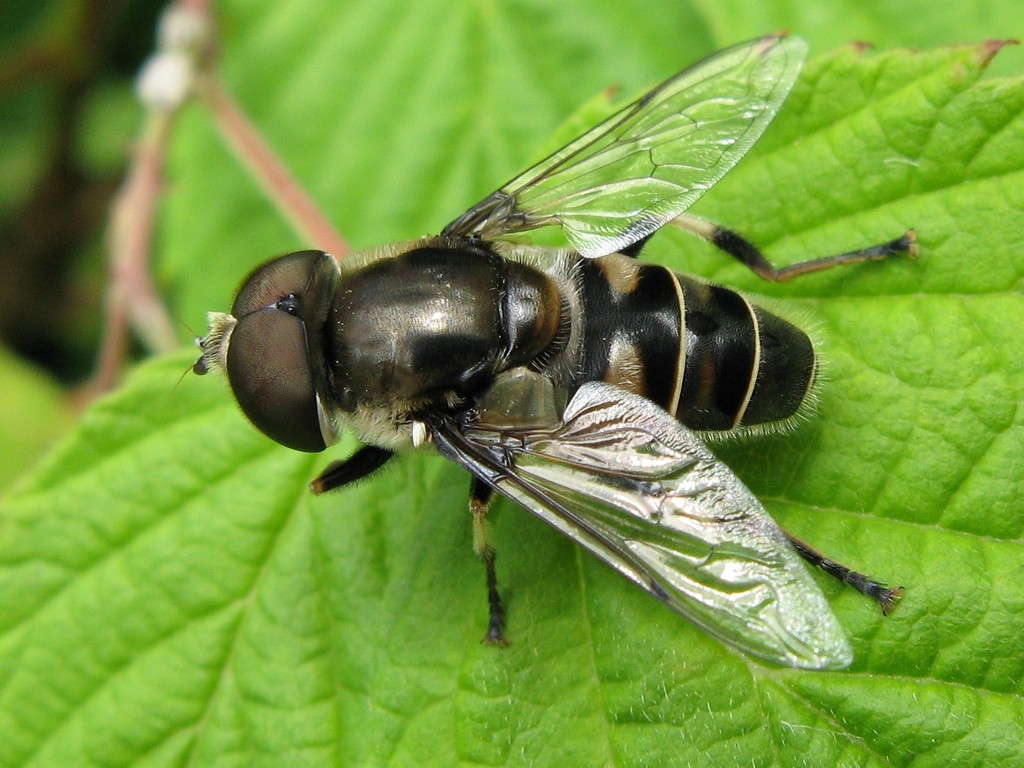
Black-shouldered Drone Fly
Eristalis dimidiata
Eristalis dimidiata, the black-shouldered drone fly, is a species of hoverfly native to much of Canada and the eastern and northern United States. It flies year-round in southern areas and from late March to mid-November further north. It is one of the earliest hoverflies to fly in the spring, and as such likely overwinters as an adult. It lives primarily in forests.
Hoverflies get their names from the ability to remain nearly motionless while in flight. The adults are also known as flower flies as they are commonly found on and around flowers, from which they get both energy-giving nectar and protein-rich pollen. The larvae are aquatic filter-feeders of the rat-tailed type.
From the article Eristalis dimidiata on Wikipedia (CC BY-SA), quoted section by section
Description
Black-shouldered drone flies have opaque, infuscated humeral cells (at the base of their wings), with the rest of the wing entirely hyaline (transparent), except for possibly a diffuse medial spot on the wing. Their hind tarsi are entirely black. Overall, much of the fly is black, though the wings are mostly transparent and the posterior margins of the abdominal segments are white. Their pterostigma are dark brown and distinct. They have one to six short bristles on the dorsus (back) of their arista.
Listen
Looking for field recordings…
Where it lives
Recorded sightings
—
geo-referenced records in GBIF, from museums, herbaria and field observers.
Drag the globe to turn it. Dots are where records exist, not a range map; darker means more records.
In the stacks
Searching the stacks…
Every page naming Eristalis dimidiata in the Biodiversity Heritage Library →
This page is assembled live from iNaturalist, GBIF, Wikipedia, the Source Library and the Internet Archive. It is not yet part of the hand-edited codex. iNaturalist taxon 155106.