- Animals
- ›Arthropods
- ›Hexapods
- ›Insects
- ›Winged and Once-winged Insects
- ›Flies
- ›Nematoceran Flies
- ›Gnats and Allies
- ›Fungus Gnats and Gall Midges
- ›Predatory Fungus Gnats
- ›Keroplatinae
- ›Orfeliini
- ›Orfelia
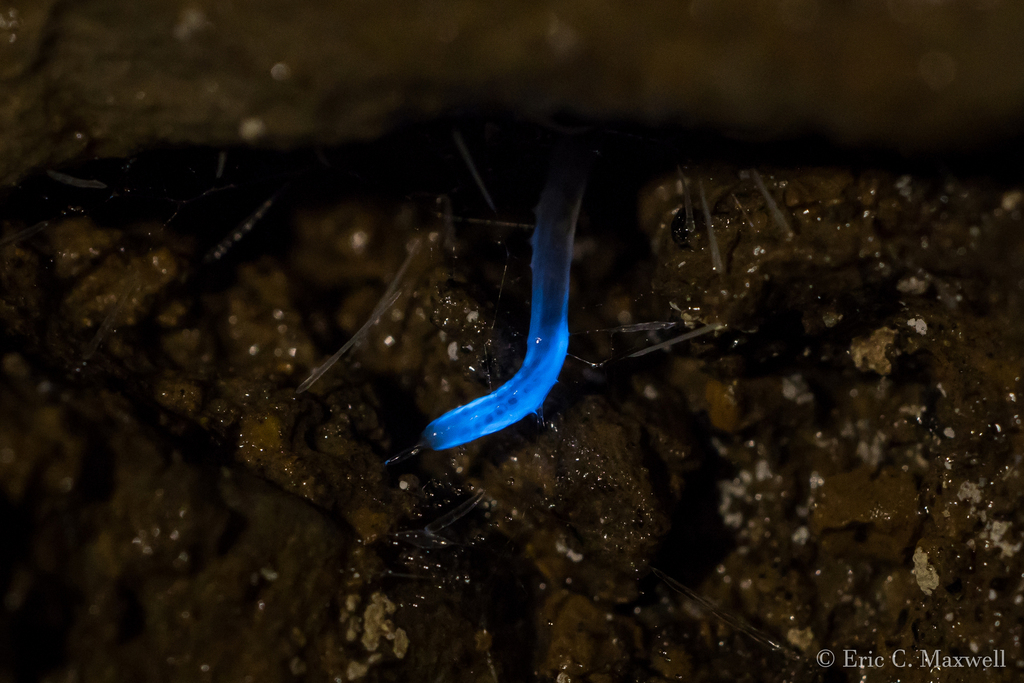
Foxfire Fly
Orfelia fultoni
Orfelia fultoni is the only bioluminescent species of fly found in North America. It is distantly related to Arachnocampa, and their bioluminescent systems use distinct mechanisms. The larvae of the species live in stream banks among moss and rock cavities, as well as in wet sandstone caves. They build sticky webs, and using their two bioluminescent lanterns as an attractant, capture flying prey. They produce the bluest light of any studied bioluminescent insect. The species occurs...
From the article Orfelia fultoni on Wikipedia (CC BY-SA), quoted section by section
Range & habitat
Orfelia fultoni occurs in the Appalachian Mountains and Cumberland Plateau, primarily in the states of Alabama, Georgia, North Carolina, Tennessee, and Virginia. The larvae of the species live in stream banks among moss and rock cavities, as well as in wet sandstone caves. They build sticky webs on moss, rotten wood, in cracks between rocks or on bare soil, and using their two bioluminescent lanterns as an attractant, capture flying prey in their webs. Once caught in the web, chemicals in the web paralyze the prey. O. fultoni require a dark, still area where their lights can shine and where the wind doesn’t disturb their webs too much.
Dismals Canyon. Orfelia fultoni has sometimes been referred to by the common name "dismalites", in consequence of their presence in Dismals Canyon, an 86 acres (35 hectares) National Natural Landmark with a spring-fed creek and waterfall in northwest Alabama. The canyon is home to the largest population of O. fultoni anywhere in the United States. There are two peak seasons for the larvae in Alabama, the spring peak of late April through May, and the fall peak at the end of September through the first of October. They are visible throughout the year in smaller numbers. Dismals Canyon offers guided evening tours for visitors to see the dismalites.
Wikipedia: “Habitat”
Listen
Looking for field recordings…
Where it lives
Recorded sightings
—
geo-referenced records in GBIF, from museums, herbaria and field observers.
Drag the globe to turn it. Dots are where records exist, not a range map; darker means more records.
In the stacks
Searching the stacks…
Every page naming Orfelia fultoni in the Biodiversity Heritage Library →
This page is assembled live from iNaturalist, GBIF, Wikipedia, the Source Library and the Internet Archive. It is not yet part of the hand-edited codex. iNaturalist taxon 155139.