- Plants
- ›Vascular Plants
- ›flowering plants
- ›Dicots
- ›Gentians, Dogbanes, Madders, and Allies
- ›madder family
- ›Rubioideae
- ›Anthospermeae
- ›Coprosminae

Nertera
Nertera is a genus of about 15 species of flowering plants in the family Rubiaceae, native to the Southern Hemisphere, in South America and Australasia, with one species extending into the Northern Hemisphere in Central America, eastern Asia, and Hawaii. The name derives from the Greek word nerteros, meaning low down. Common names include pincushion, coral bead or bead plant. They are prostrate, creeping, mat-forming herbaceous perennial plants growing to 20–40 cm (7.9–15.7 in) across or more but no more than a few centimetres high. The leaves are usually quite small, and when crushed may in some species release a foul smell (methanethiol) like the related woody genus Coprosma. The flowers are insignificant and probably wind-pollinated. The fruit is usually a bright orange berry, but in some species may be a dry capsule.
Selected species
12 branches of this genus, most-observed first
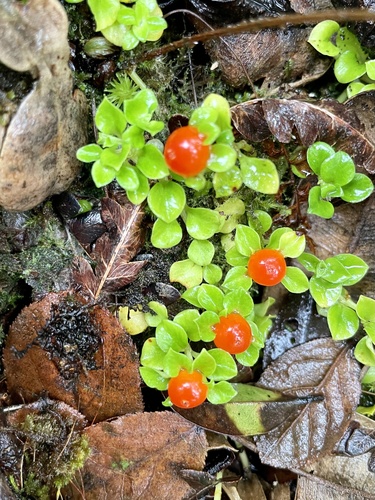
Beadplant
speciesNertera granadensis

fruiting duckweed
speciesNertera depressa

Hairy Forest Nertera
speciesNertera villosa

Nertera nigricarpa
speciesNertera nigricarpa

Nertera dichondrifolia
speciesNertera dichondrifolia
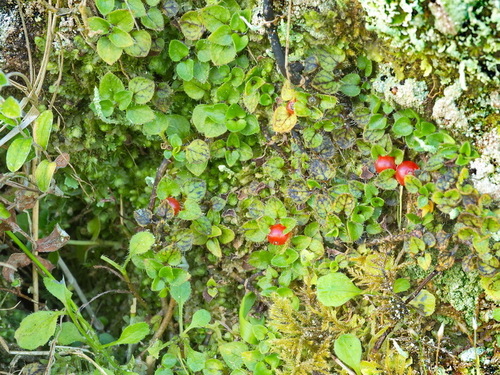
Nertera ciliata
speciesNertera ciliata
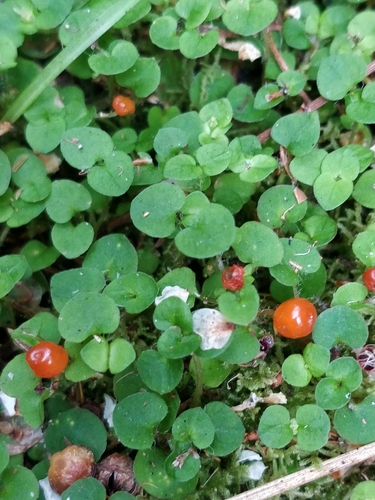
Nertera scapanioides
speciesNertera scapanioides

Nertera balfouriana
speciesNertera balfouriana
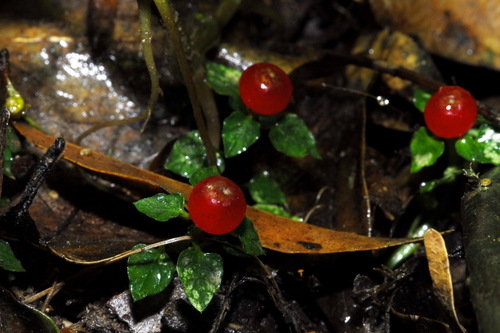
Nertera taiwaniana
speciesNertera taiwaniana
Nertera sinensis
speciesNertera sinensis
Nertera cunninghamii
speciesNertera cunninghamii
Nertera holmboei
speciesNertera holmboei
Where it lives
Recorded sightings
—
geo-referenced records in GBIF, from museums, herbaria and field observers.
Drag the globe to turn it. Dots are where records exist, not a range map; darker means more records.
In the stacks
Searching the stacks…
Every page naming Nertera in the Biodiversity Heritage Library →
This page is assembled live from iNaturalist, GBIF, Wikipedia, the Source Library and the Internet Archive. It is not yet part of the hand-edited codex. iNaturalist taxon 156707.