- Plants
- ›Vascular Plants
- ›flowering plants
- ›Dicots
- ›Buttercups, Poppies, and Allies
- ›buttercup family
- ›Anemones, buttercups, larkspurs and allies
- ›globeflowers and pheasant's eyes
- ›Adonis
- ›Adonis
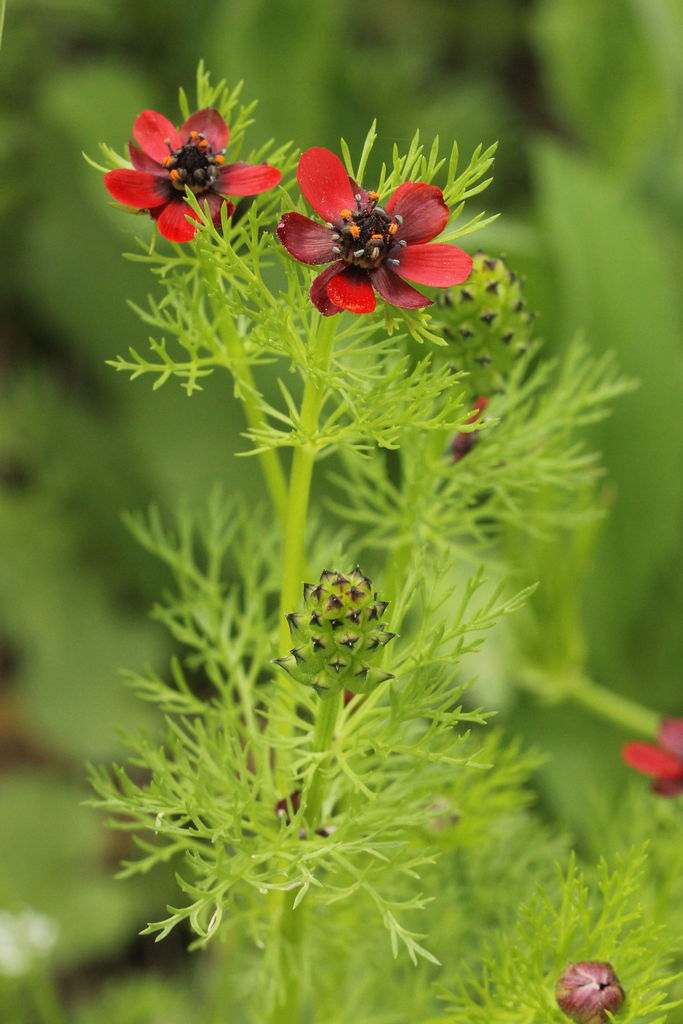
Pheasant's-eye
Adonis annua
Adonis annua (syn. Adonis autumnalis L., Adonis phoenicea Bercht. & J.Presl.), also known as pheasant's-eye, Adonis' flower, autumn Adonis, autumn pheasant's-eye, blooddrops, red chamomile, red Morocco, rose-a-ruby, and soldiers-in-green, is an ornamental plant of the family Ranunculaceae. It is named after the Greek mythology character Adonis.
It is native to North Africa, Western Asia, the Mediterranean, and Europe. The name Bird's Eye is also associated with the bird's-eye primrose. Pheasant's eye is also an alternative name for poet's narcissus.
From the article Adonis annua on Wikipedia (CC BY-SA), quoted section by section
In human culture
According to the Language of flowers by Kate Greenaway the Adonis represents "painfull recolections". The flower also tends to represent grief but always conveys the message of sad memories.
Wikipedia: “Symbolism”
Where it lives
Recorded sightings
—
geo-referenced records in GBIF, from museums, herbaria and field observers.
Drag the globe to turn it. Dots are where records exist, not a range map; darker means more records.
In the old herbals & bestiaries

In the stacks
Searching the stacks…
Every page naming Adonis annua in the Biodiversity Heritage Library →
This page is assembled live from iNaturalist, GBIF, Wikipedia, the Source Library and the Internet Archive. It is not yet part of the hand-edited codex. iNaturalist taxon 158029.