- Plants
- ›Vascular Plants
- ›flowering plants
- ›Dicots
- ›Waterlilies, Fanworts, and Allies
- ›Waterlily Family
- ›Nymphaea
- ›Brachyceras
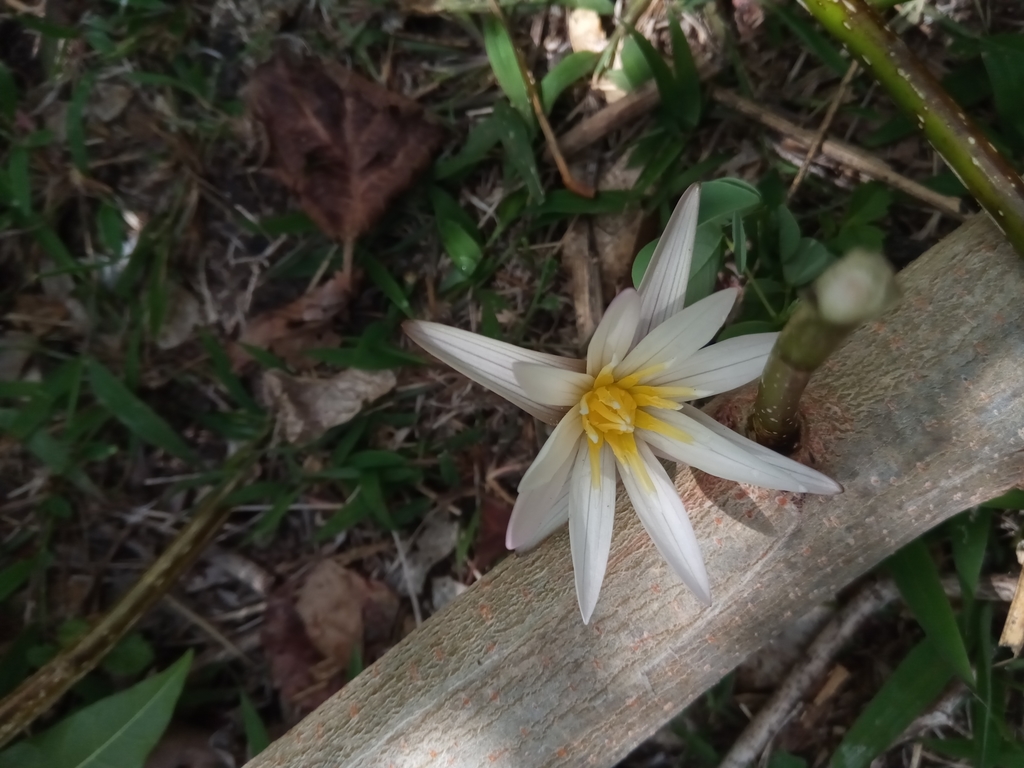
Nymphaea dimorpha
Nymphaea dimorpha is a species of waterlily endemic to Madagascar.
From the article Nymphaea dimorpha on Wikipedia (CC BY-SA), quoted section by section
Description
This species exhibits two distinctive growth forms. The submerged growth form has very thin foliage with short petioles. The emergent form has floating leaves with longer petioles.
Range & habitat
It grows in pools of water among slowly flowing streams. The pools, which are darkened with organic material, are shaded by the canopy of tropical forest.
Wikipedia: “Habitat”
What it does
Cleistogamy occurs in this species. It can produce flowers, which never open, but self-fertilise and never reach the water surface.
Wikipedia: “Generative reproduction”
How it is grown
It is easily cultivated and suitable for low-light conditions. In cultivation it may grow four times larger than plants observed in their natural habitat. This is due to better fertilisation. It is very sensitive to cold temperatures. It is used in hybridisation to create new smaller waterlily cultivars.
== References ==
Wikipedia: “Cultivation”
In human culture
This species was first described as Nymphaea minuta K.C.Landon, R.A.Edwards & Nozaic in 2006. Later, it was discovered that this was a Nomen illegitimum, as the name was preoccupied by the French fossil waterlily Nymphaea minuta Saporta described in 1891. Therefore, the new name Nymphaea dimorpha I.M.Turner was chosen in 2014.
Wikipedia: “Taxonomic history”
Where it lives
Recorded sightings
—
geo-referenced records in GBIF, from museums, herbaria and field observers.
Drag the globe to turn it. Dots are where records exist, not a range map; darker means more records.
In the stacks
Searching the stacks…
Every page naming Nymphaea dimorpha in the Biodiversity Heritage Library →
This page is assembled live from iNaturalist, GBIF, Wikipedia, the Source Library and the Internet Archive. It is not yet part of the hand-edited codex. iNaturalist taxon 1600419.