- Plants
- ›Vascular Plants
- ›flowering plants
- ›monocots
- ›grasses, sedges, cattails, and allies
- ›Sedges
- ›Cyperoideae
- ›Scirpeae
- ›Eriophorum
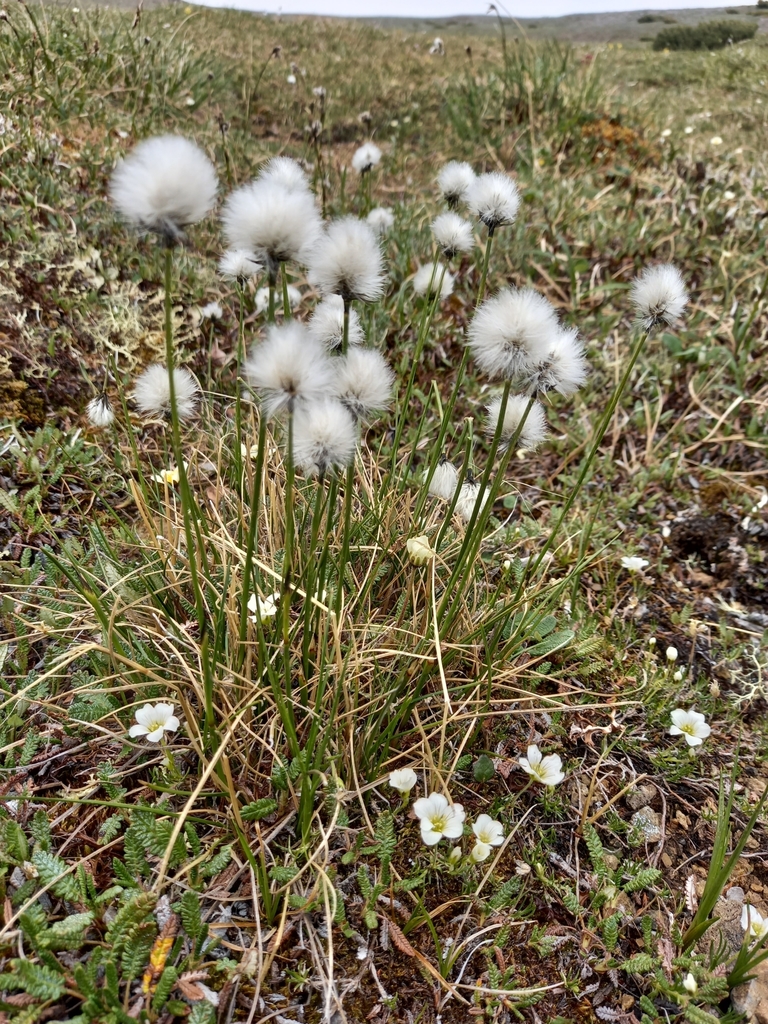
arctic cottongrass
Eriophorum callitrix
Eriophorum callitrix, commonly known as Arctic cotton, Arctic cottongrass, suputi, or pualunnguat in Inuktitut, is a perennial Arctic plant in the Cyperaceae family. It is one of the most widespread flowering plants in the northern hemisphere and tundra regions. Upon every stem grows a single round, white and wooly fruit. The seed heads are covered in this cottony mass and usually disperse when the wind carries them away. They also have narrow, grass-like leaves. This plant...
From the article Eriophorum callitrix on Wikipedia (CC BY-SA), quoted section by section
Range & habitat
Eriophorum callitrix has a northern circumpolar distribution with a gap in northern Europe. Its preferred habitats include wet meadows, tundra, and calcareous bogs.
Wikipedia: “Distribution and habitat”
At the table
The Inuit used the seed heads as wicks in seal oil lamps. Clumps were placed into babies' pants and then thrown away when soiled.
Wikipedia: “Uses”
Where it lives
Recorded sightings
—
geo-referenced records in GBIF, from museums, herbaria and field observers.
Drag the globe to turn it. Dots are where records exist, not a range map; darker means more records.
In the stacks
Searching the stacks…
Every page naming Eriophorum callitrix in the Biodiversity Heritage Library →
This page is assembled live from iNaturalist, GBIF, Wikipedia, the Source Library and the Internet Archive. It is not yet part of the hand-edited codex. iNaturalist taxon 162677.