- Plants
- ›Vascular Plants
- ›flowering plants
- ›monocots
- ›grasses, sedges, cattails, and allies
- ›grasses
- ›Pooideae
- ›Wheats, ryes, barleys and relatives
- ›barleys, ryes, and relatives
- ›Leymus
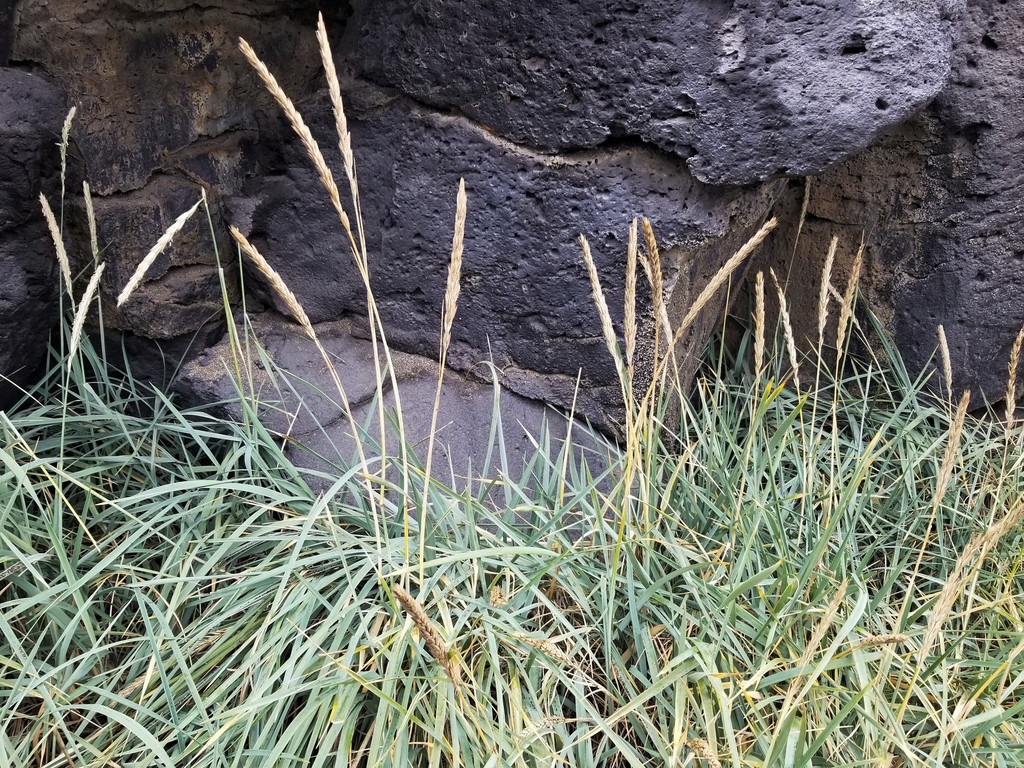
lyme grass
Leymus arenarius
Leymus arenarius (L.) Hochst. (syn. Elymus arenarius L.) is a psammophilic (sand-loving) species of grass in the family Poaceae, native to the coasts of Atlantic and Northern Europe. Leymus arenarius is commonly known as sand ryegrass, sea lyme grass, or simply lyme grass.
From the article Leymus arenarius on Wikipedia (CC BY-SA), quoted section by section
Range & habitat
Leymus arenarius is native to the coasts of northern and western Europe. A closely related species, Leymus mollis (previously Elymus arenarius ssp. mollis) is native to the northern coasts of North America.
Wikipedia: “Distribution”
At the table
In Europe, the plant's stems are used for roof thatching and can be woven into a coarse fabric. The seeds were historically used as food. As early as the 18th century, the plant's extensive network of roots was utilized to stabilizing sands on northern coastal beaches. In Iceland, the grass was harvested as a wild grain as early as the 12th century.
Wikipedia: “Uses”
Where it lives
Recorded sightings
—
geo-referenced records in GBIF, from museums, herbaria and field observers.
Drag the globe to turn it. Dots are where records exist, not a range map; darker means more records.
In the stacks
Searching the stacks…
Every page naming Leymus arenarius in the Biodiversity Heritage Library →
This page is assembled live from iNaturalist, GBIF, Wikipedia, the Source Library and the Internet Archive. It is not yet part of the hand-edited codex. iNaturalist taxon 164671.