- Animals
- ›Arthropods
- ›Hexapods
- ›Insects
- ›Winged and Once-winged Insects
- ›Beetles
- ›Water, Rove, Scarab, Long-horned, Leaf, and Snout Beetles
- ›Elateriform Beetles
- ›Click, Firefly, and Soldier Beetles
- ›Fireflies
- ›Ototretinae
- ›Lamellipalpodes
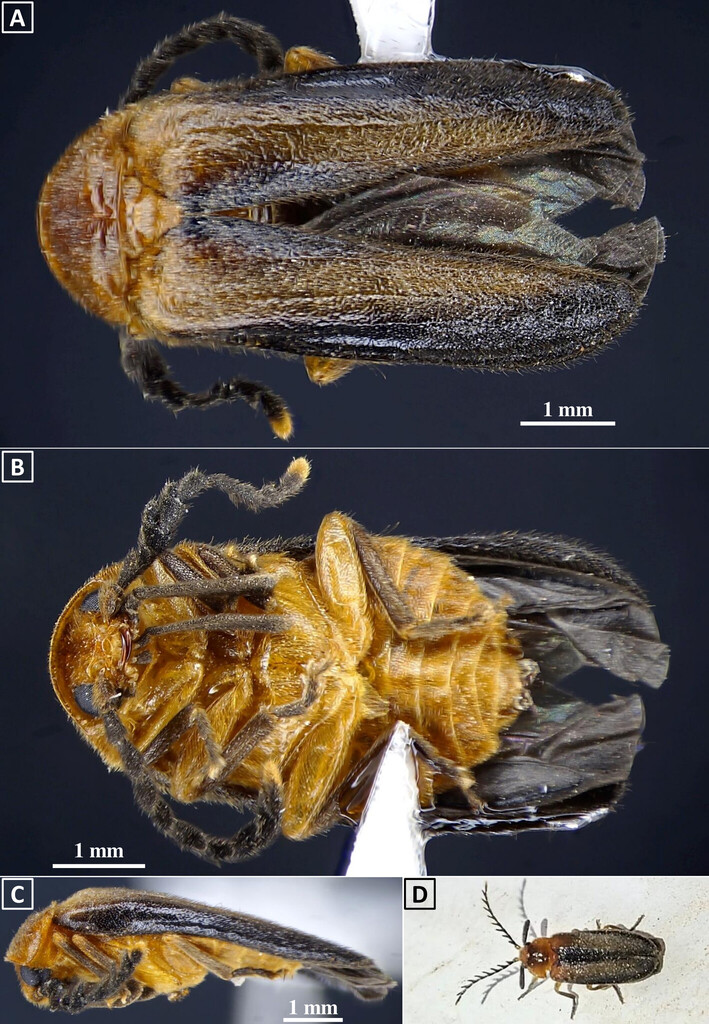
Lamellipalpodes kurumba
Lamellipalpodes kurumba is a rare, non-luminous species of firefly discovered in the Nilgiri Hills of the Western Ghats in Tamil Nadu, India. The Western Ghats are internationally recognized as one of the world's major biodiversity hotspots, characterized by high levels of species richness and endemism. Lamellipalpodes is a genus of non-luminous fireflies within the family Lampyridae, characterized by distinctly broadened terminal labial and maxillary palpomeres. The species was named in honour of the Kurumba, an indigenous tribal community traditionally inhabiting the Nilgiri region.
From the article Lamellipalpodes kurumba on Wikipedia (CC BY-SA), quoted section by section
In human culture
The specific epithet kurumba refers to the Kurumba community of the Nilgiris, in recognition of the region where the species was discovered and the longstanding association of the community with the local landscape.{
Wikipedia: “Etymology”
Listen
Looking for field recordings…
Where it lives
Recorded sightings
—
geo-referenced records in GBIF, from museums, herbaria and field observers.
Drag the globe to turn it. Dots are where records exist, not a range map; darker means more records.
In the stacks
Searching the stacks…
Every page naming Lamellipalpodes kurumba in the Biodiversity Heritage Library →
This page is assembled live from iNaturalist, GBIF, Wikipedia, the Source Library and the Internet Archive. It is not yet part of the hand-edited codex. iNaturalist taxon 1651805.