- Plants
- ›Vascular Plants
- ›flowering plants
- ›Dicots
- ›Waterlilies, Fanworts, and Allies
- ›Waterlily Family
- ›Nymphaea
- ›Hydrocallis
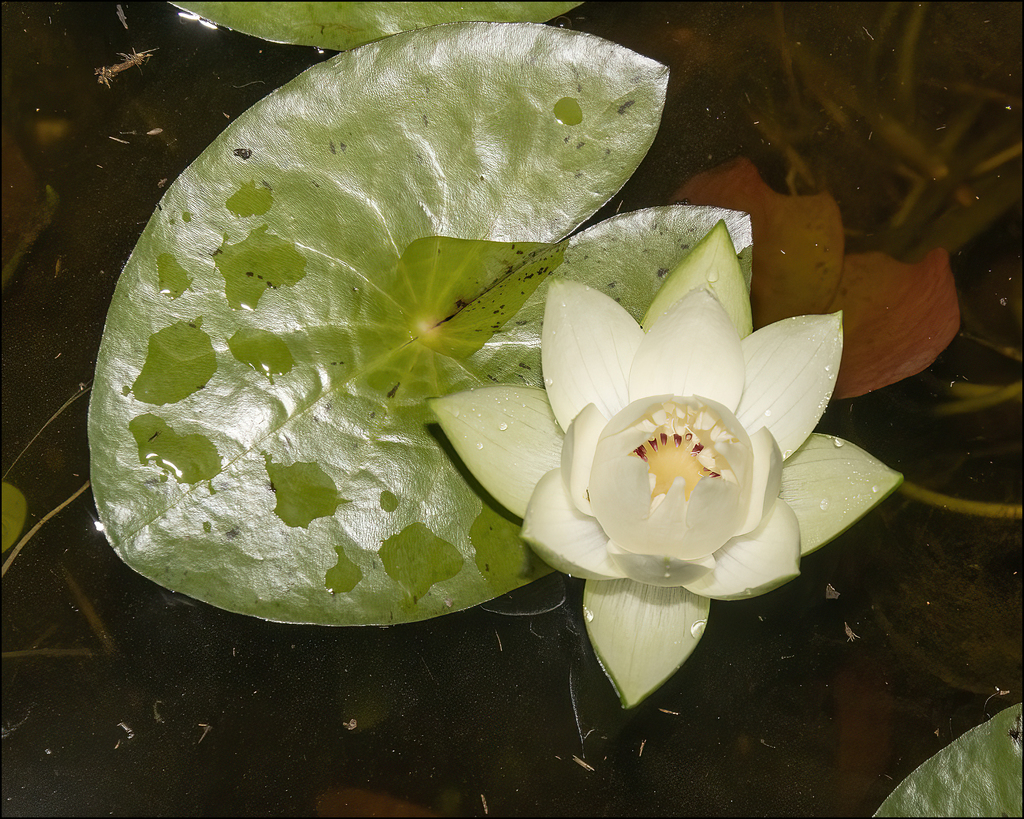
Jameson's Waterlily
Nymphaea jamesoniana
Nymphaea jamesoniana is a species of waterlily native to the USA (Western Florida), Mexico, and tropical South America.
From the article Nymphaea jamesoniana on Wikipedia (CC BY-SA), quoted section by section
Range & habitat
It grows in various freshwater habitats, such as marshes, canals, shallow waters, flooded ditches, flooded flatwoods, ponds, slowly flowing streams, and lakes. It is intolerant of saltwater.
Wikipedia: “Habitat”
At the table
Nymphaea jamesoniana has been employed in the treatment of conditions such as irritated eyes, dysentery, and skin lesions. It has been utilized for its astringent properties. There are claims that its flowers possess narcotic properties. The Chorote people of Argentina use the rhizomes as food. Apart from the Chorote people, the rhizomes are also used by Wichi, Western Toba, and Pilagá.
Wikipedia: “Uses”
In human culture
The specific epithet jamesoniana honours the Scottish botanist William Jameson (1796-1873).
Wikipedia: “Etymology”
Where it lives
Recorded sightings
—
geo-referenced records in GBIF, from museums, herbaria and field observers.
Drag the globe to turn it. Dots are where records exist, not a range map; darker means more records.
In the stacks
Searching the stacks…
Every page naming Nymphaea jamesoniana in the Biodiversity Heritage Library →
This page is assembled live from iNaturalist, GBIF, Wikipedia, the Source Library and the Internet Archive. It is not yet part of the hand-edited codex. iNaturalist taxon 165753.