- Plants
- ›Vascular Plants
- ›flowering plants
- ›Dicots
- ›Sunflowers, Bellflowers, Fanflowers, and Allies
- ›Sunflowers, Daisies, Asters, and Allies
- ›Asteroideae
- ›paper daisies
- ›cudweeds, everlastings, and pussytoes
- ›Omalotheca
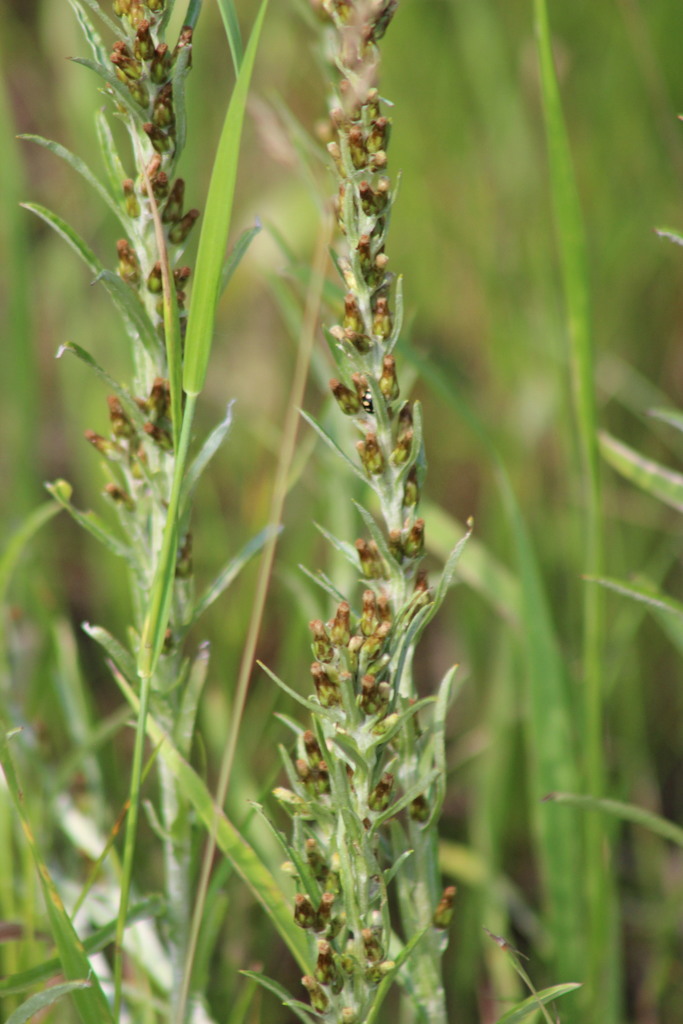
Woodland Cudweed
Omalotheca sylvatica
Omalotheca sylvatica, synonyms including Gnaphalium sylvaticum, is a species of plant in the family Asteraceae. It is commonly known as heath cudweed, wood cudweed, golden motherwort, chafeweed, owl's crown, and woodland arctic cudweed. It is widespread across the temperate Northern Hemisphere, throughout North America and Eurasia. The species was first formally described by Carl Linnaeus in 1753 as Gnaphalium sylvaticum.
From the article Omalotheca sylvatica on Wikipedia (CC BY-SA), quoted section by section
Description
It is a perennial herb with short runners, growing to 8 to 60 cm tall. Its leaves are lanceolate in shape, pointed, 2 to 8 cm long, with a single vein. They have no hair on top, but are woolly hairy below. The upper leaves become progressively shorter and narrower. The flower heads are 6 mm long. The bracts of the flower heads have a green centre, and chaffy brown edges. The florets are pale brown. The achenes are hairy with reddish pappus hairs. It flowers from July until September.
Where it lives
Recorded sightings
—
geo-referenced records in GBIF, from museums, herbaria and field observers.
Drag the globe to turn it. Dots are where records exist, not a range map; darker means more records.
In the stacks
Searching the stacks…
Every page naming Omalotheca sylvatica in the Biodiversity Heritage Library →
This page is assembled live from iNaturalist, GBIF, Wikipedia, the Source Library and the Internet Archive. It is not yet part of the hand-edited codex. iNaturalist taxon 165838.