- Plants
- ›Vascular Plants
- ›flowering plants
- ›Dicots
- ›Legumes, Milkworts, and Allies
- ›Legumes
- ›Faboideae
- ›Phaseoleae
- ›Phaseolinae
- ›Phaseolus
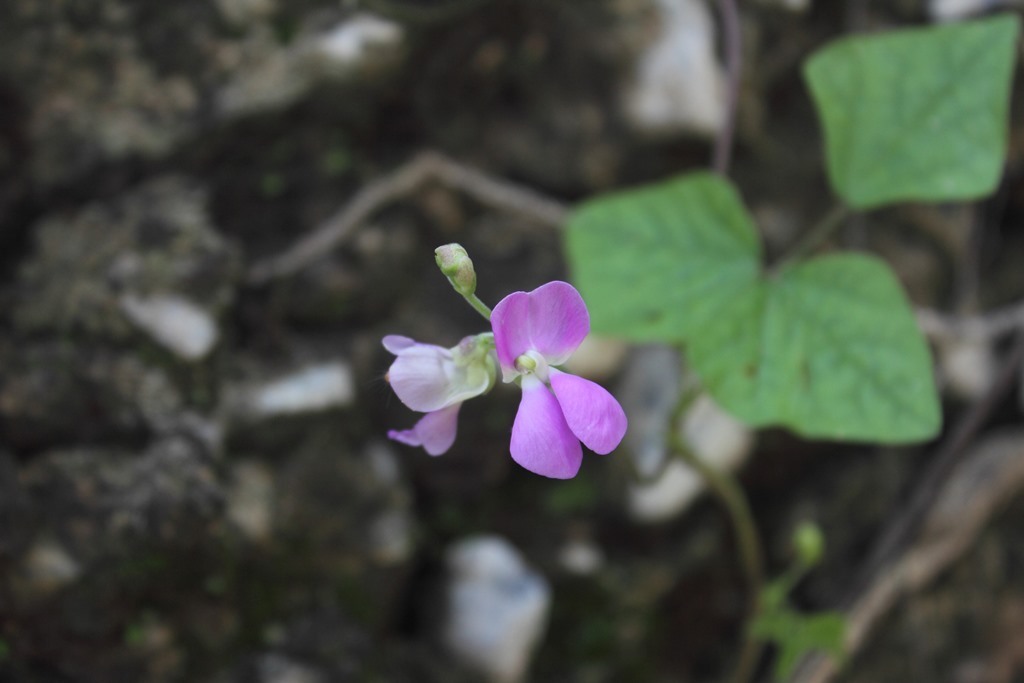
Spotted Bean
Phaseolus maculatus
Phaseolus maculatus (Metcalfe bean, prairie bean, spotted bean) is a plant native to Mexico and the southwestern United States from Arizona, New Mexico, and Texas. It is found on dry, rocky hillsides in meadows and in wooded areas from 1500 to 2400 m (5000–8000 ft) in elevation.
P. maculatus is a trailing perennial herb with a large, woody taproot. Leaves are trifoliate, oval, up to 8 cm (3.2 in) long, with small uncinate (hooked) hairs. Leaf blades tend to be oriented vertically so they do are not pressed against the ground. Flowers are purple. Seeds are mottled black and brown.
From the article Phaseolus maculatus on Wikipedia (CC BY-SA), quoted section by section
At the table
This bean is often used as livestock forage, and it is cited as a gene source for disease resistance in the lima bean (P. lunatus) by Germplasm Resources Information Network. The Tarahumara peoples of the Sierra Madre Occidental in Chihuahua use the roots medicinally and also make glue from the shoots. The species is also occasionally grown as an ornamental.
Wikipedia: “Uses”
Where it lives
Recorded sightings
—
geo-referenced records in GBIF, from museums, herbaria and field observers.
Drag the globe to turn it. Dots are where records exist, not a range map; darker means more records.
In the stacks
Searching the stacks…
Every page naming Phaseolus maculatus in the Biodiversity Heritage Library →
This page is assembled live from iNaturalist, GBIF, Wikipedia, the Source Library and the Internet Archive. It is not yet part of the hand-edited codex. iNaturalist taxon 166630.