- Plants
- ›Vascular Plants
- ›flowering plants
- ›monocots
- ›grasses, sedges, cattails, and allies
- ›grasses
- ›Pooideae
- ›Poeae
- ›bluegrasses, timothies, foxtails, and allies
- ›Poa
- ›Alpinae
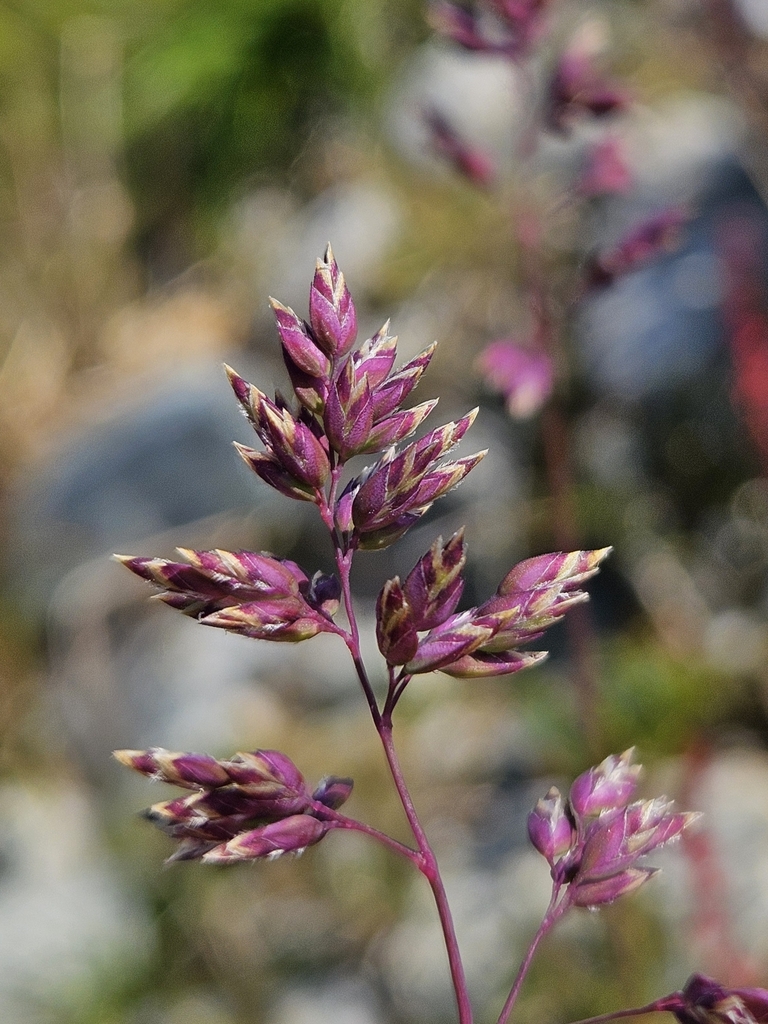
Alpine Bluegrass
Poa alpina
Poa alpina, commonly known as alpine meadow-grass or alpine bluegrass, is a species of grass with a primarily holarctic distribution.
It is noted for being pseudoviviparous: in place of seeds, it sometimes reproduces asexually, creating new plantlets in the spikelets. The plantlets represent a developmental change following sexual reproduction, as the spikelet apical meristems revert to vegetative growth following the production of floral tissue, producing an axis with true leaves. These plantlets can produce roots and fall off, but typically their growth on the mother plant and the senescence of the main stem makes the entire structure lean over and touch the ground, where the mass of plantlets and roots can establish together. This vegetative reproduction mechanism is thought to be an advantage in variable alpine environments where pollination and sexual reproduction is inconsistent.
Where it lives
Recorded sightings
—
geo-referenced records in GBIF, from museums, herbaria and field observers.
Drag the globe to turn it. Dots are where records exist, not a range map; darker means more records.
In the stacks
Searching the stacks…
Every page naming Poa alpina in the Biodiversity Heritage Library →
This page is assembled live from iNaturalist, GBIF, Wikipedia, the Source Library and the Internet Archive. It is not yet part of the hand-edited codex. iNaturalist taxon 167076.