- Plants
- ›Vascular Plants
- ›flowering plants
- ›Dicots
- ›beeches, oaks, walnuts, and allies
- ›beech family
- ›Quercus
- ›Quercus
- ›Lobatae
- ›Coccineae
- ›Quercus shumardii
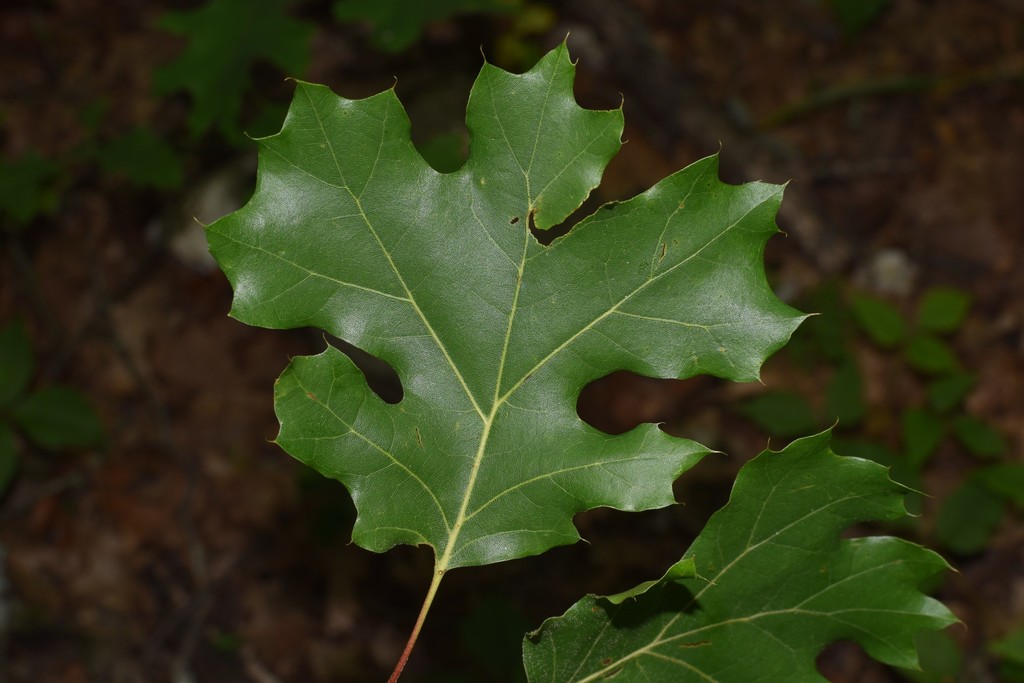
mapleleaf oak
Quercus acerifolia
Quercus acerifolia (also called maple-leaf oak) is a rare North American species of oak in the red oak section of Quercus (known as Lobatae). The species was first described in 1927 from samples collected by E.J. Palmer in the Ozark Mountains. The initial documentation classified the species as Quercus shumardii var. acerifolia. The species was first perceived as a variant of Shumard oak due to its similar foliage and ranges. Over two decades later, the tree was re-evaluated by botanists Nick Alan Stoynoff and William J. Hess, who determined that it was a distinct species. Their case for reclassification was presented in the paper, "A New Status for Quercus shumardii var. acerifolia (Fagaceae)," published in the journal Sida in 1990. The reclassification was based on the tree's unique ecological and morphological characteristics including leaf shape, acorn size, and ecological niche. The species was renamed Quercus acerifolia, due to its leaf shape which resembles that of a maple tree.
From the article Quercus acerifolia on Wikipedia (CC BY-SA), quoted section by section
Range & habitat
Maple-leaf oak is endemic to the Ouachita Mountains of the State of Arkansas. The geographic distribution of this species is remarkably limited. Its range covers just 24 square kilometers across locations including Sugarloaf Mountain, Magazine Mountain, Pryor Mountain, and Porter Mountain within the Ouachita Mountains. This species grows primarily on xeric sites, occupying high elevation woodland habitats with dry and rocky soils. This restricted distribution is a significant contributing factor to its endangerment status.
Wikipedia: “Habitat and distribution”
What it does
The maple-leaf oak serves as a keystone species in its native ecosystems, contributing to many key ecological processes. Oak trees play a vital ecological role by contributing to nutrient cycling and soil fertility, regulating water cycles, providing habitats and food for wildlife, and sequestering carbon. The decomposition of large oak leaves provides a nutrient-rich substrate which improves soil quality and supports the microbiota communities. Oak trees also provide critical wildlife habitat in temperate forests, providing canopy shelter and nesting sites for birds and habitat for other mammals and fungi. Species of woodpeckeers, thrushes, and warblers rely on these oak trees for habitat and feed on caterpillars found on the trees during the breeding season. The acorns produced by the tree also serve as a food source for a range of wildlife in the Ouachita Mountains.
Wikipedia: “Ecology”
Toxicity
The maple-leaf oak is listed as a critically endangered tree species in the Red List of US Oaks. The Red List was developed to identify the oak species of highest extinction concern globally. This rating scale was determined using species characteristics including geographic range, rate of decline, fragmentation, and population size. This species is considered critically imperiled due to its highly fragmented population distribution and its small population size. Fewer than 600 individuals are present in the wild, making it extremely vulnerable to extinction pressures. Oak species such as the maple-leaf oak are at risk of extinction primarily due to climate change induced habitat shifts, habitat fragmentation and habitat destruction. This species is threatened by habitat loss throughout its fragmented range, largely attributed to anthropogenic activities such as logging and development in the Ouachita Mountains. Climate change induced range shifts also threaten the maple-leaf oak. Climate shifts throughout the world have resulted in protected habitat of endangered species becoming uninhabitable. As sessile organisms, trees often struggle to relocate establish themselves in new suitable habitat quickly enough before widespread mortality occurs. This relocation process often results in high tree mortality. …
Wikipedia: “Endangerment status and threats”
Where it lives
Recorded sightings
—
geo-referenced records in GBIF, from museums, herbaria and field observers.
Drag the globe to turn it. Dots are where records exist, not a range map; darker means more records.
In the stacks
Searching the stacks…
Every page naming Quercus acerifolia in the Biodiversity Heritage Library →
This page is assembled live from iNaturalist, GBIF, Wikipedia, the Source Library and the Internet Archive. It is not yet part of the hand-edited codex. iNaturalist taxon 167633.