- Plants
- ›Vascular Plants
- ›flowering plants
- ›Dicots
- ›Heathers, Balsams, Primroses, and Allies
- ›New World pitcher plants
- ›Sarracenia
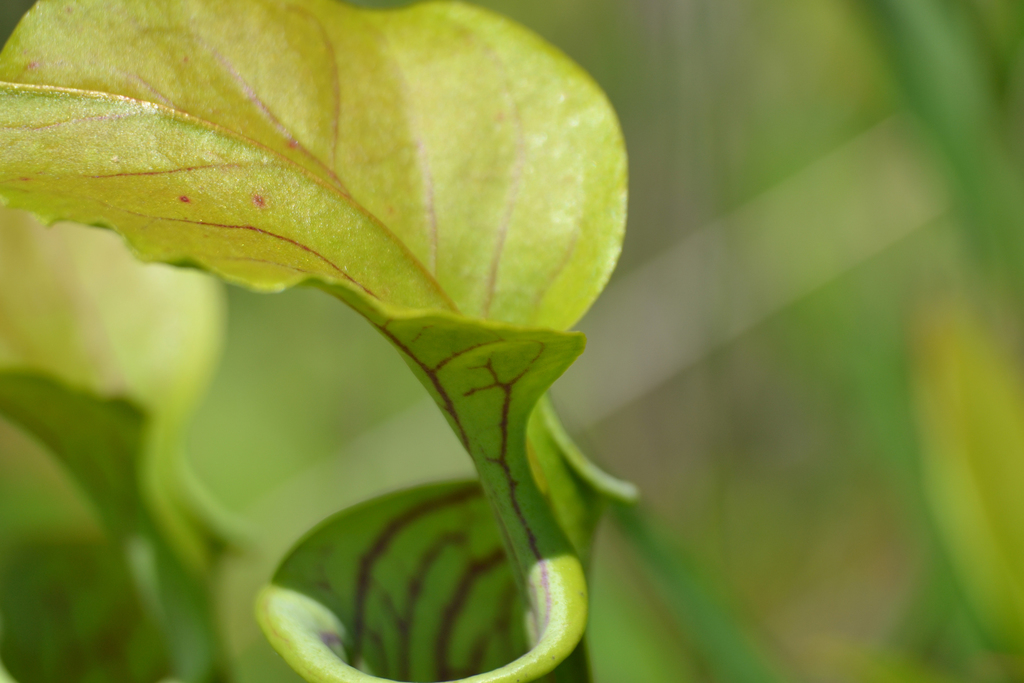
green pitcher plant
Sarracenia oreophila
Sarracenia oreophila, also known as the green pitcherplant, is a carnivorous plant in the genus Sarracenia. It has highly modified leaves in the form of pitchers that act as pitfall traps for prey. The narrow pitcher leaves are tapered tubes that rise up to 75 centimetres (30 in) from the ground, with a mouth 6 to 10 centimetres (2.4 to 3.9 in) in circumference Like all the Sarracenia, it is native to North America. Sarracenia oreophila is the most endangered of all Sarracenia species, its range limited to a handful of sites in northern Alabama, North Carolina, Georgia, and—historically—Tennessee.
From the article Sarracenia oreophila on Wikipedia (CC BY-SA), quoted section by section
Description
Like other members of the genus Sarracenia, the green pitcher plant traps insects using a tubular rolled leaf which collects digestive juices at the bottom. The pitcher tube of this species is similar to that of Sarracenia flava, but has a wider pitcher mouth and neck and is usually somewhat shorter, reaching only 60 cm. (24 in). The uppermost part of the leaf is flared into a lid (the operculum), which prevents excess rain from entering the pitcher and diluting the digestive secretions within. The upper regions of the pitcher are covered in short, stiff, downwards-pointing hairs, which serve to guide insects alighting on the upper portions of the leaf towards the opening of the pitcher tube. The opening of the pitcher tube is retroflexed into a 'nectar roll' or peristome, whose surface is studded with nectar-secreting glands. Prey entering the tube find that their footing is made extremely uncertain by the smooth, waxy secretions found on the surfaces of the upper portion of the tube. Insects losing their footing on this surface plummet to the bottom of the tube, where a combination of digestive fluid, wetting agents and inward-pointing hairs prevent their escape. …
Wikipedia: “Morphology and carnivory”
Where it lives
Recorded sightings
—
geo-referenced records in GBIF, from museums, herbaria and field observers.
Drag the globe to turn it. Dots are where records exist, not a range map; darker means more records.
In the stacks
Searching the stacks…
Every page naming Sarracenia oreophila in the Biodiversity Heritage Library →
This page is assembled live from iNaturalist, GBIF, Wikipedia, the Source Library and the Internet Archive. It is not yet part of the hand-edited codex. iNaturalist taxon 168439.