- Plants
- ›Vascular Plants
- ›flowering plants
- ›Dicots
- ›Roses, Elms, Figs, and Allies
- ›rose family
- ›Amygdaloideae
- ›Spiraeeae
- ›Spiraea
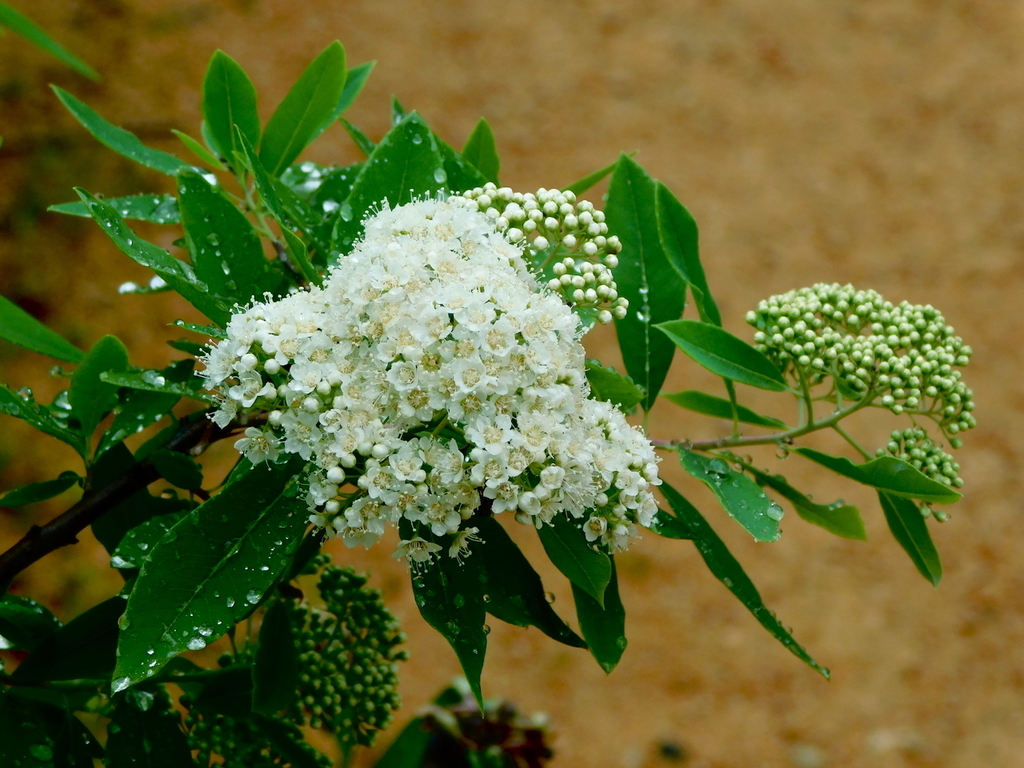
Virginia Meadowsweet
Spiraea virginiana
Spiraea virginiana is a rare species of flowering plant in the rose family (Rosaceae) known by the common names Virginia meadowsweet and Virginia spiraea. It is native to the southern Appalachian Mountains, where it has a distribution scattered across nine states. However, most populations are very small and poor in quality. It is threatened by disturbances in the hydrology of its habitat, introduced species of plants, and other threats. It is a federally listed threatened species of the United States.
This plant is a shrub growing one to three meters (3–10 feet) tall. It is clonal, with several cloned individuals growing in clumps. The leaves are variable in shape and size and may have smooth or toothed edges. The inflorescence is a dense corymb of many cream-white flowers, each flower about 0.6 centimeters wide. The fruit is a follicle. Flowering occurs in June and July. Though the plant produces many flowers, it rarely reproduces sexually and rarely produces seeds. Instead, it reproduces vegetatively by cloning, producing many new sprouts which grow into shrubs. There are fewer than 30 genotypes in total, meaning there are fewer than 30 individual sets of genes; all the other plants are clones of one of the 30 types.
Where it lives
Recorded sightings
—
geo-referenced records in GBIF, from museums, herbaria and field observers.
Drag the globe to turn it. Dots are where records exist, not a range map; darker means more records.
In the stacks
Searching the stacks…
Every page naming Spiraea virginiana in the Biodiversity Heritage Library →
This page is assembled live from iNaturalist, GBIF, Wikipedia, the Source Library and the Internet Archive. It is not yet part of the hand-edited codex. iNaturalist taxon 169257.