- Plants
- ›Vascular Plants
- ›flowering plants
- ›Dicots
- ›Sunflowers, Bellflowers, Fanflowers, and Allies
- ›Sunflowers, Daisies, Asters, and Allies
- ›Asteroideae
- ›asters and allies
- ›Symphyotrichinae
- ›Symphyotrichum
- ›Symphyotrichum
- ›Symphyotrichum
- ›Heterophylli
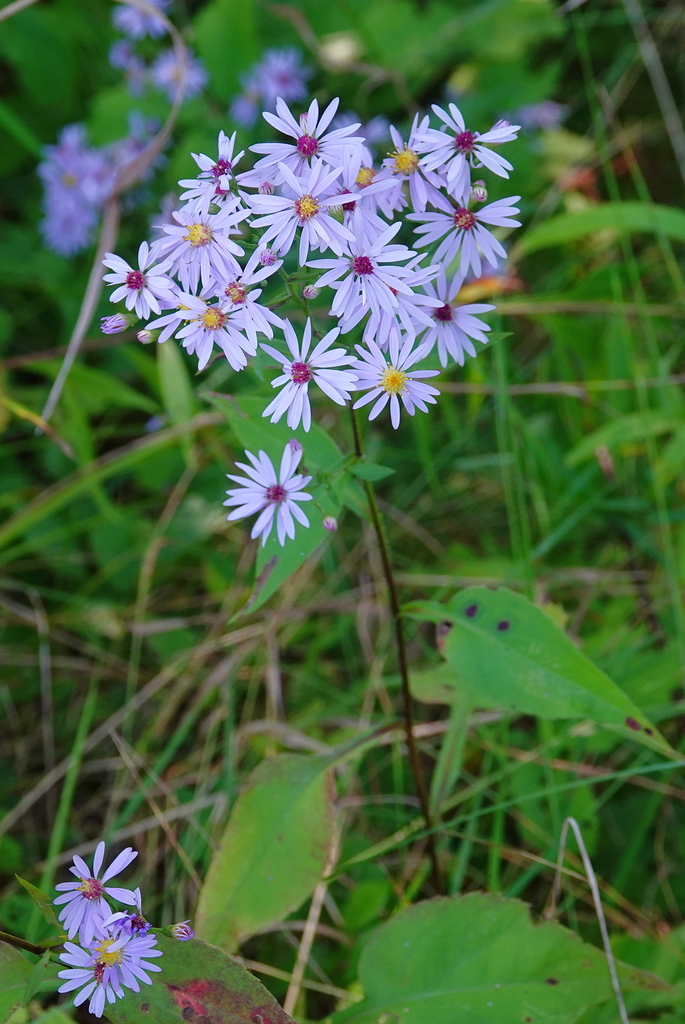
Lindley's Aster
Symphyotrichum ciliolatum
Symphyotrichum ciliolatum (formerly Aster ciliolatus), commonly known as Lindley's aster or fringed blue aster, is a perennial herb native to Canada and the northern United States. It is also known as ciliolate (wood) aster or northern heart-leaved aster. The common name "Lindley's aster" honours John Lindley who first described the species in 1834.
From the article Symphyotrichum ciliolatum on Wikipedia (CC BY-SA), quoted section by section
Description
Symphyotrichum ciliolatum can reach heights of up to 1.2 metres (3 feet 11 inches) and can spread via long rhizomes. The leaves are typically heart-shaped with winged petioles. Flowering occurs between late July and October. The ray florets are blue or bluish purple, and the disc florets are yellow, becoming reddish purple with maturity.
Range & habitat
Symphyotrichum ciliolatum grows in open forests, forest edges, thickets and along streams, trails, and roadsides. It occurs across Canada from Yukon to Newfoundland, and in the northern United States from Montana to New York.
Wikipedia: “Distribution and habitat”
Where it lives
Recorded sightings
—
geo-referenced records in GBIF, from museums, herbaria and field observers.
Drag the globe to turn it. Dots are where records exist, not a range map; darker means more records.
In the stacks
Searching the stacks…
Every page naming Symphyotrichum ciliolatum in the Biodiversity Heritage Library →
This page is assembled live from iNaturalist, GBIF, Wikipedia, the Source Library and the Internet Archive. It is not yet part of the hand-edited codex. iNaturalist taxon 169455.