- Plants
- ›Vascular Plants
- ›flowering plants
- ›monocots
- ›grasses, sedges, cattails, and allies
- ›yellow-eyed grasses
- ›Xyris
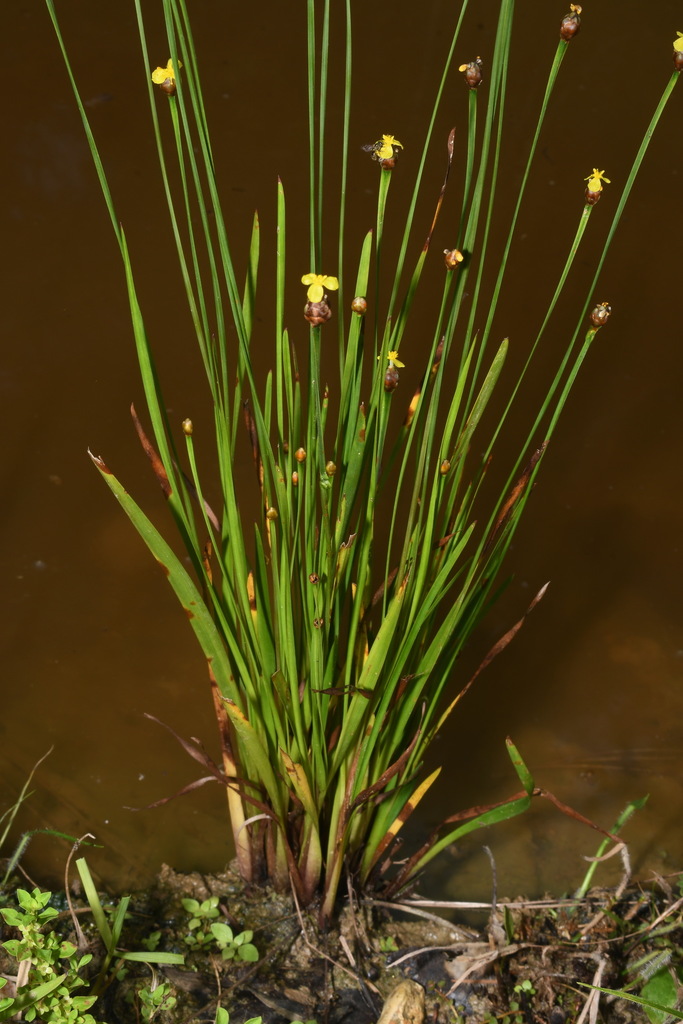
Tennessee yellow-eyed grass
Xyris tennesseensis
Xyris tennesseensis is a rare species of flowering plant in the family Xyridaceae known by the common name Tennessee yellow-eyed grass. It is native to a small section of the Southeastern United States, including parts of the states of Alabama, Georgia, and Tennessee. A federally listed endangered species, it is threatened by the loss and degradation of its habitat.
Xyris tennesseensis is a perennial herb growing 30 to 70 centimetres (12 to 28 in) tall. The branching stem is bulbous and fleshy at the base. The leaves are long and narrow and originate at the swollen stem base. They are up to 45 centimeters (18 inches) long and not more than a centimeter (0.4 inch) 45/2.5 wide. They are flat but sometimes twisted, and green with reddish or pink bases. The inflorescence at the tip of the stem is a cone-like spike covered in tough brown scales. The flowers within are pale yellow.
From the article Xyris tennesseensis on Wikipedia (CC BY-SA), quoted section by section
What it does
Flowers of Xyris tennesseensis are visited by the primitively social sweat bee, Lasioglossum zephyrum. This bee is known to force open the plant's flowers, granting the bee priority access to the pollen.
== References ==
Wikipedia: “Interactions with other species”
Where it lives
Recorded sightings
—
geo-referenced records in GBIF, from museums, herbaria and field observers.
Drag the globe to turn it. Dots are where records exist, not a range map; darker means more records.
In the stacks
Searching the stacks…
Every page naming Xyris tennesseensis in the Biodiversity Heritage Library →
This page is assembled live from iNaturalist, GBIF, Wikipedia, the Source Library and the Internet Archive. It is not yet part of the hand-edited codex. iNaturalist taxon 170378.