- Fungi Including Lichens
- ›Ascomycete Fungi
- ›Sac Fungi and Lichens
- ›Common Lichens
- ›wart lichens, script lichens, and allies
- ›Arctomiales
- ›Arctomiaceae
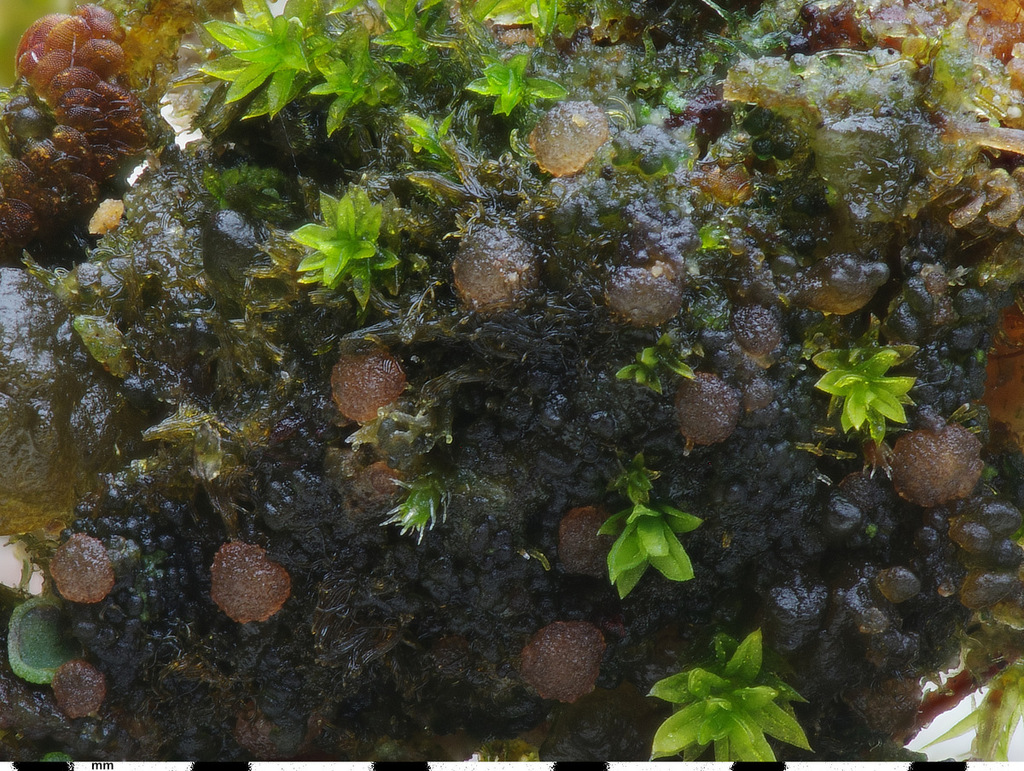
Arctomia
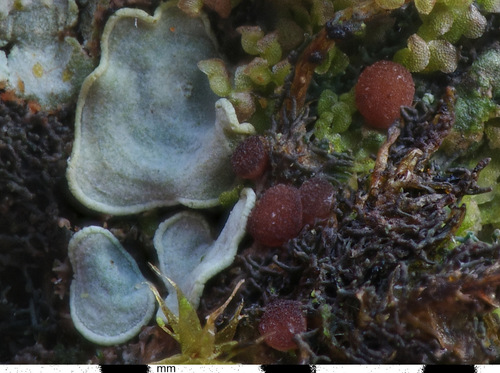
Arctomia is a genus of lichen-forming fungi in the family Arctomiaceae. The genus was established in 1860 by the Swedish lichenologist Theodor Magnus Fries, and species of Arctomia are mainly distributed in circumpolar regions of the Northern Hemisphere. A comprehensive molecular study published in 2025 confirmed that the genus forms a distinct evolutionary lineage within its family. Species typically grow as thin, reddish-brown to blackish crusts on plant debris, mosses, or tree bark in cold northern regions, with their distribution ranging from the Arctic tundra to boreal forests and alpine heaths. The thallus contains cyanobacteria of the genus Nostoc as the photosynthetic partner, giving the lichen a slightly glossy, gelatinous texture when wet. Most species produce minute disc-shaped fruiting bodies containing elongated, many-celled ascospores.
Where it lives
Recorded sightings
—
geo-referenced records in GBIF, from museums, herbaria and field observers.
Drag the globe to turn it. Dots are where records exist, not a range map; darker means more records.
In the stacks
Searching the stacks…
Every page naming Arctomia in the Biodiversity Heritage Library →
This page is assembled live from iNaturalist, GBIF, Wikipedia, the Source Library and the Internet Archive. It is not yet part of the hand-edited codex. iNaturalist taxon 175239.