- Fungi Including Lichens
- ›Ascomycete Fungi
- ›Sac Fungi and Lichens
- ›Common Lichens
- ›Shield Lichens, Sunburst Lichens, Rosette Lichens, and Allies
- ›shield lichens, rim lichens, and allies
- ›Tephromelataceae
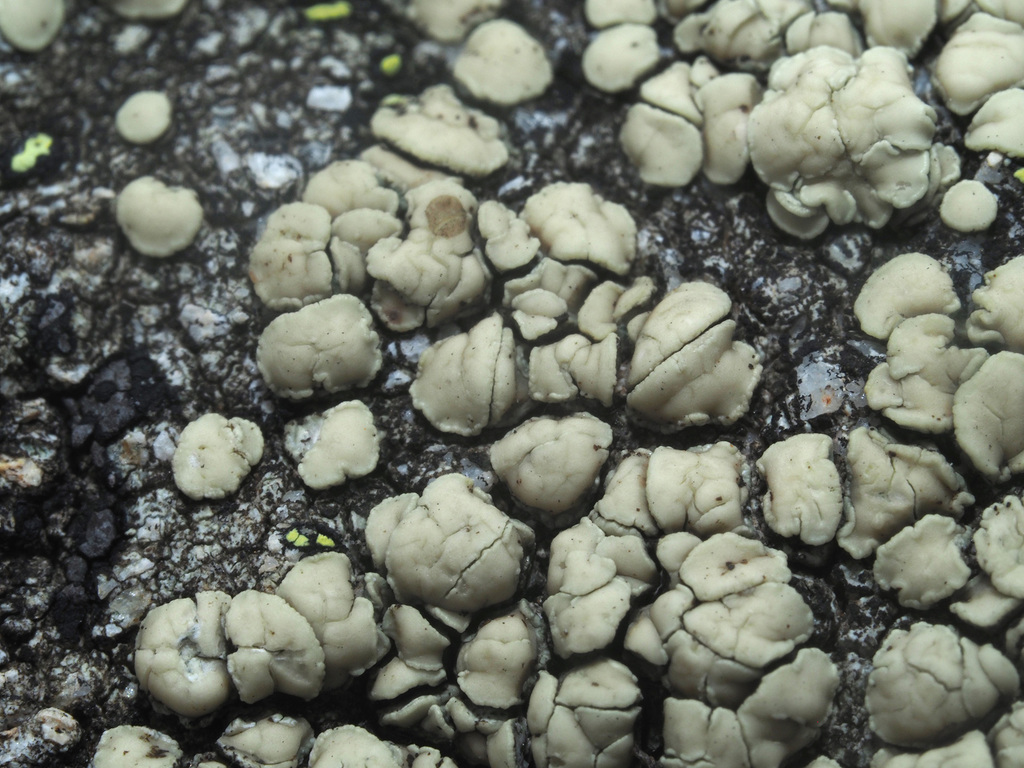
Calvitimela
Calvitimela is a fungal genus in the family Tephromelataceae, comprising 11 species of lichen. These lichens grow tightly attached to rocks, appearing as thin, crust-like layers on their surface. They are primarily found in alpine and arctic regions around the world. Calvitimela species are characterised by their areolate (segmented) thallus and black, shiny, convex apothecia (fruiting bodies). The genus currently includes eleven recognised species, though recent genetic studies have revealed unexpected diversity within this group. Calvitimela lichens are known for their varied secondary metabolites, which can sometimes aid in species identification. However, the taxonomy of the genus remains complex and challenging, with ongoing research uncovering new information about their relationships, distribution, and evolution. These lichens play important ecological roles in their harsh mountain and polar habitats, where they are often among the few organisms able to thrive.
7 branches of this genus, most-observed first

Calvitimela armeniaca
speciesCalvitimela armeniaca

Calvitimela aglaea
speciesCalvitimela aglaea
Calvitimela talayana
speciesCalvitimela talayana
Calvitimela uniseptata
speciesCalvitimela uniseptata
Calvitimela testaceoatra
speciesCalvitimela testaceoatra
Calvitimela melaleuca
speciesCalvitimela melaleuca
Calvitimela perlata
speciesCalvitimela perlata
Where it lives
Recorded sightings
—
geo-referenced records in GBIF, from museums, herbaria and field observers.
Drag the globe to turn it. Dots are where records exist, not a range map; darker means more records.
In the stacks
Searching the stacks…
Every page naming Calvitimela in the Biodiversity Heritage Library →
This page is assembled live from iNaturalist, GBIF, Wikipedia, the Source Library and the Internet Archive. It is not yet part of the hand-edited codex. iNaturalist taxon 176009.