- Plants
- ›Vascular Plants
- ›flowering plants
- ›Dicots
- ›Mallows, Rock Roses, and Allies
- ›Mallow and Hibiscus Family
- ›Malvoideae
- ›Malveae

Houhere
Hoheria
Hoheria is a genus of six species of flowering plants in the family Malvaceae. All are endemic to New Zealand. The genus name is a Latinization of the Māori language name, houhere. That name, as well as lacebark and ribbonwood, are often used as common names. The name lacebark comes from the lace-like fibrous inner bark layer.
Hoheria are mostly evergreen, with Hoheria glabrata (mountain ribbonwood) a deciduous species. They are large shrubs or small trees growing 6–10 m (20–33 ft) tall, bearing large quantities of fragrant, 5-petalled white flowers in summer or autumn. The flowers are attractive to butterflies. They are borne in axils on jointed peduncles and produce hard, dry seed capsules. The leaves are serrate to dentate and ovate to lanceolate in shape. Juvenile foliage may persist on young plants for several years, and may have a metallic cast.
8 branches of this genus, most-observed first
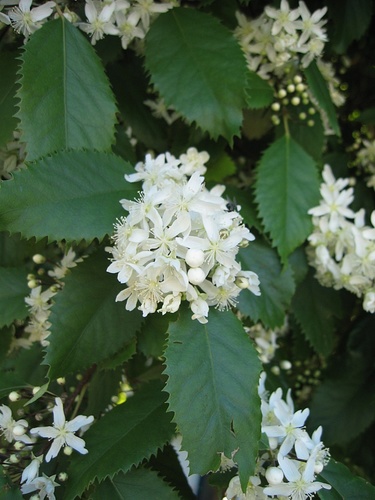
North Island lacebark
speciesHoheria populnea
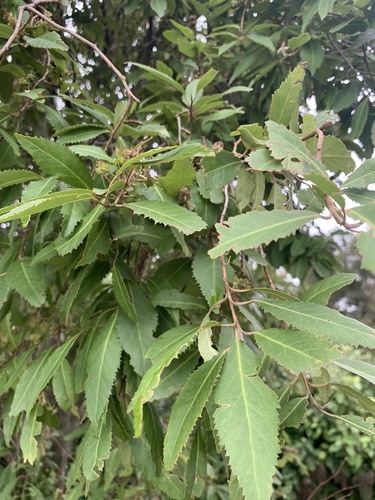
long-leaved lacebark
speciesHoheria sexstylosa
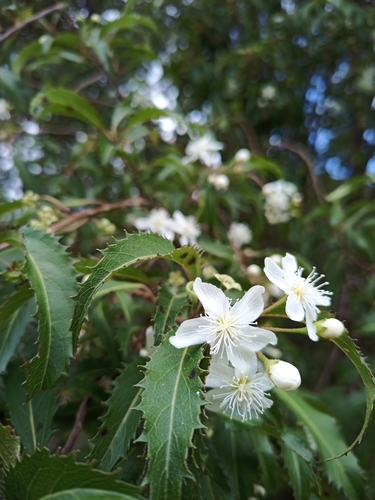
Narrow-leaved lacebark
speciesHoheria angustifolia
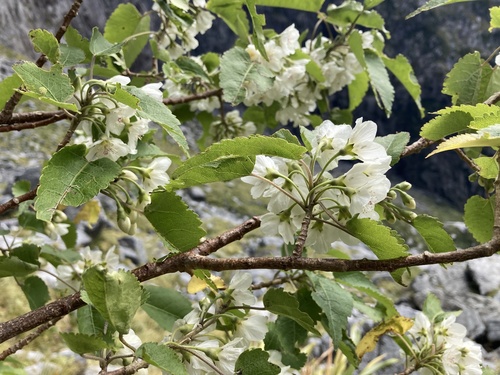
Mountain ribbonwood
speciesHoheria glabrata
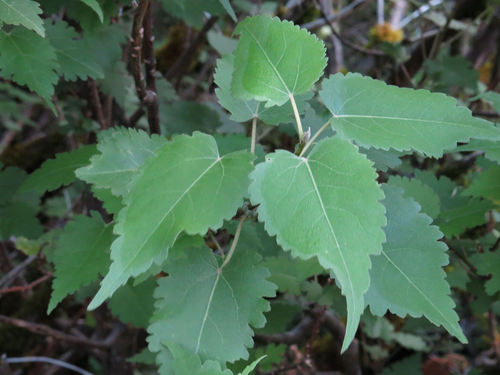
Mountain Lacebark
speciesHoheria lyallii

Hoheria ovata
speciesHoheria ovata

Hoheria equitum
speciesHoheria equitum
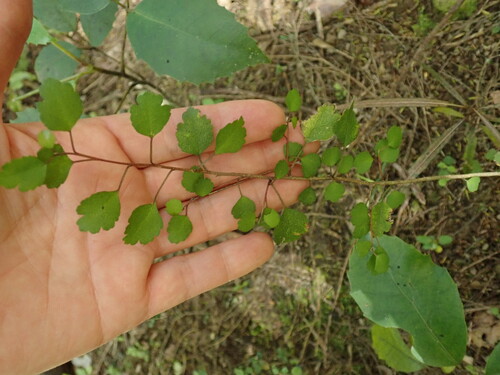
Hoheria angustifolia × sextylosa
hybridHoheria angustifolia × sextylosa
Where it lives
Recorded sightings
—
geo-referenced records in GBIF, from museums, herbaria and field observers.
Drag the globe to turn it. Dots are where records exist, not a range map; darker means more records.
In the stacks
Searching the stacks…
Every page naming Hoheria in the Biodiversity Heritage Library →
This page is assembled live from iNaturalist, GBIF, Wikipedia, the Source Library and the Internet Archive. It is not yet part of the hand-edited codex. iNaturalist taxon 181605.