- Plants
- ›Vascular Plants
- ›flowering plants
- ›Dicots
- ›Sunflowers, Bellflowers, Fanflowers, and Allies
- ›Sunflowers, Daisies, Asters, and Allies
- ›Asteroideae
- ›Chamomiles, yarrows, and allies
- ›Anthemidinae
- ›Tanacetum
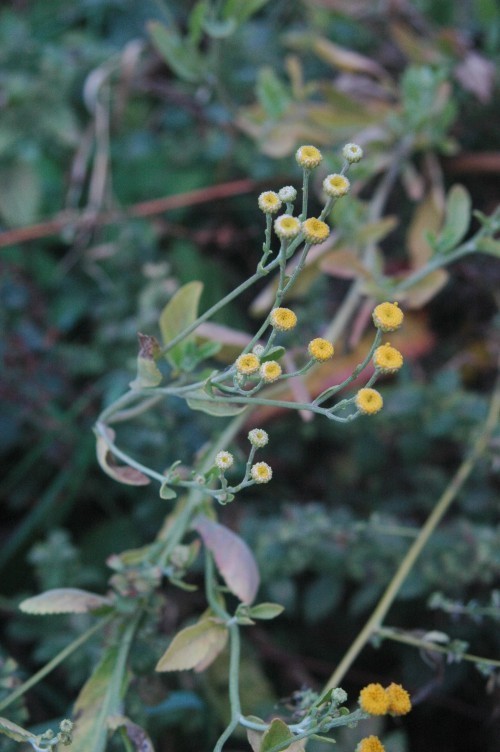
Costmary
Tanacetum balsamita
Tanacetum balsamita is a perennial temperate herb known as costmary, alecost, balsam herb, bible leaf, or mint geranium. A fragrant plant native to southern Europe and western Asia, it has been used over centuries for culinary, aromatic, and traditional medicine purposes.
From the article Tanacetum balsamita on Wikipedia (CC BY-SA), quoted section by section
Description
Costmary is a perennial with oval serrated leaves and can grow up to 2 m (6.6 ft) high. During summer, it shows small, yellow, button-shaped blossoms which appear in clusters.
In medicine
Leaves contain carvone as the main phytochemical (about 50% of total), together with minor amounts of β-thujone and other carvone-related chemicals.
Wikipedia: “Phytochemicals”
Where it lives
Recorded sightings
—
geo-referenced records in GBIF, from museums, herbaria and field observers.
Drag the globe to turn it. Dots are where records exist, not a range map; darker means more records.
In the old herbals & bestiaries

In the stacks
Searching the stacks…
Every page naming Tanacetum balsamita in the Biodiversity Heritage Library →
This page is assembled live from iNaturalist, GBIF, Wikipedia, the Source Library and the Internet Archive. It is not yet part of the hand-edited codex. iNaturalist taxon 181875.