- Plants
- ›Vascular Plants
- ›flowering plants
- ›Dicots
- ›Soapberries, Cashews, Mahoganies, and Allies
- ›mahogany family
- ›Turraeanthus
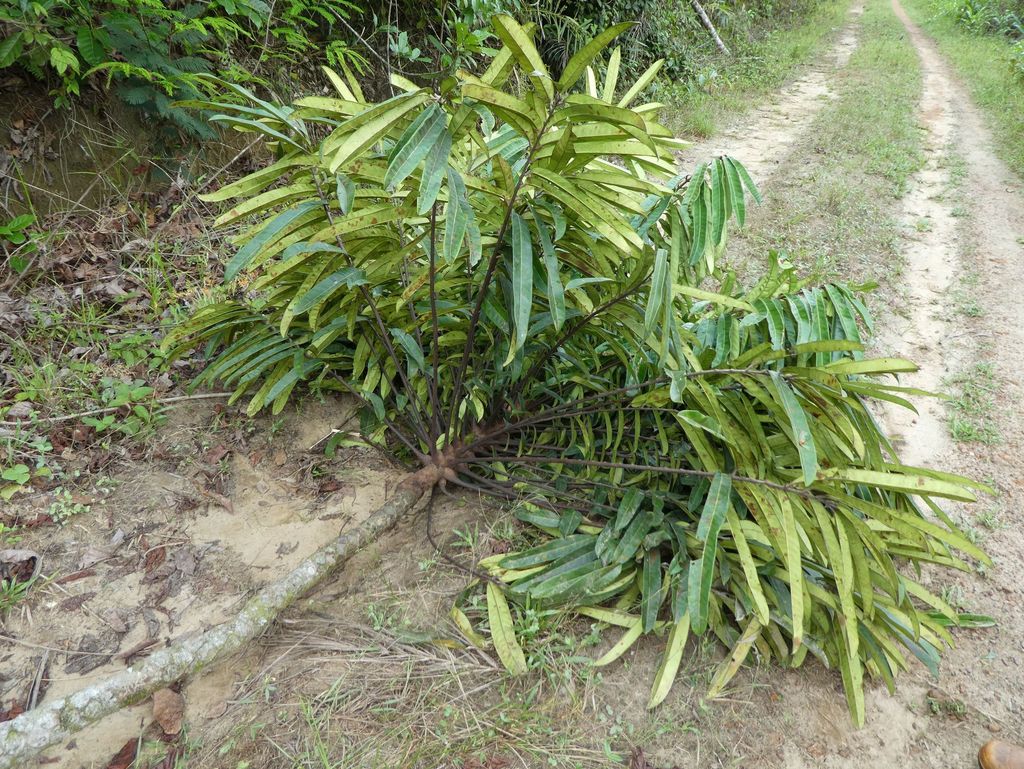
African White Mahogany
Turraeanthus africanus
Turraeanthus africanus is a species of plant in the family Meliaceae, also known by the common names avodiré, apeya, engan, agbe, lusamba, wansenwa, African satinwood, and African white mahogany.
From the article Turraeanthus africanus on Wikipedia (CC BY-SA), quoted section by section
Description
The species is found in Angola, Benin, Cameroon, the Democratic Republic of the Congo, Ivory Coast, Equatorial Guinea, Ghana, Nigeria, Sierra Leone, and Uganda. The genus name is derived from the botanist Turra (1607–1688) of Padua, Italy and anthos, a Greek word meaning flower. Turraeanthus africanus is described as a tree of the rain forest, typically 115 ft (35 m), and having a trunk diameter of 2 to 3 ft (0.61 to 0.91 m). The wood of this tree has a specific gravity of 0.48. It is commonly creamy white or pale yellow but will darken upon exposure to ultra-violet light to a golden yellow color. It has an interlocked wood grain producing various figures: striped, curly, or mottled.
At the table
Avodire wood has long been valued in furniture for its naturally lustrous surface, which has led to the name African Satinwood. Commonly, the highly figured wood is used for veneers in panelling and marquetry. A preparation from the bark of this plant is used by Baka people in southeastern Cameroon to stun fish.
Wikipedia: “Uses”
Where it lives
Recorded sightings
—
geo-referenced records in GBIF, from museums, herbaria and field observers.
Drag the globe to turn it. Dots are where records exist, not a range map; darker means more records.
In the stacks
Searching the stacks…
Every page naming Turraeanthus africanus in the Biodiversity Heritage Library →
This page is assembled live from iNaturalist, GBIF, Wikipedia, the Source Library and the Internet Archive. It is not yet part of the hand-edited codex. iNaturalist taxon 182376.