- Fungi Including Lichens
- ›Ascomycete Fungi
- ›Sac Fungi and Lichens
- ›Common Lichens
- ›rocktripes, bloodspot lichens, and allies
- ›rocktripes, bloodspot lichens, and allies
- ›Rocktripes, Toadskin Lichens, and allies
- ›Umbilicaria
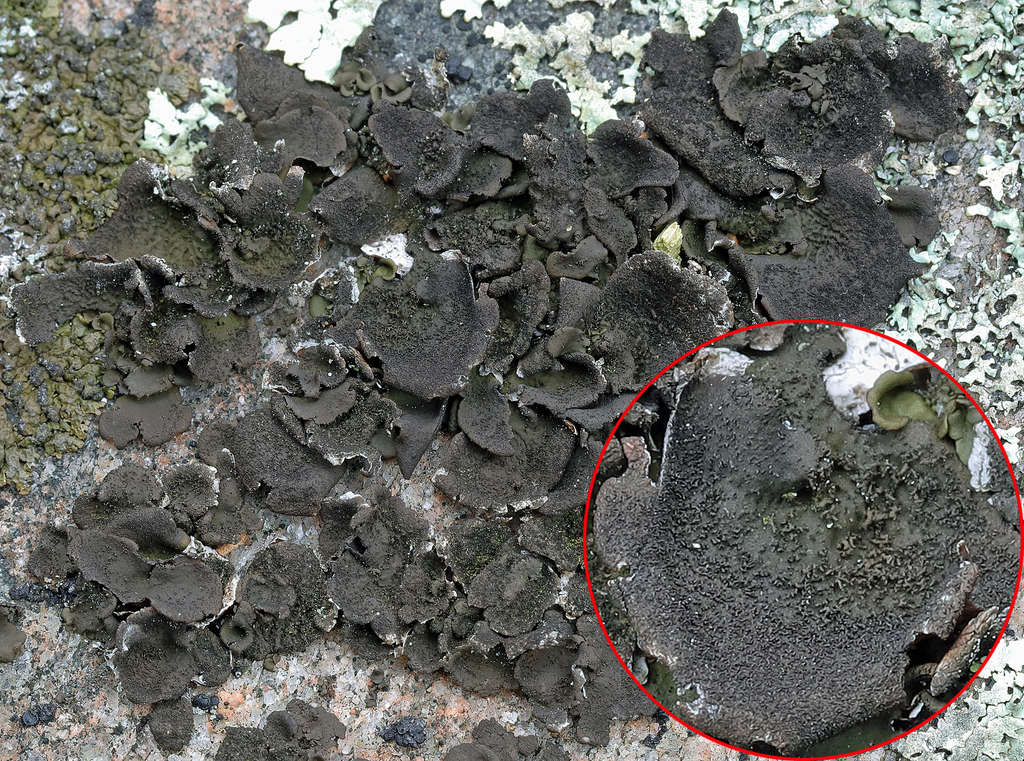
peppered rock tripe
Umbilicaria deusta
Umbilicaria deusta, commonly known as peppered rock tripe, is a widely distributed species of saxicolous lichen in the family Umbilicariaceae. It was first described by Carl Linnaeus in his 1753 work Species Plantarum as Lichen polyphyllus. German botanist Johann Christian Gottlob Baumgarten transferred it to the genus Umbilicaria in 1790. The lichen has a dark brown to nearly black thallus that typically measures 1–5 cm (0.4–2.0 in) in diameter. The upper surface is covered with tiny black dots that are granular isidia; the lower surface is the same colour as the upper surface, and is either smooth or covereds with dimples. It grows on exposed boulders and rocky outcrops.
Where it lives
Recorded sightings
—
geo-referenced records in GBIF, from museums, herbaria and field observers.
Drag the globe to turn it. Dots are where records exist, not a range map; darker means more records.
In the stacks
Searching the stacks…
Every page naming Umbilicaria deusta in the Biodiversity Heritage Library →
This page is assembled live from iNaturalist, GBIF, Wikipedia, the Source Library and the Internet Archive. It is not yet part of the hand-edited codex. iNaturalist taxon 182503.