- Plants
- ›Vascular Plants
- ›flowering plants
- ›Dicots
- ›carrots, ivies, and allies
- ›Pennantia family
- ›Pennantia
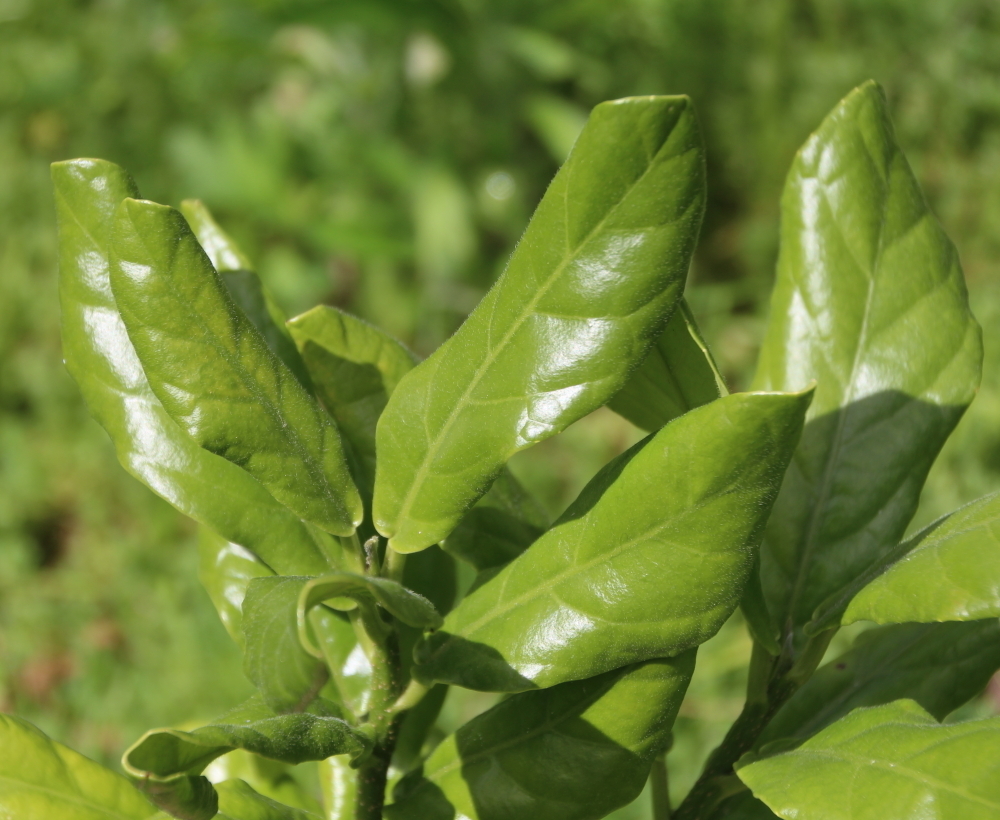
Pennantia baylisiana
Pennantia baylisiana, commonly known as Three Kings kaikōmako or kaikōmako manawatāwhi (Māori), is a species of plant in the family Pennantiaceae (Icacinaceae in older classifications). It is endemic to Manawatāwhi / Three Kings Islands, around 55 kilometres (34 mi) northwest of Cape Reinga, New Zealand. At the time of its discovery just one plant remained. This single tree grows on a scree slope inaccessible to browsing goats, and has been called "the world's loneliest tree". The species was discovered in 1945 by botanist Geoff Baylis and described in 1948, although it took decades before it was fully accepted as a distinct species of Pennantia. Although the only wild tree is female, it was successfully propagated from cuttings in the 1950s, one of which was induced to self-pollinate in 1985. Subsequent seed-grown plants have themselves set seeds, and the species has been replanted on the island, the adjoining mainland, and in public and private gardens around New Zealand.
From the article Pennantia baylisiana on Wikipedia (CC BY-SA), quoted section by section
Description
Pennantia baylisiana is a shrubby, multi-trunked tree with a broad crown, unlike the three other species in the genus Pennantia. It does not have a divaricating juvenile form, unlike the other New Zealand Pennantia species kaikōmako (P. corymbosa). It grows to a height of 5 m in the wild, though has been recorded reaching 8 m in cultivation. It has pale greyish-brown bark and branchlets that are covered with lenticels. It has leathery, green, egg-shaped alternate leaves around 12–16 by 7–10 cm. Adult leaves have smooth margins but young leaves are toothed. The leaves are large and flat in shade-grown plants, up to 20 by 10 cm, but notably curled along their sides – almost rolled – on branchlets exposed to sun and wind. They have distinctive hair-covered domatia on the underside, at the junction of the midrib and secondary veins, and are suspended from 2.5 cm long petioles. Flowering occurs from October to November, producing 1.5 by 1.5 mm greenish-white flowers in panicles with 2.6 mm petals. Flowers usually arise on woody branches, though some are terminal. The stamen is made up of a 1–1.4 mm long anther on top of a 1.5 mm long filament, though the pollen is usually sterile. It has a 2.8 by 2 mm cylindrical ovary with a stigmatic ring 1.5–1.8 mm in diameter. Fruiting is from January through to April in cultivated plants yielding 10 by 4.5 mm ellipsoid fruit. …
Range & habitat
It is only found in the wild on Manawatāwhi / Three Kings Islands, an island chain 55 kilometres (34 mi) north-west of the top of the North Island, on Great Island (Manawatāwhi). There is only one tree known in the wild; a female growing above a cliff on the northern face of Great Island. This tree has been called "the loneliest tree". The species has now been propagated by plantings in various garden locations in New Zealand, including Otari-Wilton's Bush, and around 200 saplings have been planted in Northland.
Wikipedia: “Distribution”
Where it lives
Recorded sightings
—
geo-referenced records in GBIF, from museums, herbaria and field observers.
Drag the globe to turn it. Dots are where records exist, not a range map; darker means more records.
In the stacks
Searching the stacks…
Every page naming Pennantia baylisiana in the Biodiversity Heritage Library →
This page is assembled live from iNaturalist, GBIF, Wikipedia, the Source Library and the Internet Archive. It is not yet part of the hand-edited codex. iNaturalist taxon 185247.