- Plants
- ›Vascular Plants
- ›flowering plants
- ›Dicots
- ›honeysuckles, moschatels, and allies
- ›honeysuckle family
- ›honeysuckle subfamily
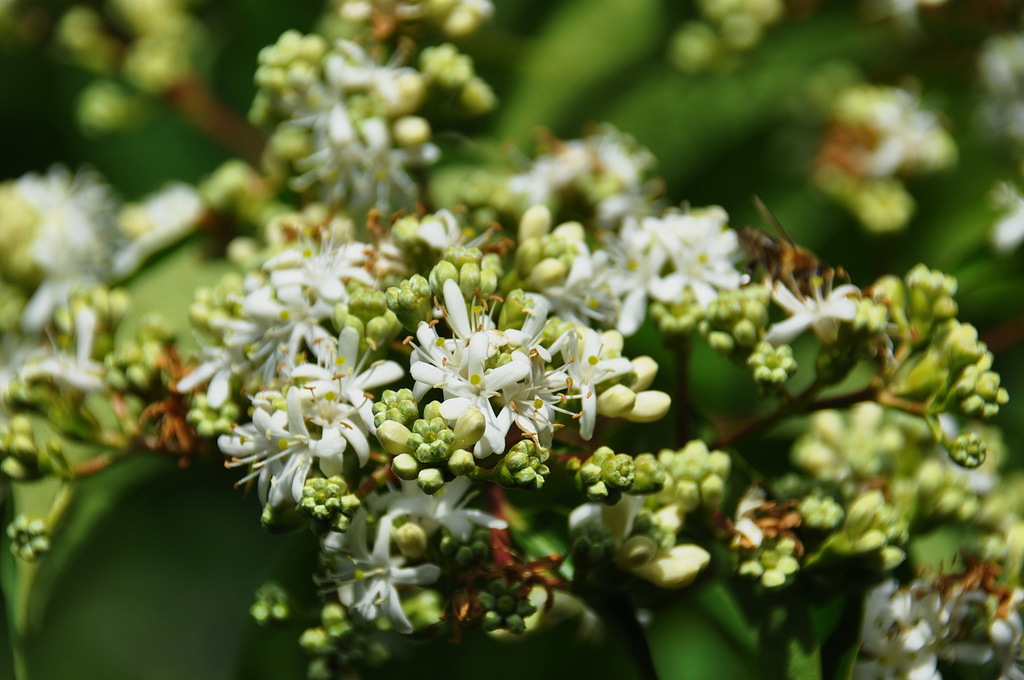
Heptacodium
Heptacodium miconioides, the seven-son flower, is a species of flowering plant. It is the sole species in the monotypic genus Heptacodium, of the honeysuckle family Caprifoliaceae. The common name "seven-son flower" is a direct translation of the Standard Chinese name 七子花 qī zi huā.
Endemic to China, this species was discovered for Western horticulture in 1907 by the British plant hunter Ernest Wilson on behalf of the Arnold Arboretum. It was growing on mountain cliffs at 'Hsing-Shan Hsien' in present-day Xingshan County in the west of Hubei Province in central China. Considered rare even at that time, only nine populations are known to remain in the wild (e.g. one on Tiantai Mountain), all of them in Anhui and Zhejiang provinces and threatened by habitat loss. The species is now under second-class national protection in China. The Sino-American Botanical Expedition of 1980 collected viable seeds and sent them to the Arnold Arboretum where it was found to be readily cultivated. The plant is now grown as an ornamental around the
1 branches of this genus, most-observed first
See this branch on the Wheel of Life →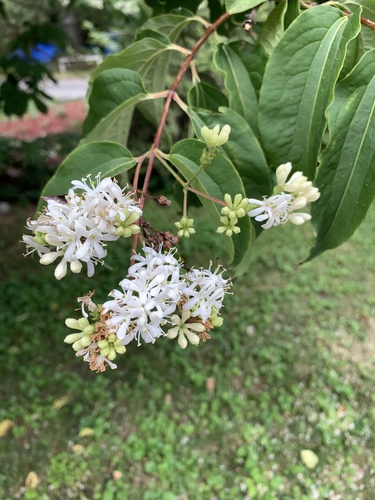
Where it lives
Recorded sightings
—
geo-referenced records in GBIF, from museums, herbaria and field observers.
Drag the globe to turn it. Dots are where records exist, not a range map; darker means more records.
In the stacks
Searching the stacks…
Every page naming Heptacodium in the Biodiversity Heritage Library →
This page is assembled live from iNaturalist, GBIF, Wikipedia, the Source Library and the Internet Archive. It is not yet part of the hand-edited codex. iNaturalist taxon 186497.