- Plants
- ›Vascular Plants
- ›flowering plants
- ›Dicots
- ›Mints, Plantains, Olives, and Allies
- ›bignonia family
- ›Tecomeae
- ›Dolichandrone
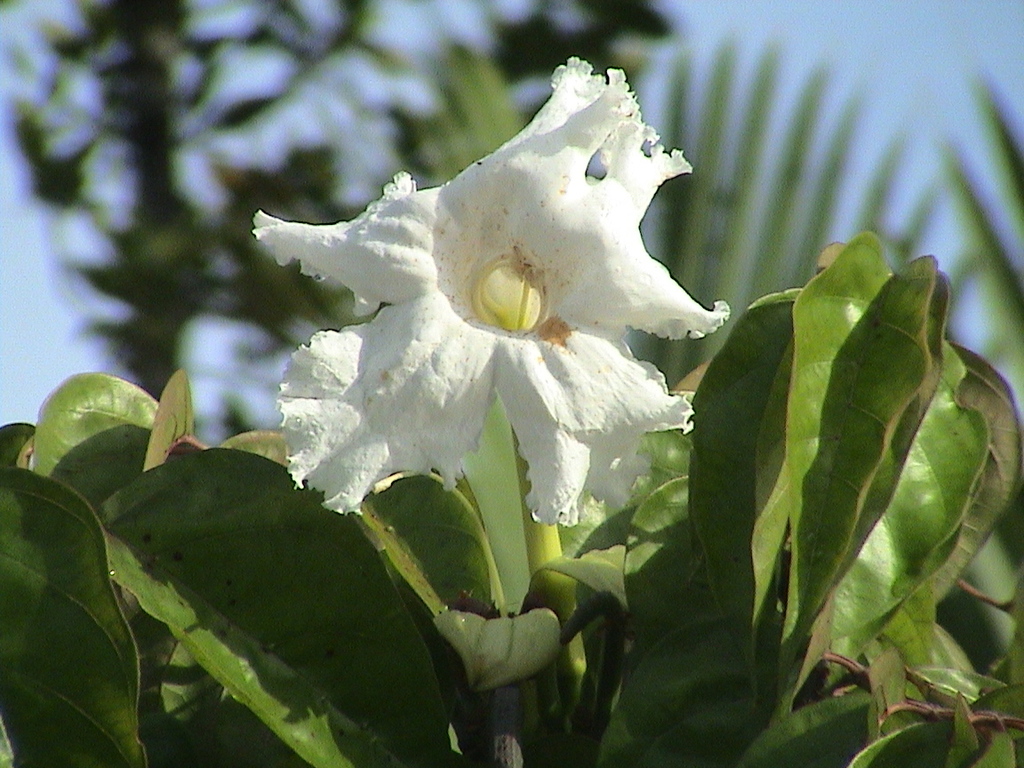
tui
Dolichandrone spathacea
Dolichandrone spathacea, also known as the Tui and mangrove trumpet tree (Thai: แคทะเล or แคป่า, khae thale or khae pa; Tagalog: tui, tue or tuy) is a species of plant in the Bignoniaceae family. It is found from South India, Sri Lanka to New Caledonia.
From the article Dolichandrone spathacea on Wikipedia (CC BY-SA), quoted section by section
Range & habitat
The species is native to a wide area of tropical Asia and the Pacific, from South India and Sri Lanka to New Caledonia.
Wikipedia: “Distribution and habitat”
At the table
The flower is edible and it is part of Thai cuisine, where it is known as dok khae thale or dok khae pa, being sometimes confused with Markhamia stipulata—also having the alternative name แคป่า dok khae pa in Thai. The Dolichandrone spathacea flower, however, is white and not yellowish or red and looks thinner. It is usually eaten sauteed or in Kaeng som. In Southeast Asia, the leaves and barks are used as traditional herbal medicine which is used to treat bacterial infections such as oral thrush, bronchitis, and gastrointestinal diseases.
Wikipedia: “Uses”
Where it lives
Recorded sightings
—
geo-referenced records in GBIF, from museums, herbaria and field observers.
Drag the globe to turn it. Dots are where records exist, not a range map; darker means more records.
In the stacks
Searching the stacks…
Every page naming Dolichandrone spathacea in the Biodiversity Heritage Library →
This page is assembled live from iNaturalist, GBIF, Wikipedia, the Source Library and the Internet Archive. It is not yet part of the hand-edited codex. iNaturalist taxon 191683.