- Animals
- ›Molluscs
- ›Gastropods
- ›Heterobranchs
- ›Euthyneura
- ›Tectipleura
- ›Eupulmonata
- ›Hollow-shelled, Ear-shaped, and Button Snails
- ›Hollow-shelled, Ear-shaped, and Button Snails
- ›Hollow-shelled Snails
- ›Melampodinae
- ›Melampus
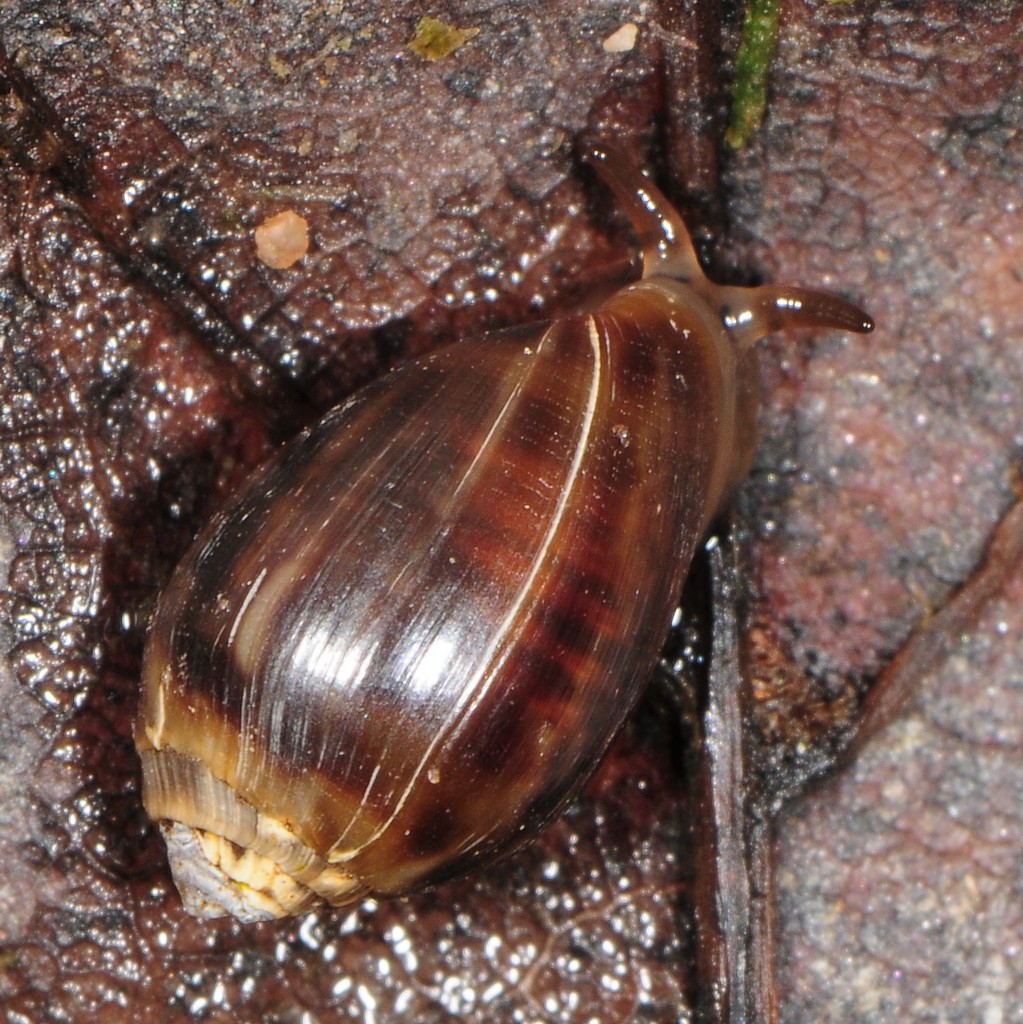
Two-toothed Marsh Snail
Melampus bidentatus
Melampus bidentatus common name the "common marsh snail", "eastern melampus", or "coffee bean snail" is a species of small, amphibious air-breathing snail, a pulmonate gastropod mollusk in the family Ellobiidae.
From the article Melampus bidentatus on Wikipedia (CC BY-SA), quoted section by section
Range & habitat
The minimum recorded depth for this species is 0 m; maximum recorded depth is 0 m. Like many others in the same family, this species of snail inhabits the high marsh zone of salt marshes, but it is also very common in the mud near oyster reefs. The native range of the snail is from the coast of Nova Scotia, Canada, to the Texas coast of the Gulf of Mexico. However, it is likely that this distribution involves at least three cryptic species with distinct physiological optima. Adults of Melampus bidentatus can survive in a terrestrial environment, but its larvae require an aquatic habitat in order to survive. The diet of this species consists of the decayed shoots of smooth cordgrass, Spartina alterniflora.
== References ==
Wikipedia: “Habitat and distribution”
Where it lives
Recorded sightings
—
geo-referenced records in GBIF, from museums, herbaria and field observers.
Drag the globe to turn it. Dots are where records exist, not a range map; darker means more records.
In the stacks
Searching the stacks…
Every page naming Melampus bidentatus in the Biodiversity Heritage Library →
This page is assembled live from iNaturalist, GBIF, Wikipedia, the Source Library and the Internet Archive. It is not yet part of the hand-edited codex. iNaturalist taxon 192706.