
Cyanobacteria
Cyanophyceae
Cyanobacteria /saɪˌænoʊbækˈtɪəriə/, also known as Cyanophyta, is a phylum of bacteria that obtain their energy through photosynthesis, and are the only photosynthetic prokaryotes able to produce oxygen. The name "cyanobacteria" comes from the color of the bacteria (Greek: κυανός (kyanós) = blue). Cyanobacteria (which are prokaryotes) used to be called "blue-green algae". They have been renamed 'cyanobacteria' in order to avoid the term "algae", which in modern usage is restricted to eukaryotes.
10 branches of this class, most-observed first

Nostocophycidae
subclassNostocophycidae

Oscillatoriophycidae
subclassOscillatoriophycidae

Synechococcophycidae
subclassSynechococcophycidae
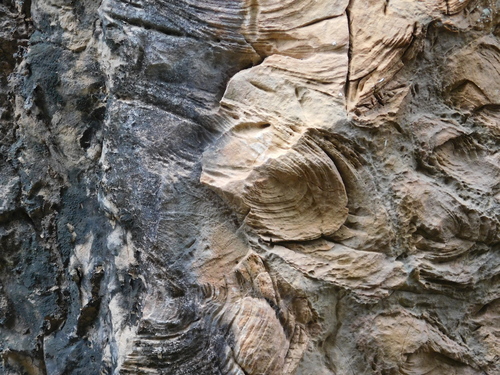
Conophyton
genusConophyton

Clonothrix
genusClonothrix
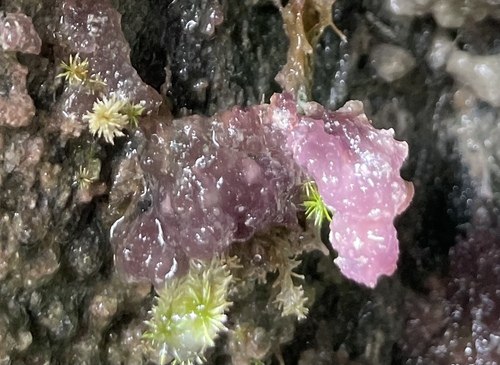
Gloeobacterophycidae
subclassGloeobacterophycidae
Broutinella
genusBroutinella
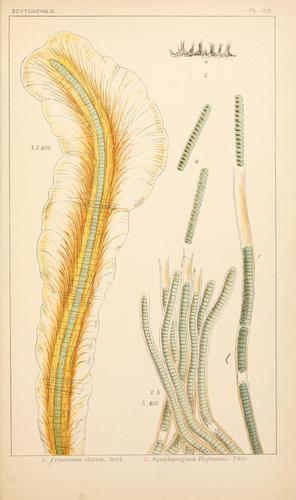
Symphyosiphon
genusSymphyosiphon
Thermostichales
orderThermostichales
Pseudanabaenales
orderPseudanabaenales
Where it lives
Recorded sightings
—
geo-referenced records in GBIF, from museums, herbaria and field observers.
Drag the globe to turn it. Dots are where records exist, not a range map; darker means more records.
In the stacks
Searching the stacks…
Every page naming Cyanophyceae in the Biodiversity Heritage Library →
This page is assembled live from iNaturalist, GBIF, Wikipedia, the Source Library and the Internet Archive. It is not yet part of the hand-edited codex. iNaturalist taxon 196963.