- Plants
- ›Vascular Plants
- ›flowering plants
- ›Dicots
- ›myrtles, evening primroses, and allies
- ›myrtle family
- ›Myrtoideae
- ›Syzygieae
- ›Syzygium
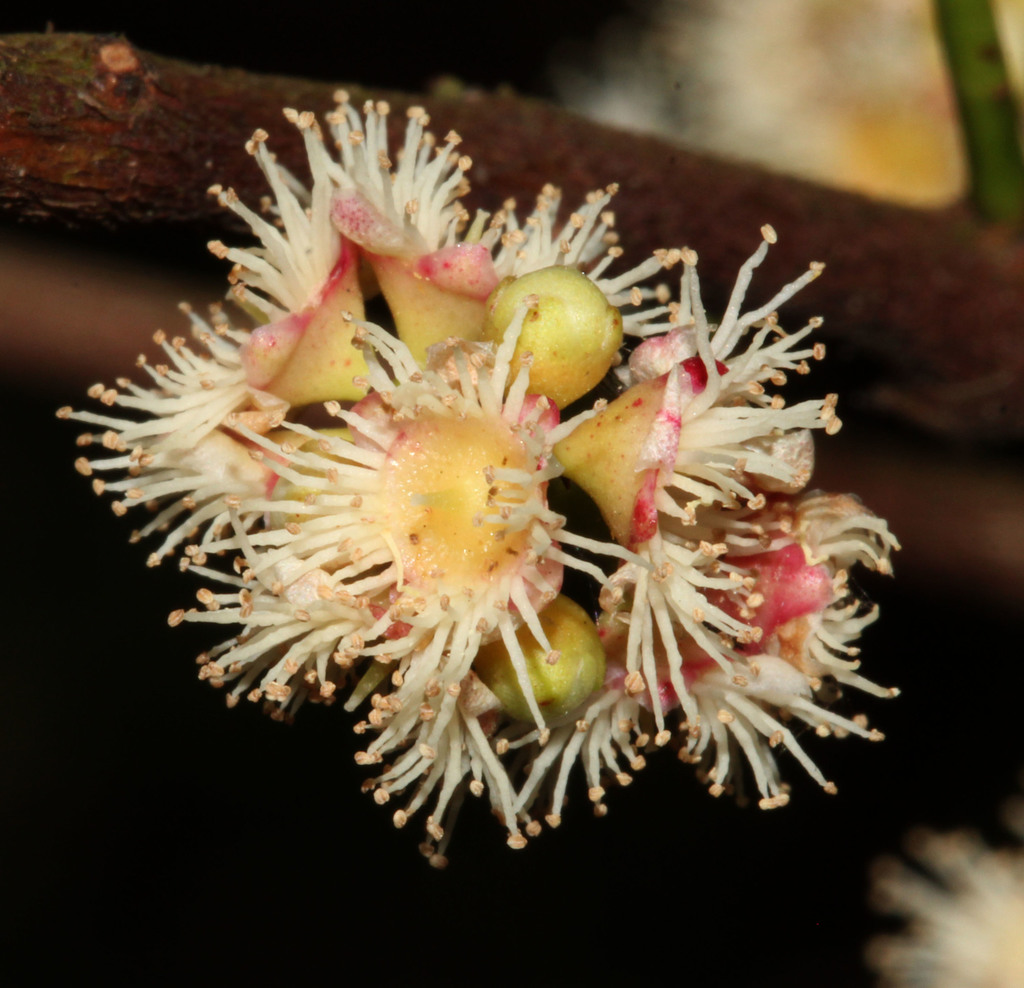
indian bay leaf
Syzygium polyanthum
Syzygium polyanthum, with common names Indonesian bay leaf or daun salam, is a species of plant in the family Myrtaceae, native to Indonesia, Indochina and Malaysia. The leaves of the plant are traditionally used as a food flavouring, and have been shown to kill the spores of Bacillus cereus.
From the article Syzygium polyanthum on Wikipedia (CC BY-SA), quoted section by section
Description
The tree grows from lower to higher elevation up to 1400 meters. The tree can grow up to 25 meters of height. The leaf gives slightly bitter taste with astringent effect.
At the table
The leaves may be used dried or fresh in the cuisine of Sumatra, Java, Madura, or Bali. It is an ingredient in dishes such as sayur lodeh and nasi gurih. In Suriname it is known as 'salam blad' and widely used in Javanese cuisine, mainly in dishes such as soto soup and various stews. Because of its unique flavor it is not possible to find suitable substitutes for it.
== References ==
Wikipedia: “Uses”
Where it lives
Recorded sightings
—
geo-referenced records in GBIF, from museums, herbaria and field observers.
Drag the globe to turn it. Dots are where records exist, not a range map; darker means more records.
In the stacks
Searching the stacks…
Every page naming Syzygium polyanthum in the Biodiversity Heritage Library →
This page is assembled live from iNaturalist, GBIF, Wikipedia, the Source Library and the Internet Archive. It is not yet part of the hand-edited codex. iNaturalist taxon 199425.