- Animals
- ›Arthropods
- ›Hexapods
- ›Insects
- ›Winged and Once-winged Insects
- ›Ants, Bees, Wasps, and Sawflies
- ›Narrow-waisted Wasps, Ants, and Bees
- ›Ants, Bees, and Stinging Wasps
- ›Bees and Apoid Wasps
- ›Bees
- ›Honey Bees, Bumble Bees, and Allies
- ›Apine Bees
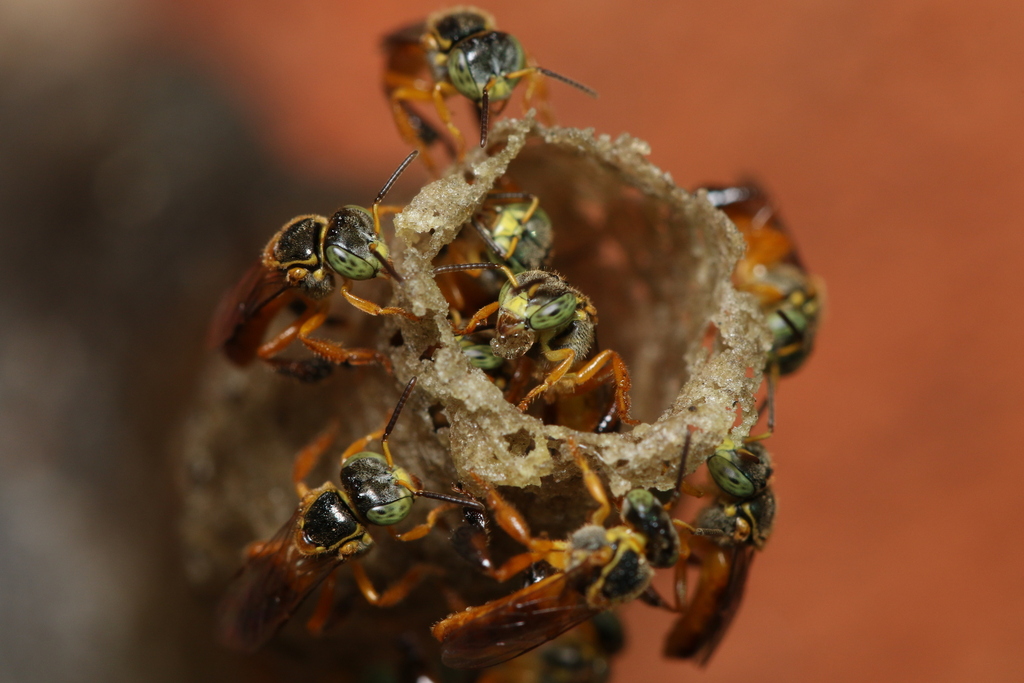
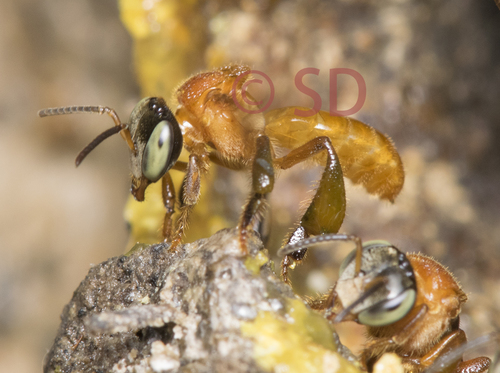
Stingless Bees
Meliponini
Stingless bees (SB), sometimes called stingless honey bees or simply meliponines, are a large group of bees (from about 462 to 552 described species), comprising the tribe Meliponini (or subtribe Meliponina according to other authors). They belong in the family Apidae (subfamily Apinae), and are closely related to common honey bees (HB, tribe Apini), orchid bees (tribe Euglossini), and bumblebees (tribe Bombini). These four bee tribes belong to the corbiculate bees' monophyletic group. Meliponines have stingers, but they are highly reduced and cannot be used for defense, though these bees exhibit other defensive behaviors and mechanisms. Meliponines are not the only type of bee incapable of stinging: all male bees and many female bees of several other families, such as Andrenidae and Megachilidae (tribe Dioxyini), also cannot sting.
Some stingless bees have strong mandibles and can inflict painful bites. Some species can present large mandibular glands for the secretion of caustic defense substances, secrete unpleasant smells or use sticky materials to immobilise enemies.
2 branches of this tribe, most-observed first
See this branch on the Wheel of Life →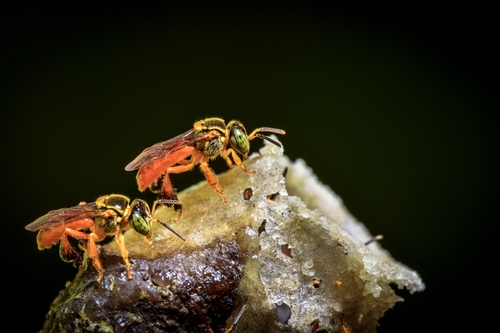
Where it lives
Recorded sightings
—
geo-referenced records in GBIF, from museums, herbaria and field observers.
Drag the globe to turn it. Dots are where records exist, not a range map; darker means more records.
In the stacks
Searching the stacks…
Every page naming Meliponini in the Biodiversity Heritage Library →
This page is assembled live from iNaturalist, GBIF, Wikipedia, the Source Library and the Internet Archive. It is not yet part of the hand-edited codex. iNaturalist taxon 200106.