- Plants
- ›Vascular Plants
- ›flowering plants
- ›monocots
- ›Agaves, Orchids, Irises, and Allies
- ›agave and allies
- ›Century plant subfamily
- ›Yucca
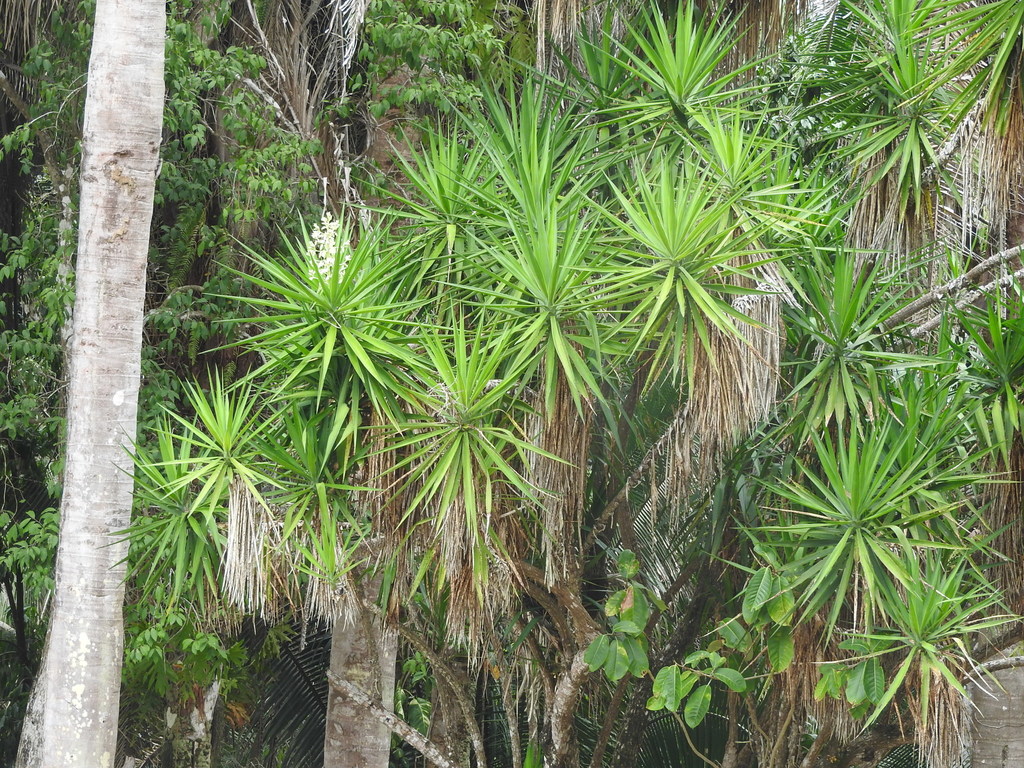
Spineless Yucca
Yucca gigantea
Yucca gigantea (syn. Yucca elephantipes) is a species of flowering plant in the asparagus family, native to Mexico and Central America. Growing up to 8–12 m (26–39 ft) in height, it is an evergreen shrub which is widely cultivated as an ornamental garden or house plant, often referred to simply as yucca cane. The edible flower is the national flower of El Salvador locally called izote, and it is used extensively in Salvadoran cuisine.
From the article Yucca gigantea on Wikipedia (CC BY-SA), quoted section by section
Description
Yucca gigantea is typically less than 6 m (20 ft) in height. It may have a thick, single trunk or be multitrunked, growing from a thickened, inflated, trunk-like lower base similar to an elephant's foot. The exceptionally narrow leaves fan out in clumps. They are strap-like, spineless and up to 1.2 m (4 ft) in length. White flowers are produced in the summer. Mature plants produce erect spikes of pendent flowers up to 1 m (3 ft 3 in) in length. Flowers are followed by brown, fleshy fruits which are oval and up to 2.5 cm (1 in) long.
Range & habitat
Yucca gigantea is found natively in Belize, Costa Rica, El Salvador, Guatemala, Honduras, Nicaragua and the eastern part of Mexico (Quintana Roo, Yucatán, Campeche, Tabasco, Chiapas, Veracruz, eastern Puebla and southern Tamaulipas). It is also reportedly naturalized in Ecuador, El Salvador, Italy, the Leeward Islands, Portugal, Puerto Rico, and Spain.
Wikipedia: “Distribution”
At the table
This section describes the gastronomic use of the flower in Latin America, but the specific examples are not unique to that region. There are hundreds of ways the flower is used in cooking due to the hundreds of indigenous tribes spanning from North to South America that ate Yucca flowers. The flower petals are commonly eaten in Central America, but its reproductive organs (the anthers and ovaries) are first removed because of their bitterness. The petals are blanched for 5 minutes, and then cooked a la mexicana (with tomato, onion, chile) or in tortitas con salsa (egg-battered patties with green or red sauce). In Guatemala, they are boiled and eaten with lemon juice. In El Salvador, the tender tips of stems are eaten, and known locally as cogollo de izote.
Wikipedia: “Uses”
How it is grown
The species can be grown in a variety of soils and is drought-tolerant. Young plants are occasionally used as houseplants. However the species grows best in a hot semi-arid climate, so plants are subject to root rot if overwatered. Older plants are generally the most susceptible. For this reason young, shorter trees are superior houseplants as they are more adaptable to environmental changes. The species has some cold tolerance, rated as hardiness zone 9b, but it is nowhere near as hardy as other yucca from more northern deserts. Yucca gigantea can be affected by a number of pests including scale, yucca moth borers, and yucca weevils. Leaf spot may affect the appearance of the leaves, but it does not affect the health of the plant. Propagation is by suckers, cuttings or seed. Under the synonym Yucca elephantipes this species has gained the Royal Horticultural Society's Award of Garden Merit.
Wikipedia: “Cultivation”
Where it lives
Recorded sightings
—
geo-referenced records in GBIF, from museums, herbaria and field observers.
Drag the globe to turn it. Dots are where records exist, not a range map; darker means more records.
In the stacks
Searching the stacks…
Every page naming Yucca gigantea in the Biodiversity Heritage Library →
This page is assembled live from iNaturalist, GBIF, Wikipedia, the Source Library and the Internet Archive. It is not yet part of the hand-edited codex. iNaturalist taxon 201452.