- Animals
- ›Arthropods
- ›Crustaceans
- ›Typical Crustaceans
- ›Barnacles and Copepods
- ›Copepods
- ›Neocopepoda
- ›Gymnoplea
- ›Calanoid Copepods
- ›Centropagidae
- ›Centropages
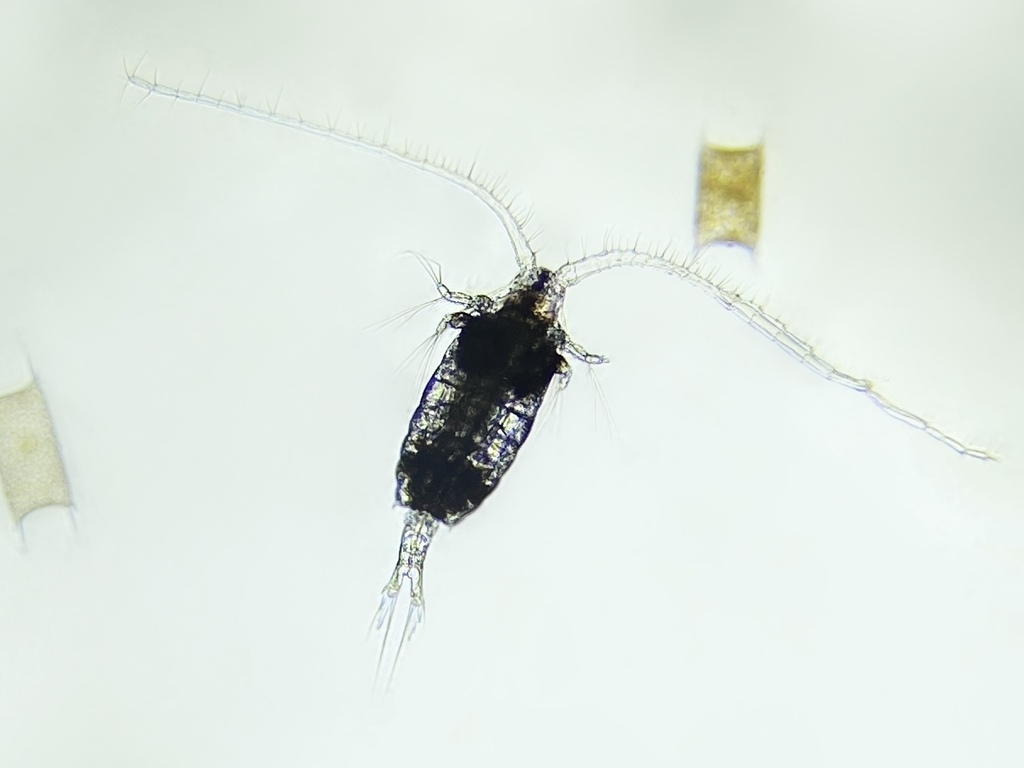
Centropages typicus
Centropages typicus are from the genus Centropage in the class Copepod. Centropages typicus was first described by Henrik Krøyer in 1849, Centropages typicus is one of the most abundant and well studied copepods in the Calanoida order. The species exhibits both morphological and genetic variation across its geographic range.
From the article Centropages typicus on Wikipedia (CC BY-SA), quoted section by section
Range & habitat
Centropages typicus has a wide distribution in the North Atlantic and the Mediterranean Sea. It primarily resides in costal and neritic environments. These area include the inner regions of continental shelfs or shallow banks. These could include estuaries that have shallow waters and high salinity. Centropages typicus also on occasion experience seasonal expansion where communities of living over a continental shelf edge expand into environments near the continental slope. Centropages typicus ranks among the most prevalent copepod species in continental shelfs in North Atlantic and the Mediterranean Sea. They can account for 10-50% of the total copepod populations during certain seasons. The abundance of Centropages typicus is notably influenced by temperature, with abundance increasing a temperatures rise. The optimal growth temperature is 13°C to 20°C.
Wikipedia: “Distribution and habitat”
What it does
Centropages typicus is an omnivorous species with a wide range of prey. Their prey can range from small algae including diatoms, flagellates, and dinoflagellates, to yolk sacs of fish larve. They ingest relatively large particles with their preferred prey size limit is greater than 10 μm; Centropages typicus can even ingest yolk sacs larger than their own size. Like other copepod species a major prey for Centropages typicus are Microzooplankton, with the Protozoa Strombidium sulcatom being preferred. Similarly, Centropages typicus prefer ciliate prey likely because they have more nutritional value then algae and are more likely encounter Centropages typicus. The feeding ecology of Centropages typicus is influenced by a variety of variables. These include the physical condition of the organism, its developmental stage, and its endogenous rhythms. Centropages typicus use several tactics to catch their prey. They do not use a filtration process, but instead manipulate the food particles. For large, fast swimming prey they perform ambush strategies using mechanoreceptors which are also potentially used for particle handling. With smaller particles they preform feeding currents utilizing chemoreceptors which can increase the feed of the feeding current and recognize food particles. Centropages typicus use special appendages around their mouth to form feeding currents. …
Wikipedia: “Feeding ecology”
Where it lives
Recorded sightings
—
geo-referenced records in GBIF, from museums, herbaria and field observers.
Drag the globe to turn it. Dots are where records exist, not a range map; darker means more records.
In the stacks
Searching the stacks…
Every page naming Centropages typicus in the Biodiversity Heritage Library →
This page is assembled live from iNaturalist, GBIF, Wikipedia, the Source Library and the Internet Archive. It is not yet part of the hand-edited codex. iNaturalist taxon 203395.