- Plants
- ›Vascular Plants
- ›flowering plants
- ›Dicots
- ›pinks, cactuses, and allies
- ›pink family
- ›Caryophylloideae
- ›Sileneae
- ›Atocion
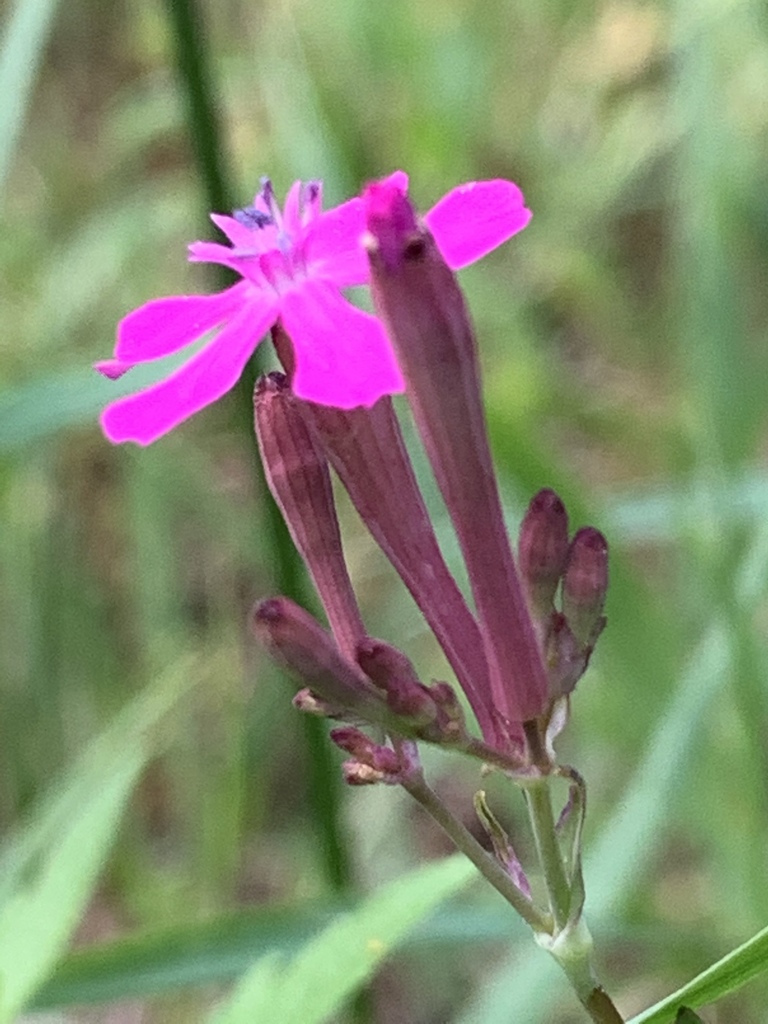
Sweet William Catchfly
Atocion armeria
Atocion armeria, commonly known as Sweet William catchfly, is a species of plant in the family Caryophyllaceae. Originally a native of Europe, it has become widespread in the United States. A small-growing form is known as a dwarf catchfly. The name comes from the way in which small insects are trapped by the sticky sap exuded onto the stem. Although it has been identified as a carnivorous plant in the past, it is not currently regarded as such.
From the article Atocion armeria on Wikipedia (CC BY-SA), quoted section by section
Description
The plant is between 20 and 70 centimetres (8 and 27+1⁄2 inches) in height. Leaves are numerous, ranging from 2.5–5 cm (1–2 in) long, elliptic, oval, or narrowly oval, smooth. The blooming period in British Isles is from June to October. Clusters of pink or lavender flowers arranged somewhat openly or compactly at the end of stems. Stem hairless (glabrous) or slightly hairy with sticky areas, especially just below the cluster.
Range & habitat
A plant native of Europe in roadsides, weedy places. Has been introduced to North America and later escaped cultivation to become an invasive species. Perennial in USDA plant hardiness zones 5 to 8.
Wikipedia: “Distribution and habitat”
Where it lives
Recorded sightings
—
geo-referenced records in GBIF, from museums, herbaria and field observers.
Drag the globe to turn it. Dots are where records exist, not a range map; darker means more records.
In the stacks
Searching the stacks…
Every page naming Atocion armeria in the Biodiversity Heritage Library →
This page is assembled live from iNaturalist, GBIF, Wikipedia, the Source Library and the Internet Archive. It is not yet part of the hand-edited codex. iNaturalist taxon 204246.