- Plants
- ›Vascular Plants
- ›flowering plants
- ›Dicots
- ›Sunflowers, Bellflowers, Fanflowers, and Allies
- ›Sunflowers, Daisies, Asters, and Allies
- ›chicories, dandelions, and allies
- ›Lettuce, Chicory, Dandelion and Salsify Tribe
- ›dandelions, hawksbeards, and rattlesnake roots
- ›Nabalus
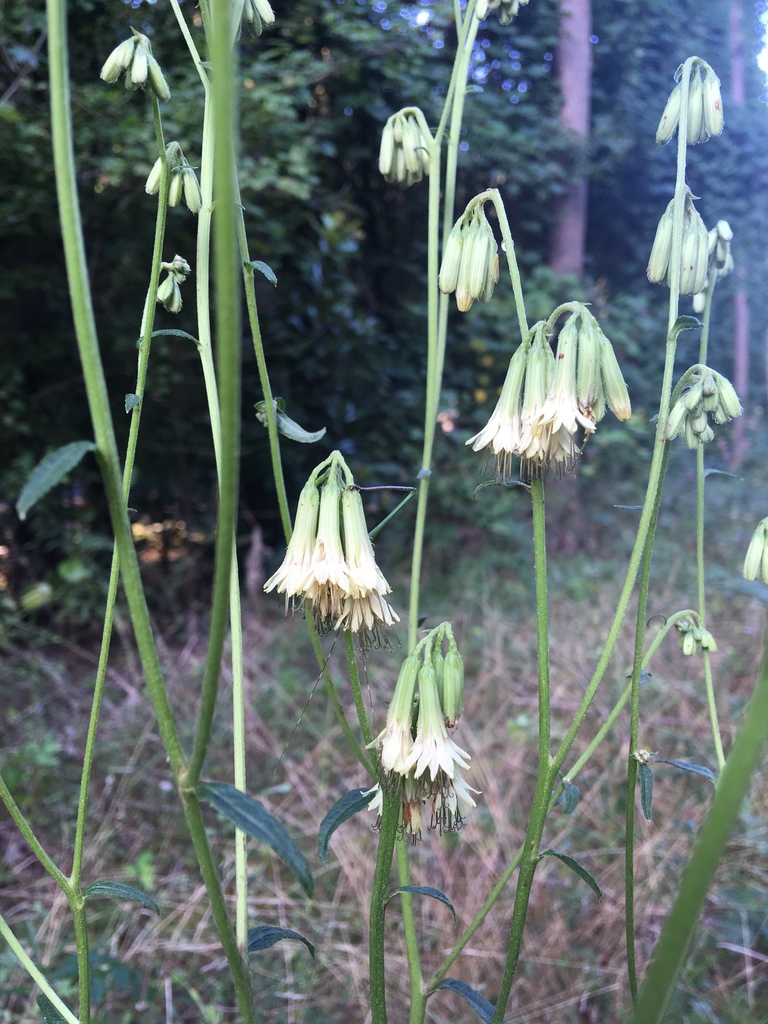
lion's foot rattlesnake root
Nabalus serpentaria
Nabalus serpentarius (commonly known as cankerweed, gall-of-the-earth, or lion's-foot) is a perennial flower species found in North America.
From the article Nabalus serpentarius on Wikipedia (CC BY-SA), quoted section by section
Description
Nabalus serpentarius may reach a total height between 50 and 200 cm (20 and 79 in), with erect stems that may vary from green to red to purple in coloration). Leaf blades are deltate to ovate in shape, reaching a length of 5 to 20 cm (2.0 to 7.9 in) and a width of 4 to 10 cm (1.6 to 3.9 in). The margins pinnately lobed, resulting in 3 to 5 lobes. Blooms are white to yellow in color, with petals ranging in length between 9 and 15 mm (0.35 and 0.59 in). N. serpentarius blooms from August through October.
Range & habitat
Within North America N. serpentarius can be found in the eastern United States, its native range stretching from New York to Florida and westward through Mississippi. Nabalus serpentarius may be found in habitats such as forest ecosystems.
== References ==
Wikipedia: “Distribution and habitat”
Where it lives
Recorded sightings
—
geo-referenced records in GBIF, from museums, herbaria and field observers.
Drag the globe to turn it. Dots are where records exist, not a range map; darker means more records.
In the stacks
Searching the stacks…
Every page naming Nabalus serpentaria in the Biodiversity Heritage Library →
This page is assembled live from iNaturalist, GBIF, Wikipedia, the Source Library and the Internet Archive. It is not yet part of the hand-edited codex. iNaturalist taxon 204361.