- Animals
- ›Arthropods
- ›Hexapods
- ›Insects
- ›Winged and Once-winged Insects
- ›Beetles
- ›Water, Rove, Scarab, Long-horned, Leaf, and Snout Beetles
- ›Cucujiform Beetles
- ›Snout and Bark Beetles
- ›True Weevils
- ›Molytinae
- ›Pissodini
- ›Pissodes
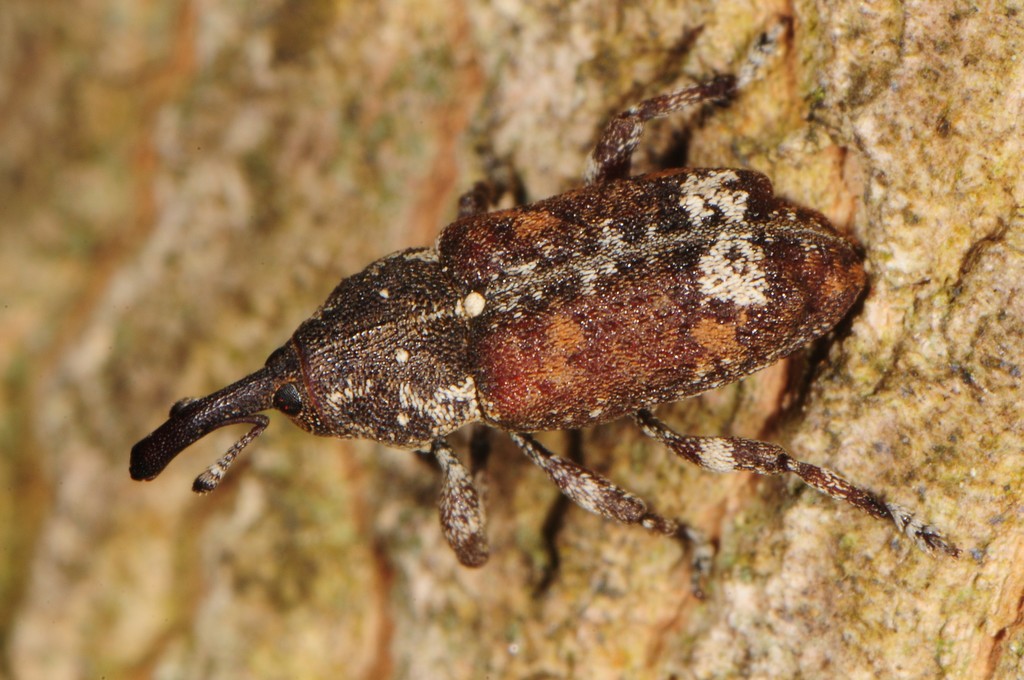
White Pine Weevil
Pissodes strobi
Pissodes strobi, known as the white pine weevil or Engelmann spruce weevil, is the primary weevil attacking and destroying white pines. It was described in 1817 by William Dandridge Peck, professor of natural history and botany at Harvard University. The weevil is dark brown with white spots and is native to North America.
The eggs are laid inside a tree, usually white pine, Sitka spruce, white spruce, Engelmann spruce, or other pine or spruce, and the offspring feed on this tree until the host is killed. Terminals or shoots, as well as needles from pine or spruce, is what the diet of adult white pine weevils consists of.
From the article Pissodes strobi on Wikipedia (CC BY-SA), quoted section by section
Range & habitat
White pine weevils, native to North America, can be found in a number of different tree species. More than 20 species of tree have the potential to be infested by white pine weevils, mainly affecting eastern white pines. Other species that can be affected include Colorado blue, Norway, and Serbian spruces, as well as Scots, red, pitch, jack, and Austrian pines.
Wikipedia: “Distribution”
What it does
The diet of adult white pine weevils consists of the needles and shoots of both pine and spruce trees. Holes in the bark of a tree as a result of this feeding habit are evident as a white pine weevils will eat through the bark in order to reach the terminals. Feeding occurs in the spring, when white pine weevils emerge from overwintering.
Wikipedia: “Diet”
Listen
Looking for field recordings…
Where it lives
Recorded sightings
—
geo-referenced records in GBIF, from museums, herbaria and field observers.
Drag the globe to turn it. Dots are where records exist, not a range map; darker means more records.
In the stacks
Searching the stacks…
Every page naming Pissodes strobi in the Biodiversity Heritage Library →
This page is assembled live from iNaturalist, GBIF, Wikipedia, the Source Library and the Internet Archive. It is not yet part of the hand-edited codex. iNaturalist taxon 208537.