- Animals
- ›Arthropods
- ›Crustaceans
- ›Typical Crustaceans
- ›Malacostracans
- ›Decapods, Isopods, and allies
- ›Amphipods, Isopods, and Allies
- ›Amphipods
- ›Senticaudata
- ›Corophiida
- ›Corophiidira
- ›Corophioidea
- ›Corophiidae
- ›Corophiinae
- ›Monocorophium
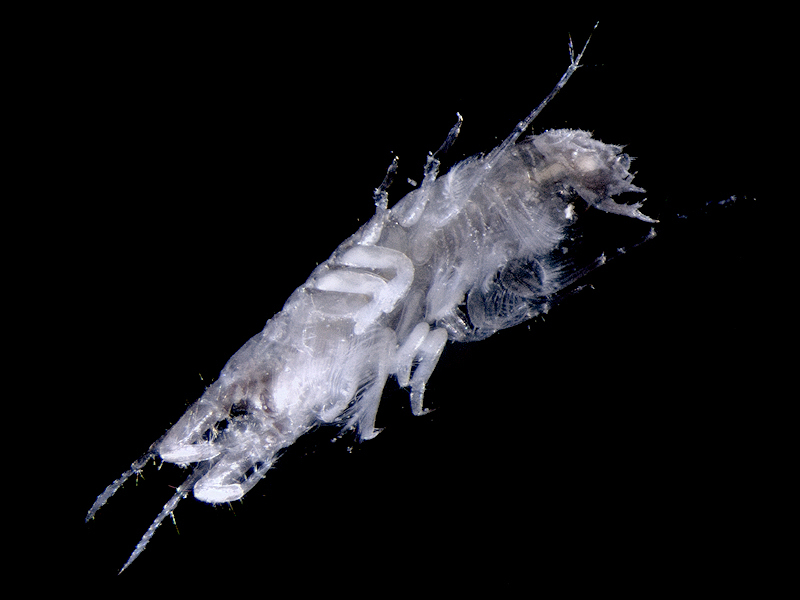
Monocorophium insidiosum
Monocorophium insidiosum is a species of small amphipod crustacean commonly found in brackish, intertidal, and subtidial environments across Europe, Asia, and parts of North America. Monocorophium insidiosum is important in estuarine environments and benthic food webs because of its ecological versatility and tube-building habit.
From the article Monocorophium insidiosum on Wikipedia (CC BY-SA), quoted section by section
Range & habitat
Monocorophium insidiosum is found in estuarine and coastal environments. It is frequently seen in the English Channel, Mediterranean Sea, North Sea, Baltic Sea, and Japanese coastal regions. Reports have also confirmed its presence along parts of the American coastline. Monocorophium insidiosum favors high-turbidity conditions and lives on muddy or sandy substrates. Although the population decrease as salinity falls below 1 PSU (practical salinity units), population growth occurs in brackish water with salinities as low as 1.2–5.7 PSU.
Wikipedia: “Distribution and habitat”
What it does
Monocorophium insidiosum is known for its tube-building behavior. It constructs protective tubes using a mixture of organic material (such as algae and detritus) and inorganic particles (like sand), and are capable of building tubes entirely from material secreted by the organism. These tubes allow the species to attach itself to hard substrates and prevents them from being washed away by currents and tides. Monocorophium insidiosum can molt up to 20 times over its lifetime.
Wikipedia: “Behavior”
Where it lives
Recorded sightings
—
geo-referenced records in GBIF, from museums, herbaria and field observers.
Drag the globe to turn it. Dots are where records exist, not a range map; darker means more records.
In the stacks
Searching the stacks…
Every page naming Monocorophium insidiosum in the Biodiversity Heritage Library →
This page is assembled live from iNaturalist, GBIF, Wikipedia, the Source Library and the Internet Archive. It is not yet part of the hand-edited codex. iNaturalist taxon 209052.