- Plants
- ›Vascular Plants
- ›flowering plants
- ›Dicots
- ›Soapberries, Cashews, Mahoganies, and Allies
- ›Cashew Family
- ›cashews, sumacs, and allies
- ›Amphipterygium
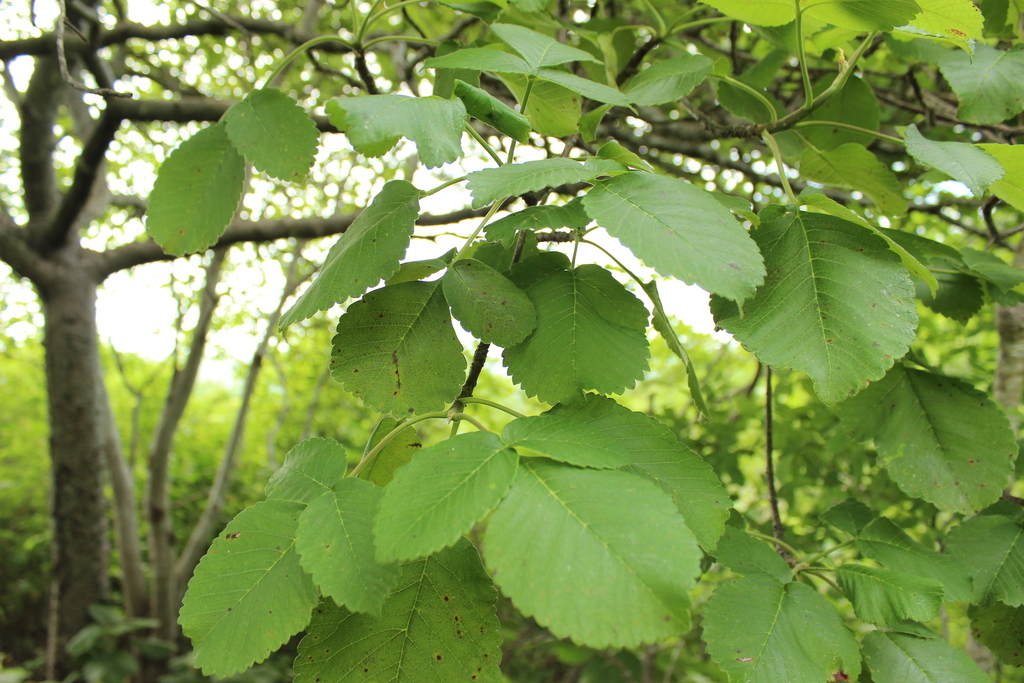
Amphipterygium adstringens
Amphipterygium adstringens, or the cuachalalate, is an ancient medicinal plant that has been commercially used in Mexico for centuries. Because of its ever-growing popularity and since the most sought after part of the plant is its bark, the cuachalalate was as of 2004 considered an endangered species.
The Amphipterygium adstringens tree's height ranges from 4–8.5 m high. The distinguishing factor of this tree is its bark. Its bark is wrinkled, grayish in color and verrucose, with corky protuberances. Its branches are usually covered with scars of fallen leaves and may be bare or covered with fine hair-like structures. Its leave arrangements is imparipinnate with petioles that average 5.4 cm in length. It usually has 3-7 leaflets leaf. These leaflets have a cuneate base and an obtuse or rounded apex, its margin is dentate or crenate. A. adstringens can be differentiated from the other members of the Amphipterygium genus by the shape of its terminal leaflets, which is spathulate, and has dentate margins on the distal half of the leaflet.
From the article Amphipterygium adstringens on Wikipedia (CC BY-SA), quoted section by section
Range & habitat
Amphypterygium adstringens is distributed in central and southern Mexico in deciduous forests, near the mountain and pacific slope regions, in the southern center part of the State of Jalisco, Michoacán, Morelos, Estado de Mexico, Puebla, Guerrero and Oaxaca. This plant usually blooms in the summer, from June to August, and tends to fruit from August to January.
Wikipedia: “Distribution”
What it does
Amphipterygium adstringens grows in hot temperatures in deciduous jungles or Quercus and Ilex forests.
Wikipedia: “Habitat and ecology”
In medicine
Cuachalalate is a legendary plant in Mexico believed to have curative effects. The most sought after part of the plant is its bark. This bark is believed to cure malaria, stomach cancer, gastric ulcers and kidney sicknesses. Many people in Mexico also use the Cuachalalate to harden their gums.
== References ==
Wikipedia: “Medicinal”
Where it lives
Recorded sightings
—
geo-referenced records in GBIF, from museums, herbaria and field observers.
Drag the globe to turn it. Dots are where records exist, not a range map; darker means more records.
In the stacks
Searching the stacks…
Every page naming Amphipterygium adstringens in the Biodiversity Heritage Library →
This page is assembled live from iNaturalist, GBIF, Wikipedia, the Source Library and the Internet Archive. It is not yet part of the hand-edited codex. iNaturalist taxon 209860.