- Animals
- ›Arthropods
- ›Hexapods
- ›Insects
- ›Winged and Once-winged Insects
- ›True Bugs, Hoppers, Aphids, and allies
- ›True Hoppers
- ›Spittlebugs, Cicadas, Leafhoppers and Treehoppers
- ›Leafhoppers and Treehoppers
- ›Typical Leafhoppers
- ›Deltocephalinae
- ›Macrostelini
- ›Macrosteles
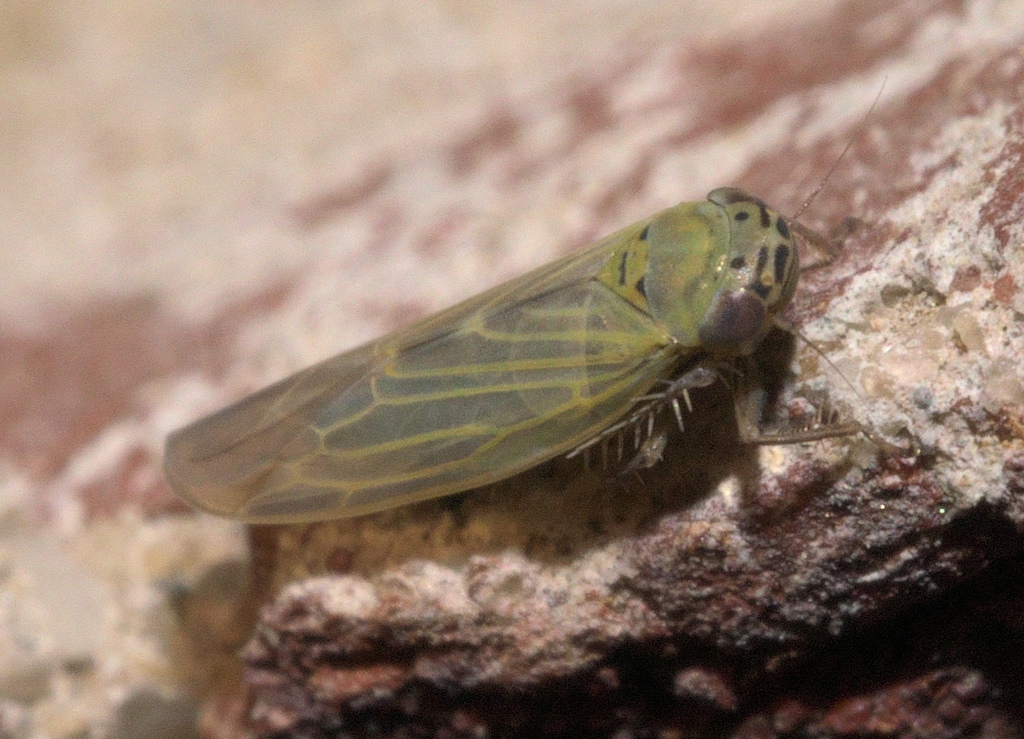
Aster Leafhopper
Macrosteles quadrilineatus
Macrosteles quadrilineatus, the aster leafhopper or six-spotted leafhopper, is a leafhopper species in the genus Macrosteles, found in the United States. It is the vector of aster yellows disease, which affects various vegetable plants, weeds and ornamental plants.
From the article Macrosteles quadrilineatus on Wikipedia (CC BY-SA), quoted section by section
Description
The aster leafhopper is a small species, with males reaching about 3.3 mm (0.13 in) in length and females about 3.7 mm (0.15 in). The fore-wings are greyish-green while the abdomen is yellowish-green. Six pairs of minute black spots or streaks on the head give the insect its alternative name of six-spotted leafhopper.
What it does
In the United States, strong southerly winds in the spring carry adults northwards to the Mid West and northern parts of the country, and these insects usually arrive earlier and exceed in number the resident insects that have been overwintering there, mostly on grasses and cereals. Eggs are laid on a wide range of host plants which include grasses and clovers, corn, oats, rye, carrots and various weeds. The eggs hatch in about one week and the whole life cycle takes about four weeks. Carrot, dill, potato and radish are selected by adults for feeding purposes but are not good for breeding purposes. The leafhopper is attacked by several parasitoids including Pachygonatopus minimus, Neogonatopus ombrodes and Epigonatopus plesius.
Wikipedia: “Ecology”
Listen
Looking for field recordings…
Where it lives
Recorded sightings
—
geo-referenced records in GBIF, from museums, herbaria and field observers.
Drag the globe to turn it. Dots are where records exist, not a range map; darker means more records.
In the stacks
Searching the stacks…
Every page naming Macrosteles quadrilineatus in the Biodiversity Heritage Library →
This page is assembled live from iNaturalist, GBIF, Wikipedia, the Source Library and the Internet Archive. It is not yet part of the hand-edited codex. iNaturalist taxon 224357.