- Fungi Including Lichens
- ›Ascomycete Fungi
- ›Sac Fungi and Lichens
- ›Common Lichens
- ›rocktripes, bloodspot lichens, and allies
- ›rocktripes, bloodspot lichens, and allies
- ›Rocktripes, Toadskin Lichens, and allies
- ›Umbilicaria
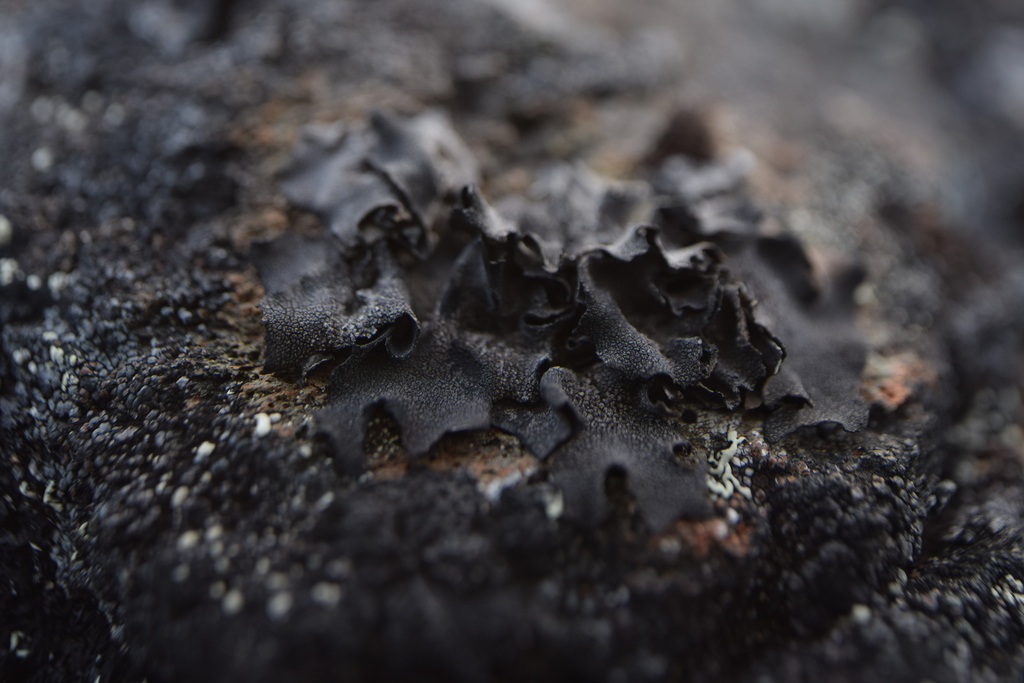
Textured Rocktripe Lichen
Umbilicaria leiocarpa
Umbilicaria leiocarpa, commonly known as textured rock tripe, is a species of saxicolous (rock-dwelling), umbilicate lichen in the family Umbilicariaceae. First described by Augustin Pyramus de Candolle in 1805, it is characterised by its small to medium-sized grey thallus with a cracked upper surface and smooth reproductive structures. The species has a primarily Holarctic distribution, being found across Europe from Fennoscandia to the Pyrenees, with populations occurring from sea level to alpine elevations around 2,000 m (6,600 ft). It shows a particular preference for siliceous rock substrates and is absent from northern Lapland despite being common in similar habitats elsewhere in Fennoscandia. The species belongs to the subgenus Agyrophora, one of eight recognised subgenera within Umbilicaria, and is distinguished by its smooth, non-pustulate thallus and distinctive asexual reproduction through specialised structures called thalloconidia.
From the article Umbilicaria leiocarpa on Wikipedia (CC BY-SA), quoted section by section
Range & habitat
Umbilicaria leiocarpa is predominantly found in the alpine regions of Fennoscandia, although its presence extends across Europe. In Fennoscandia, it is largely found in similar locales to Umbilicaria rigida, albeit it is absent from northern Lapland and adjacent parts of Norway—a notable exception given the abundant U. rigida specimens from those areas. Its European distribution includes populations in the Alps, as well as occurrences in the Carpathians and the Pyrenees. It is also found in Scotland and Japan. In Nepal, U. leiocarpa has been reported at 5,150 m elevation in a compilation of published records; this reported range lies above the tree line used in the study. In northern Europe, the species tends to inhabit elevations up to around 2,000 m (6,600 ft), primarily in alpine conditions, but it has also been found at sea level, suggesting a wide ecological amplitude. This distribution pattern supports the hypothesis that U. leiocarpa could have survived the last ice age in refugia in Southern Norway, from where it may have spread along the Scandinavian mountain chain to its current locations. The species shows a distinct preference for siliceous rock substrates. Although it has been historically been reported to occur in the Kamchatka Peninsula (Russia), those records are now considered dubious and thought to refer to other species.
== References ==
Wikipedia: “Habitat and distribution”
Where it lives
Recorded sightings
—
geo-referenced records in GBIF, from museums, herbaria and field observers.
Drag the globe to turn it. Dots are where records exist, not a range map; darker means more records.
In the stacks
Searching the stacks…
Every page naming Umbilicaria leiocarpa in the Biodiversity Heritage Library →
This page is assembled live from iNaturalist, GBIF, Wikipedia, the Source Library and the Internet Archive. It is not yet part of the hand-edited codex. iNaturalist taxon 233247.