
Chelicerates
Chelicerata
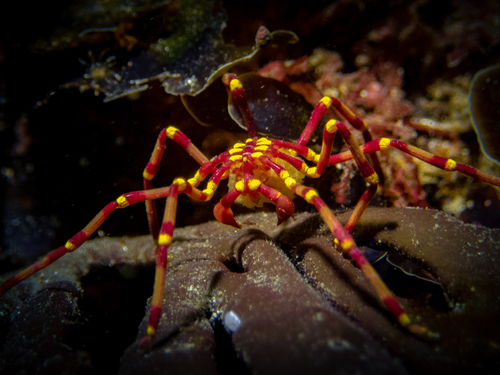
The subphylum Chelicerata (from Neo-Latin, from French chélicère, from Ancient Greek χηλή (khēlḗ) 'claw, chela' and κέρας (kéras) 'horn') constitutes one of the two major living subdivisions of the phylum Arthropoda, alongside Mandibulata. Chelicerates include the sea spiders, horseshoe crabs, and arachnids (including harvestmen, scorpions, spiders, solifuges, ticks, and mites, among many others), as well as a number of extinct lineages, such as the eurypterids (sea scorpions) and chasmataspidids.
Chelicerata split from Mandibulata by the mid-Cambrian, as evidenced by stem-group chelicerates like Habeliida, Mollisonia and Megachelicerax present by this time. The surviving marine species include the four species of xiphosurans (horseshoe crabs), and possibly the 1,300 species of pycnogonids (sea spiders), if the latter are indeed chelicerates. On the other hand, there are over 77,000 well-identified species of air-breathing chelicerates, and there may be about 500,000 unidentified species.
3 branches of this subphylum, most-observed first
See this branch on the Wheel of Life →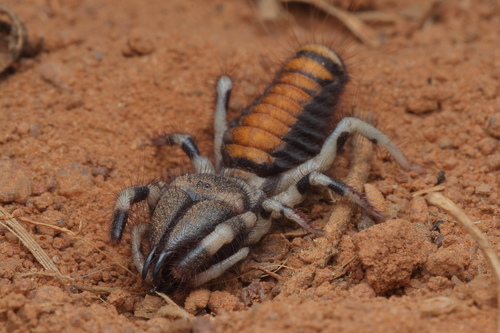

Where it lives
Recorded sightings
—
geo-referenced records in GBIF, from museums, herbaria and field observers.
Drag the globe to turn it. Dots are where records exist, not a range map; darker means more records.
In the stacks
Searching the stacks…
Every page naming Chelicerata in the Biodiversity Heritage Library →
This page is assembled live from iNaturalist, GBIF, Wikipedia, the Source Library and the Internet Archive. It is not yet part of the hand-edited codex. iNaturalist taxon 245097.