- Animals
- ›Molluscs
- ›Gastropods
- ›Heterobranchs
- ›Euthyneura
- ›Tectipleura
- ›Eupulmonata
- ›Hollow-shelled, Ear-shaped, and Button Snails
- ›Hollow-shelled, Ear-shaped, and Button Snails
- ›Hollow-shelled Snails
- ›Melampodinae
- ›Melampus
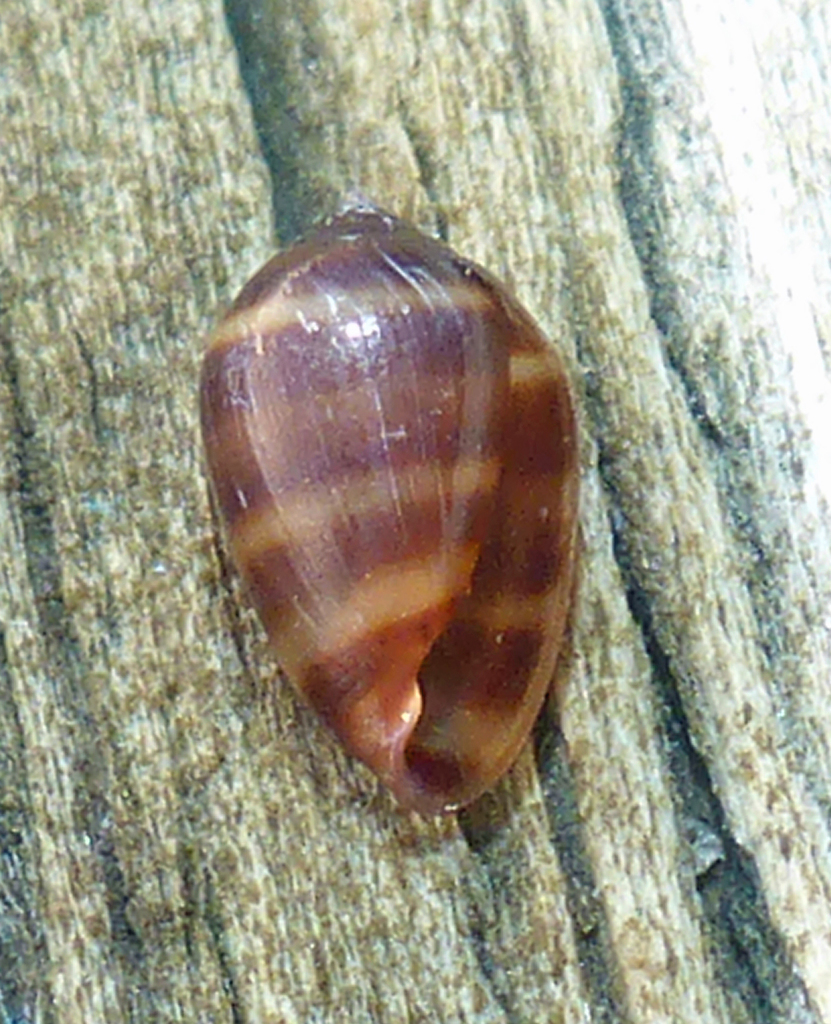
Coffee Bean Snail
Melampus coffea
Melampus coffea, commonly known as the coffee bean snail, is a species of small air-breathing salt marsh snail, a pulmonate gastropod mollusk in the family Ellobiidae....
From the article Melampus coffea on Wikipedia (CC BY-SA), quoted section by section
Range & habitat
The coffee bean snail is found on both coasts of Florida and throughout the Caribbean.
Wikipedia: “Distribution”
What it does
Minimum recorded depth is -0.3 m. Maximum recorded depth is 0.3 m. This small snail is commonly found in the intertidal zone of mangroves amongst the roots and branches. It is similar in appearance to Melampus bidentatus and the two are often confused. Melampus bidentatus is slightly larger and is more likely to be found in a salt marsh as opposed to mangrove habitat for Melampus coffea. Like other species of Melampus, the coffee bean snail is one of the few pulmonate snails to reproduce via planktonic larvae called veligers (Ruppert & Barnes 1994). Upon hatching, the veligers will spend between 4–6 weeks in the plankton, and then return to the mangroves on a high tide, and metamorphose into juvenile snails. This species is a detritivore and herbivore, foraging upon fresh and decaying mangrove leaf litter. The coffee bean snail engages in vertical migration leading up to the time of high tide, in order to escape inundation and the increased risk of predation by various fish species.
Wikipedia: “Ecology”
Where it lives
Recorded sightings
—
geo-referenced records in GBIF, from museums, herbaria and field observers.
Drag the globe to turn it. Dots are where records exist, not a range map; darker means more records.
In the stacks
Searching the stacks…
Every page naming Melampus coffea in the Biodiversity Heritage Library →
This page is assembled live from iNaturalist, GBIF, Wikipedia, the Source Library and the Internet Archive. It is not yet part of the hand-edited codex. iNaturalist taxon 254494.