- Animals
- ›Arthropods
- ›Crustaceans
- ›Typical Crustaceans
- ›Malacostracans
- ›Decapods, Isopods, and allies
- ›Decapods and Krill
- ›Decapods
- ›Crabs, Lobsters, Shrimps, and Allies
- ›True Crabs
- ›Eubrachyuran Crabs
- ›Heterotrematan Crabs
- ›Xanthoid Crabs
- ›Mud Crabs
- ›Panopeus
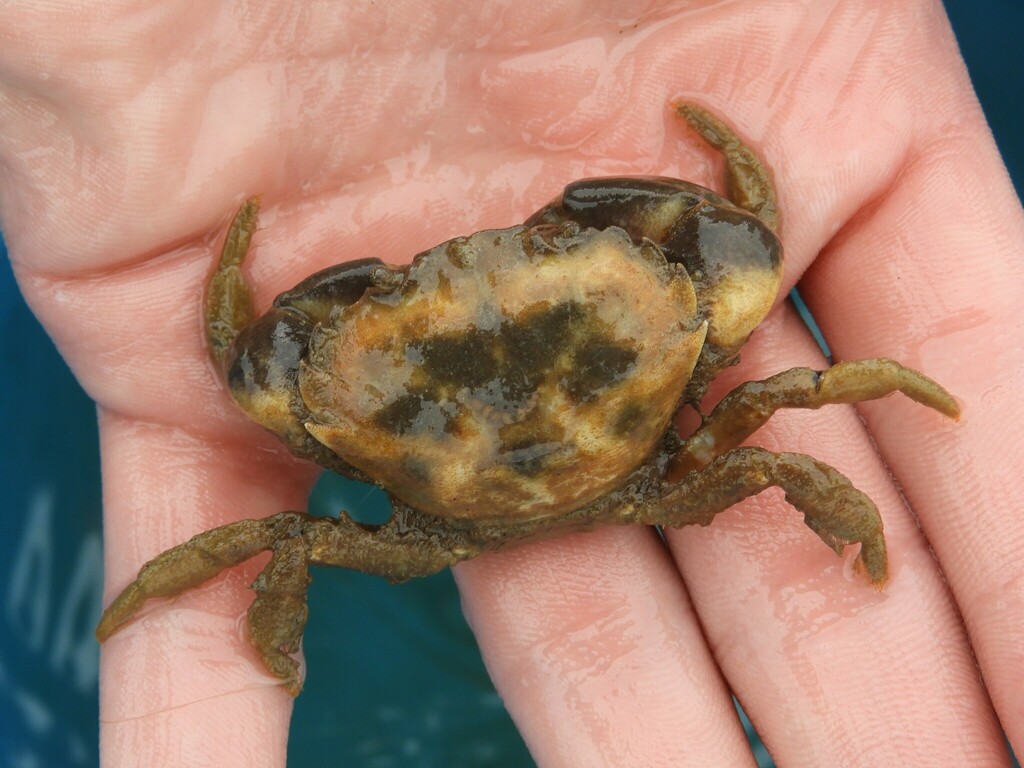
Atlantic Mud Crab
Panopeus herbstii
Panopeus herbstii, also known as the black-fingered mud crab, black-clawed mud crab, Atlantic mud crab or sometimes common mud crab, is a species of true crab, belonging to the infraorder Brachyura, and is the largest of the mud crabs. Panopeus herbstii are found along the western edges of the Atlantic Ocean in areas of North America, Central, and South America. Typically Panopeus herbstii feed on molluscs such as clams. Their conservation status is not marked but they are at risk due to habitat destruction and climate change along with ocean acidification.
From the article Panopeus herbstii on Wikipedia (CC BY-SA), quoted section by section
Description
Panopeus herbstii is small, growing to about a width 6.4 cm, with black-tipped claws of unequal size. P. herbstii has a strong exoskeleton, with very thick and strong claws. The shell is mostly a dull gray and dark brown color with the belly of the crab being a lighter white.
Range & habitat
Panopeus herbstii is found along the Atlantic coast of North America, from Boston, Massachusetts to Santa Catarina, Brazil and on Bermuda. It is the most common xanthid crab on the east coast of the United States. It is found on muddy bottoms and oyster beds, where it takes refuge under stones and shells or among sponges and weeds, but it is rarely seen in the open. Its habitat often being in oyster beds allows for easier access to prey and feeding.
Wikipedia: “Habitat”
What it does
It feeds mainly on young clams, oysters, barnacles, and periwinkles; it cracks open their shells with its strong claws. They are also an interspecific cannibalism species as they eat other crabs. Mud crabs are especially fond of hermit crabs, which are grasped by the legs and pulled out of their protective shells. Like most mud crabs, it is a scavenger. Young P. herbstii are an important food source to other marine animals.
Wikipedia: “Diet”
Where it lives
Recorded sightings
—
geo-referenced records in GBIF, from museums, herbaria and field observers.
Drag the globe to turn it. Dots are where records exist, not a range map; darker means more records.
In the stacks
Searching the stacks…
Every page naming Panopeus herbstii in the Biodiversity Heritage Library →
This page is assembled live from iNaturalist, GBIF, Wikipedia, the Source Library and the Internet Archive. It is not yet part of the hand-edited codex. iNaturalist taxon 260419.