- Animals
- ›Arthropods
- ›Crustaceans
- ›Typical Crustaceans
- ›Malacostracans
- ›Decapods, Isopods, and allies
- ›Decapods and Krill
- ›Decapods
- ›Crabs, Lobsters, Shrimps, and Allies
- ›True Crabs
- ›Eubrachyuran Crabs
- ›Thoracotrematan Crabs
- ›Shore and marsh crabs
- ›Sesarmid Marsh Crabs
- ›Sesarma
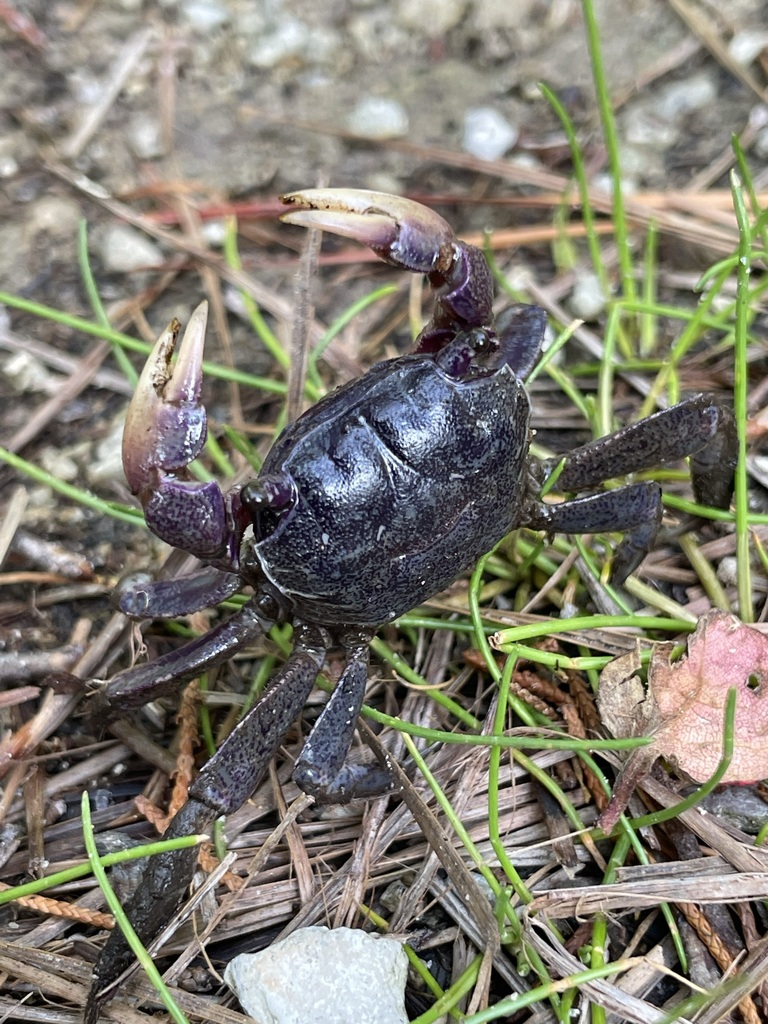
Purple Marsh Crab
Sesarma reticulatum
Sesarma reticulatum, the purple marsh crab or simply marsh crab, is a crab species native to the salt marshes of the eastern United States.
From the article Sesarma reticulatum on Wikipedia (CC BY-SA), quoted section by section
Description
Sesarma reticulatum is purple or brown, with darker speckles, with a carapace up to 1 inch (25 mm) long. It can be distinguished from the closely related S. cinereum by the presence of a second tooth around the orbit of each eye. The larvae or zoea of Sesarma reticulatum are aquatic, residing at a depth of greater than 1 meter below the water's surface. The larvae remain in estuaries during their development, providing food for predators. Most Sesarma species live in mangroves.
Range & habitat
The range of S. reticulatum extends from Woods Hole, Massachusetts to Volusia County, Florida; a related species occurs in the Gulf of Mexico.
Wikipedia: “Distribution”
What it does
Their overpopulation, caused by over-harvesting by recreational fishermen of its natural predators such as blue crabs, striped bass, smooth dogfish and cod, has been blamed for the decline in cordgrass found in the salt marshes of Cape Cod and the decrease in the extent of salt marshes on the Atlantic coast of North America due to increased erosion. Scientists from Brown and Princeton universities methodically ruled out other causes for the degradation of the salt marshes. The explosion in the population of sesarma crabs has provided additional food to night herons. The crabs eat marsh grass not only from above but underground in tunnels they construct. The research demonstrates the possible cumulative ecological impact of popular human activities such as recreational fishing.
== References ==
Wikipedia: “Ecology”
Where it lives
Recorded sightings
—
geo-referenced records in GBIF, from museums, herbaria and field observers.
Drag the globe to turn it. Dots are where records exist, not a range map; darker means more records.
In the stacks
Searching the stacks…
Every page naming Sesarma reticulatum in the Biodiversity Heritage Library →
This page is assembled live from iNaturalist, GBIF, Wikipedia, the Source Library and the Internet Archive. It is not yet part of the hand-edited codex. iNaturalist taxon 260461.