- Plants
- ›Vascular Plants
- ›flowering plants
- ›monocots
- ›gingers, bananas, and allies
- ›Lobster-claws
- ›Heliconia
- ›Stenochlamys
- ›Stenochlamys
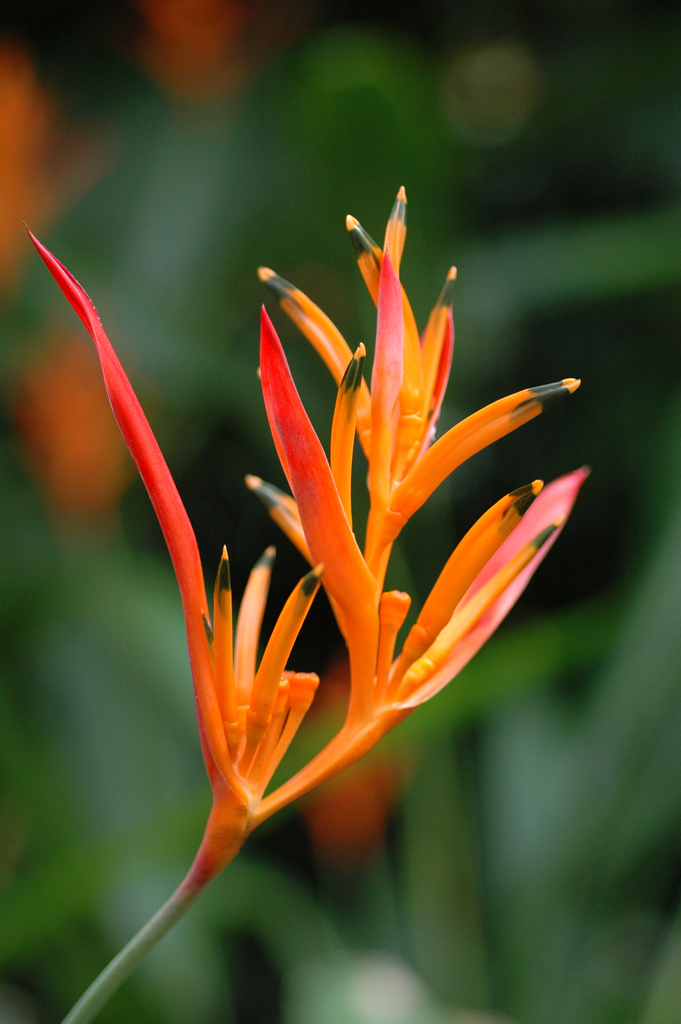
Parrot's Beak
Heliconia psittacorum
Heliconia psittacorum (parrot's beak, parakeet flower, parrot's flower, parrot's plantain, false bird-of-paradise) is a perennial herb native to the Caribbean and South America. It is considered native to French Guiana, Guyana, Suriname, Venezuela, Colombia, Bolivia, Brazil, Paraguay, Panama and Trinidad & Tobago. It is reportedly naturalized in Gambia, Thailand, Puerto Rico, Hispaniola, Jamaica and the Lesser Antilles. It is often cultivated as a tropical ornamental plant in regions outside its native range.
From the article Heliconia psittacorum on Wikipedia (CC BY-SA), quoted section by section
Description
Heliconia psittacorum can grow 1 - 2 meters tall. The leaves are lanceolate to elliptical, and are similar to banana leaves. The flower has both male parts (anthers) and female parts (stigma and pistil), also referred to as a monoecious angiosperm. The inflorescence is erect, consisting of red bracts and pale-yellow tubular flowers.
Where it lives
Recorded sightings
—
geo-referenced records in GBIF, from museums, herbaria and field observers.
Drag the globe to turn it. Dots are where records exist, not a range map; darker means more records.
In the stacks
Searching the stacks…
Every page naming Heliconia psittacorum in the Biodiversity Heritage Library →
This page is assembled live from iNaturalist, GBIF, Wikipedia, the Source Library and the Internet Archive. It is not yet part of the hand-edited codex. iNaturalist taxon 260753.