 NL·0415
Herbarium of the Nature Library
- Name
- Hoplobatrachus tigerinus
- Family
- Dicroglossidae
- Native to
- Afghanistan and Pakistan through India, Nepal and Bangladesh to Myanmar; introduced to the Andaman Islands and Madagascar
- Habitat
- Wetlands, Rice paddies, Ponds, Ditches
Indian bullfrog
Hoplobatrachus tigerinus
Also calledIndus Valley bullfrog · Mendhak (Hindi, Urdu, frog) · Sona bang (Bengali)
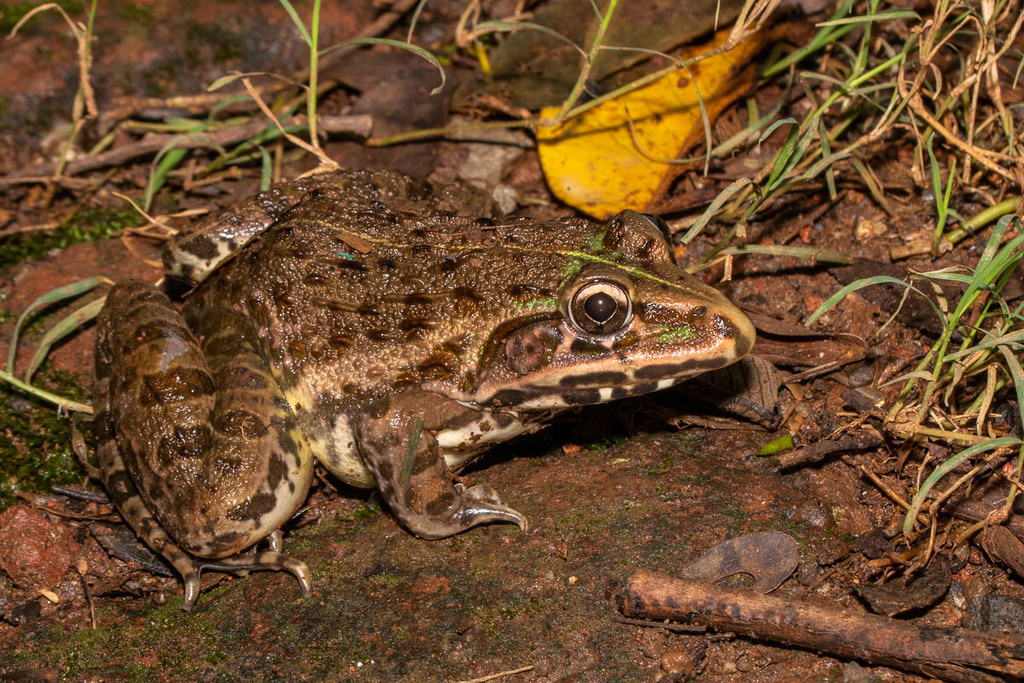
South Asia's largest frog. During the first monsoon rains the males turn bright yellow and puff out blue vocal sacs, calling in loud choruses. It was exported in huge numbers for frog legs until India banned the trade in 1987.
Hoplobatrachus tigerinus, commonly known as the Indian bullfrog, is a large species of fork-tongued frog found in South and Southeast Asia. A relatively large frog, it is normally green in color, although physiological traits vary between populations. Sexual dimorphism exists between males and females. Outside of its native range, H. tigerinus is a rapidly-spreading invasive species. Both adults and tadpoles can severely damage the populations of other frog species. Typically, Indian bullfrogs dwell in wetland environments. Research has been conducted on their ability to control mosquitos. Wikipedia
What it can do
- iMales turn bright yellow and show blue vocal sacs in the breeding season
- iiCan leap long distances and skitter across water
- iiiEats almost anything it can fit into its mouth, including other frogs, snakes and small birds
In the field
Field marks
- aLarge olive-green to brown frog with dark spots
- bThin yellow line down the middle of the back
- cBreeding males bright yellow with blue vocal sacs
- dPointed snout and strongly webbed toes
- Voice
- A loud, hoarse croak, given in deafening choruses after the monsoon rains
- Not to be confused with
- Jerdon's bullfrog (H. crassus) has shorter hind limbs and a shorter snout. Skittering frogs (Euphlyctis) are smaller and more aquatic.
- Where to see it
- Rice paddies and ponds across the Indian plains; Keoladeo (Bharatpur) and Sundarbans; best seen at the onset of the monsoon
- When
- Breeding with the first monsoon rains (June–July)
Listen
Looking for field recordings…
Life & habits
- Diet
- Insects, crabs, fish, frogs, snakes, small birds and rodents
- Habitat
- Ponds, marshes, rice paddies and ditches
- Size
- Up to ~17 cm
Comes out in large numbers to breed after the first monsoon rains; males call from shallow water.
Where it lives
Recorded sightings
—
geo-referenced records in GBIF, from museums, herbaria and field observers.
Native range
Afghanistan and Pakistan through India, Nepal and Bangladesh to Myanmar; introduced to the Andaman Islands and Madagascar
Drag the globe to turn it. Dots are where records exist, not a range map; darker means more records.
In the stacks
Searching the stacks…
Every page naming Hoplobatrachus tigerinus in the Biodiversity Heritage Library →
Marginalia
The Rigveda's frog hymn (Maṇḍūka Sūkta, 7.103) compares frogs croaking at the start of the monsoon to priests chanting; South Asia's monsoon chorus of bullfrogs is the sound it describes.
Curiosity
Before India banned exports in 1987, tens of millions of frogs were exported every year, and some studies linked the loss of frogs to increases in crop pests and mosquitoes.
Kinship

Photographs: iNaturalist contributors under the licences shown. Records: GBIF.org. Historical plates: Source Library (CC BY-SA 4.0; originals public domain). Summary text: Nature Library editors and Wikipedia (CC BY-SA). Medicinal and edibility notes are historical and educational, not advice. iNaturalist taxon 26258.