- Animals
- ›Arthropods
- ›Hexapods
- ›Insects
- ›Winged and Once-winged Insects
- ›Beetles
- ›Water, Rove, Scarab, Long-horned, Leaf, and Snout Beetles
- ›Cucujiform Beetles
- ›Lady, Fungus, Scavenger, and Bark Beetles
- ›Lady Beetles
- ›Scymninae
- ›Hyperaspidini
- ›Hyperaspis
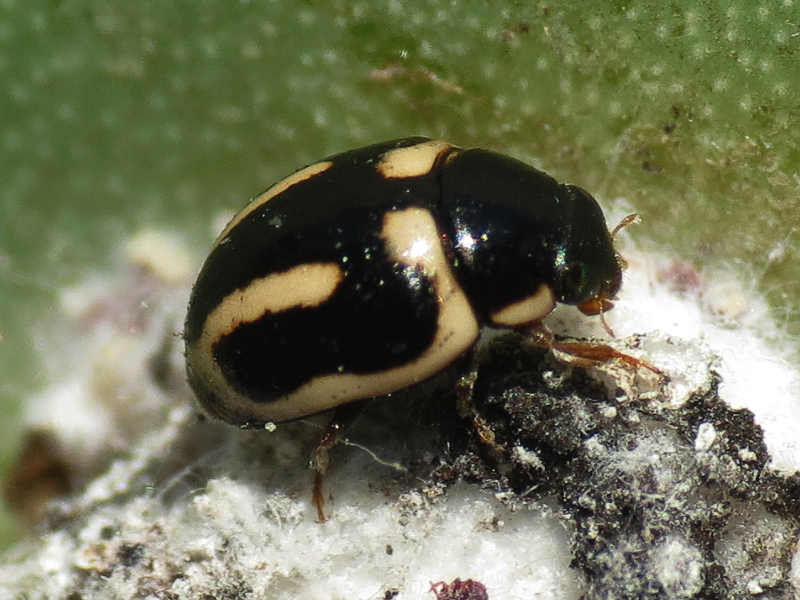
Trident Lady Beetle
Hyperaspis trifurcata
Hyperaspis trifurcata, also known as the trident lady beetle, is a species of lady beetle in the family Coccinellidae. It is found in North America, where it has been recorded from Mexico (Durango), Arizona and Texas. It has been deliberately introduced as a biological control agent in Israel, targeting invasive populations of Dactylopius opuntiae, and has recently been recorded in Jordan. Both larvae and adults are specialist predators of the cochineal scale (Dactylopius spp.), which feed on prickly pear cacti of the genus Opuntia. The larval and pupal stages are parasitized by the encyrtid wasp Homalotylus cockerelli. Females lay their eggs in the wax secreted by cochineal scales to conceal them from parasites, where the larvae continue to shelter after hatching. The gut microbiome of H. trifurcata has been shown to contain bacteria which may aid in the digestion of carminic acid, a toxic substance found in the cochineal scale's hemolymph. The beetles also appropriate carminic acid to deter predation by ants, lending the larvae a red color.
From the article Hyperaspis trifurcata on Wikipedia (CC BY-SA), quoted section by section
Description
Adults reach a length of about 2.3–3 mm. The pronotum is black with a reddish yellow lateral border. The elytra are black with a variable red or yellow pattern. The species' name originates from this pattern's resemblance to a trident. Males can be identified by white coloration on the face.
Listen
Looking for field recordings…
Where it lives
Recorded sightings
—
geo-referenced records in GBIF, from museums, herbaria and field observers.
Drag the globe to turn it. Dots are where records exist, not a range map; darker means more records.
In the stacks
Searching the stacks…
Every page naming Hyperaspis trifurcata in the Biodiversity Heritage Library →
This page is assembled live from iNaturalist, GBIF, Wikipedia, the Source Library and the Internet Archive. It is not yet part of the hand-edited codex. iNaturalist taxon 271572.