- Plants
- ›Vascular Plants
- ›flowering plants
- ›Dicots
- ›saxifrages, stonecrops, and allies
- ›stonecrop family
- ›Sempervivoideae
- ›Sedeae
- ›Sedum
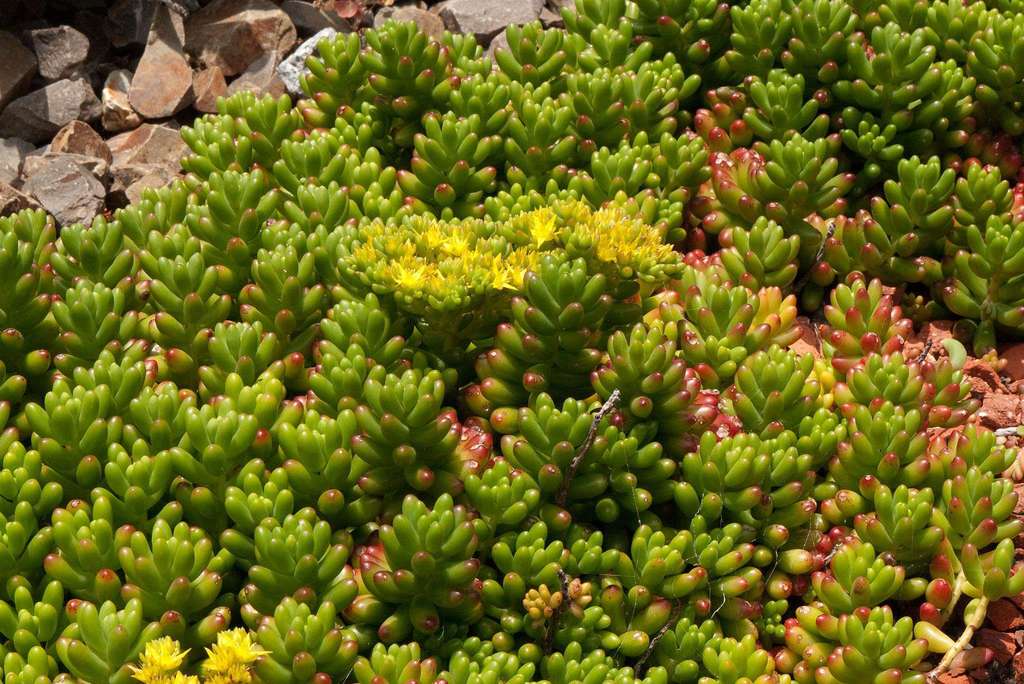
Christmas-cheer
Sedum × rubrotinctum
Sedum rubrotinctum or Sedum × rubrotinctum, commonly known as jelly-beans, jelly bean plant, or pork and beans, is a species of Sedum from the plant family Crassulaceae. It is a succulent plant originating in Mexico. The common English name refers to its short leaves that resemble jelly beans, especially when taking on a protective hue.
From the article Sedum rubrotinctum on Wikipedia (CC BY-SA), quoted section by section
Description
The leaves of Sedum rubrotinctum change colour from green to red during the summer months as a protective adaptation. The plant sprouts bright yellow flowers from between the leaves in mid-spring.
How it is grown
Sedum rubrotinctum is cultivated as an ornamental plant, for planting in gardens and as potted plants. It is grown very easily and tolerates all types of soil except for those that are poorly drained. It grows very well in summer, can take variations in climate, although it is not frost-tolerant. New plants may be grown from leaves (or beans) that drop off or are separated from the stem and laid on soil. This plant has won the Royal Horticultural Society's Award of Garden Merit. Sedum rubrotinctum is poisonous and may cause irritation when ingested or touched.
Wikipedia: “Cultivation”
Where it lives
Recorded sightings
—
geo-referenced records in GBIF, from museums, herbaria and field observers.
Drag the globe to turn it. Dots are where records exist, not a range map; darker means more records.
In the stacks
Searching the stacks…
Every page naming Sedum × rubrotinctum in the Biodiversity Heritage Library →
This page is assembled live from iNaturalist, GBIF, Wikipedia, the Source Library and the Internet Archive. It is not yet part of the hand-edited codex. iNaturalist taxon 276077.