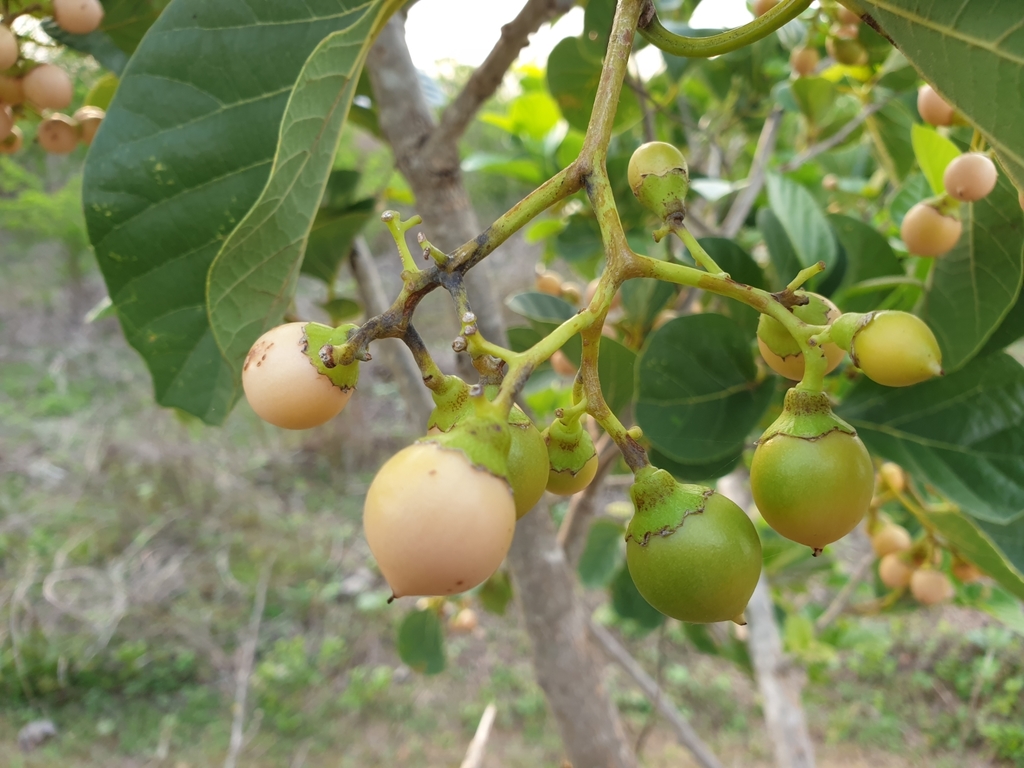
Assyrian Plum
Cordia myxa
Cordia myxa, also called sebesten plum, Assyrian plum, Indian cherry, glue berry, lasura, or bambar is a mid-sized, deciduous tree in the family Cordiaceae, native to Asia. It produces small, edible fruit and is found in warmer areas across Africa and Asia.
It is found growing primarily in Asia, as well as, across the globe especially in tropical regions having the right type of geophysical environment. It is seen coming up naturally and growing abundantly from Myanmar in the east to Lebanon and Syria in the west. Its habitat starts at about 200 metres (660 ft) above mean sea level in the plains and ascends to an altitude around 1,500 metres (4,920 ft) in the hills.
From the article Cordia myxa on Wikipedia (CC BY-SA), quoted section by section
How it is grown
Keeping in view the numerous utilities of the plant it is widely cultivated in the arid zone too. The species is indigenous to China and is widely cultivated in lower plains and tropical regions. Though this plant flourishes well in deep clay loam and sandy soils, it does still better in areas experiencing nearly 100 to 150 centimetres (39 to 59 in) of annual rainfall.
Wikipedia: “Cultivation”
Where it lives
Recorded sightings
—
geo-referenced records in GBIF, from museums, herbaria and field observers.
Drag the globe to turn it. Dots are where records exist, not a range map; darker means more records.
In the old herbals & bestiaries

In the stacks
Searching the stacks…
Every page naming Cordia myxa in the Biodiversity Heritage Library →
This page is assembled live from iNaturalist, GBIF, Wikipedia, the Source Library and the Internet Archive. It is not yet part of the hand-edited codex. iNaturalist taxon 276373.